How energy costs drove inflation past 4% while core prices held steady
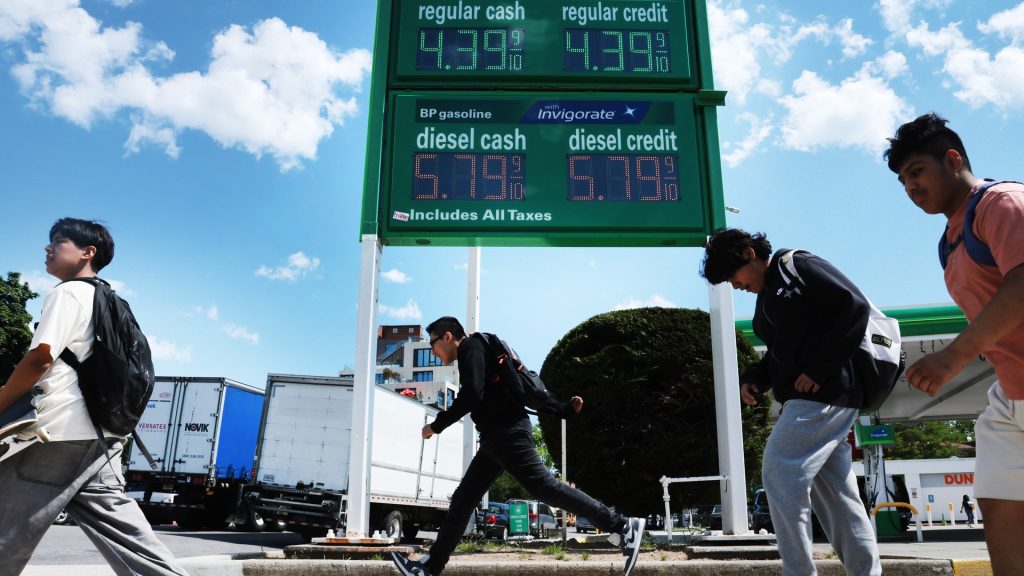
Inflation rose by 4.2% in May, driven largely by rising fuel prices due to near total closure of the Strait of Hormuz. It’s the highest annual increase in inflation since April 2023.
Gasoline prices in May were up 40.5% from a year earlier and 7% compared with April, according to the latest Consumer Price Index (CPI) report. The average gasoline price nationwide sits at $4.15 per gallon on Wednesday, down from a May high above $4.50, but still more than $1 higher than February, before the war began.

Oil prices are rising again Wednesday after the ceasefire between the U.S. and Iran broke down, with both sides launching new attacks. Prior to the war, about 20% of the world’s daily oil supply sailed through the Strait of Hormuz on Iran’s southern coast. But with Iran blocking traffic, oil producers have cut about 12 million barrels of daily production, according to reporting in the trade publication Rigzone.
The annual rise in fuel oil, including heating oil and maritime fuel, saw an even sharper annual rise at 58.9%. Electricity prices also increased by 5.9% compared with a year ago.
Will energy inflation affect the broader economy?
But when energy and food are excluded, the inflation rate drops to a much less notable 2.9%.
“Inflation pressures were muted in May outside areas directly impacted by the jump in energy prices,” said Samuel Tombs, Chief US economist for Pantheon Macroeconomics, in a note to Straight Arrow. However, Tombs also noted that “core goods prices tend to lag changes in energy prices by three-to-six months.”
Tombs said he expects prices for most goods to continue rising at about 0.3% per month — much lower than the monthly 3.9% increase in energy costs from April to May.
READ MORE: What 50 years of oil shocks explain about the future of gas prices
“All told, we see no sign of second-round effects from the surge in energy prices,” that would warrant a change in top-level U.S. monetary policy, Tombs told Straight Arrow. The Federal Reserve has historically responded to high inflation by raising interest rates to cool the economy.
But Tombs said it’s “still early,” and other economic data such as jobs reports, wage growth and rents may signal that cutting rates is the more likely outcome.
Are there signs that the Strait of Hormuz is opening?
In an interview Tuesday with CNBC, U.S. Energy Secretary Chris Wright said traffic through the Strait was “rising very meaningfully.”
In late May, various media reports stated that the U.S. Central Command had quietly restarted “Project Freedom,” which is a mission to escort commercial ships, including oil tankers, through the Strait of Hormuz. The New York Times reported that 70 ships had turned off their transponders to avoid detection while being escorted through the Strait along the side closer to Oman.
U.S. Central Command denied the reports in a post on X, and a spokesperson told the Times, “Though U.S. forces are not escorting, we continue to communicate and coordinate with commercial ships seeking to freely and safely transit the Strait of Hormuz.”
Despite Wright’s claim and the potential status of naval escorts, the U.S. Energy Information Administration cited “very limited shipping traffic through the Strait of Hormuz,” as a factor in its latest Short Term Energy Outlook report released Tuesday.
The EIA report projected that crude oil prices will remain above $80 per barrel through the end of 2026, with the assumption that the Strait remains closed in the near term, but begins opening in the third quarter.
Round out your reading
- People are overdosing on GLP-1 injections. What does that look like?
- Researchers put chatbots in a simulation. Grok ended the world in 4 days.
- Fearing more e-bike injuries, Illinois looks to become 10th state to mandate registration, insurance.
- Why are young professionals facing such a tough job market? Hint: It’s not just AI.
- We’re building a new Straight Arrow. Help us shape our future by taking our survey.
Ella Rae Greene, Editor In Chief