How Austin, Texas, brought down housing costs — and how other cities might do the same
Emily Pool had spent nearly a decade in cramped New York apartments when the COVID-19 pandemic hit. As Pool and her partner, Adam Porter, rethought what they wanted next, they began looking for a house in Pool’s hometown of Austin, Texas.
That was 2022. By then, the Texas capital had become one of the country’s hottest destinations: a booming tech hub with a vibrant social scene and an overheated housing market to match.
From 2010 to 2019, rents nearly doubled in Austin, outpacing every other major U.S. city, while home prices climbed 82%, according to the Pew Charitable Trusts.
The pandemic sent prices even higher. By May 2022, the median home within Austin city limits cost $667,000.
Pool, a 33-year-old sales manager for a furniture design company, and Porter were priced out — a bitter irony given that Pool’s mother, Leslie Pool, was shaping housing policies as one of the longest-serving members of Austin’s City Council.
Leslie Pool, who retired from the council last year, told Straight Arrow that her daughter put it bluntly: “Mom, it doesn’t look like I’ll ever be able to afford to come back to Austin.”
“When the issue comes to your doorstep,” Pool said, “it becomes real. We had to do something.”
Austin did. City leaders, Pool among them, passed a series of sweeping reforms intended to jump-start new housing developments.
Today, the city that came to symbolize the pandemic-era housing boom is seeing one of the sharpest reversals in the country: rents have fallen faster than anywhere else, new home listings have surged and sale prices have retreated.
Housing experts are now looking at Austin as something rare in America’s affordability crisis: a possible success story.
Austin’s push to build more homes
Even before escalating their efforts during the pandemic, Austin lawmakers and city officials had tried to make it easier to build new homes in the metro area.
For example, the city relaxed zoning regulations to allow the construction of large apartment towers, varied housing structures and mixed-use buildings in more neighborhoods. It also streamlined the permitting process.
In addition, the city revised building codes to permit construction on smaller lots, made it easier to subdivide existing units and removed some building requirements such as minimum parking spaces.
Austin also took steps to build and subsidize low-income housing. For instance, the city allows developers to build taller buildings if they include apartments available only to people earning less than certain levels. Voters also approved hundreds of millions of dollars in municipal bond funding for affordable housing projects.
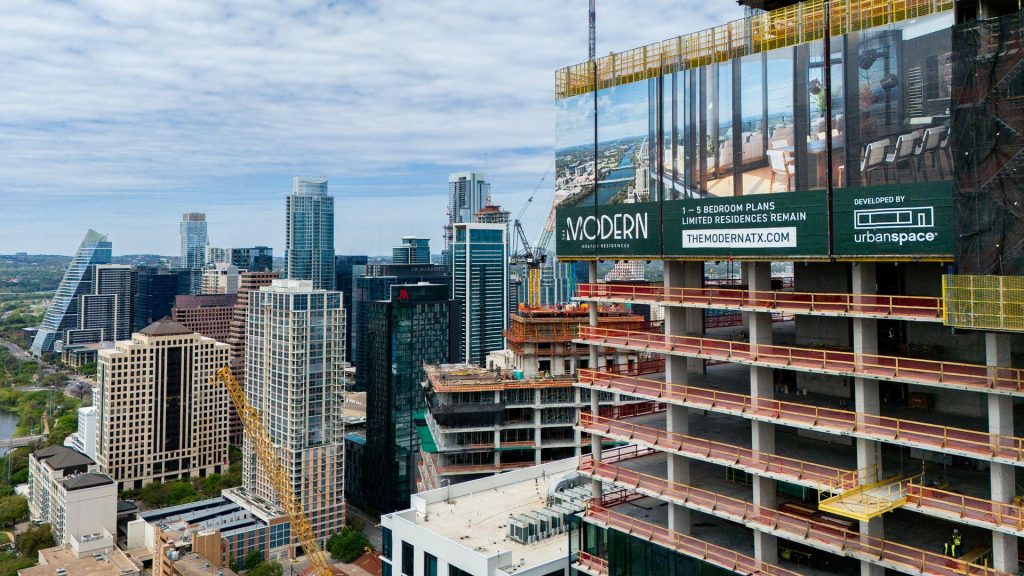
Taken together, these reforms helped fuel a major construction boom. From 2015 to 2024, Austin — a city of roughly 1 million residents — added about 120,000 homes, increasing its housing supply by 30%. That’s more than three times the national growth rate, according to Pew.
Can Democrats and Republicans agree on housing deregulation?
The Austin City Council is officially nonpartisan, and party affiliations do not appear on the ballot. But Pool said all but one council member was a Democrat like herself.
Although deregulation is often considered a Republican priority, Austin’s housing reforms drew broad support in a Democratic-led city.
“When it comes to local issues like housing,” Pool said, “you have very different political lines being drawn.”
She said government regulations can be helpful or necessary for the public good, but cities also need to reexamine their arbitrary or outdated rules.
Taylor Smith, a former policy director for City Council members who now works for the Austin Board of Realtors, agreed. While there were concerns that large-scale construction could potentially displace residents or change the character of neighborhoods, Smith told Straight Arrow there was still “a collective will” on the council to pass reforms.
Nationally, efforts to expand the housing supply tend to draw bipartisan support, said Seva Rodnyansky, a research manager with Pew’s housing policy initiative.
“Making housing more available and affordable is one of the few remaining things people can agree on in 2026,” he told Straight Arrow, “and that cuts across party lines and government levels.”
Rodnyansky said measures similar to Austin’s have helped bring down housing costs in places like Minneapolis; New Rochelle, New York; parts of Montana; and Palisades Park, New Jersey.
Austin now leads the country in housing-price declines
After a years-long building boom, Austin housing prices continue to ease.
The average rent in Austin in April — $1,362 for an apartment with no more two bedrooms — was 5.3% lower than a year earlier, according to Realtor.com. That was the steepest decline among the nation’s 50 largest metro areas.
Home values are also falling. The average Austin home is now valued at $511,264, a 5.7% drop from a year ago, according to Zillow. Nationally, the average U.S. home value rose 0.6% over the same period.
This is good news for Justin Lanier, a 30-year-old government employee. He grew up in the Chicago suburbs and moved to Austin in 2022 for a master’s degree program at the University of Texas.
He told Straight Arrow he was surprised that his rent never increased over three years.
Lanier and his girlfriend moved to a three-bedroom apartment last July and pay $2,400 a month.
He said that rent feels fair and affordable. But with many of his friends now getting rent reductions, he said he will “definitely feel empowered to ask for a decrease” when he renews his lease next month.
Low-income residents, however, might tell a different story, according to Shoshana Krieger, the project director for Building and Strengthening Tenant Action, a tenant advocacy group serving underrepresented Austin renters.
“I don’t know of any of our members whose rents have gone down on renewal,” she told Straight Arrow, “or anyone on the ground who feels like rent is affordable and the housing crisis is easing.”
For many struggling residents, she said, rent increases continue to outpace wage growth.
Also, she said, Austin landlords are increasingly charging extra for utilities and other costs or piling “junk fees” on top of rent, raising some tenants’ housing tab by as much as 10%.
Should other U.S. cities follow Austin’s housing blueprint?
Austin may have discovered a path out of the housing-affordability crisis that has emerged across the country.
“Most U.S. cities can learn from Austin,” Pew’s Rodnyansky said, because many face the same challenges: a shortage of homes, strong demand and zoning rules that thwart new construction.
Rodnyansky co-authored a recent Pew report that analyzed the effects of Austin’s housing reforms over the past decade.
It concluded that the city’s measures “have helped to unlock large amounts of housing supply” and reversed rent growth, including rents for tenants in lower-cost, older homes.
Mark Sprague, a housing market analyst with Information Capital, told Straight Arrow that Austin also got lucky with its timing. The city launched construction projects when lenders were willing to finance them, but market conditions have now changed.
Rodnyansky, Smith and Pool also touted Austin’s incremental approach, saying it allowed officials to test reforms and adjust as needed.
Housing affordability is not solved quickly or with just one policy, Rodnyansky said.
Tackling the crisis requires constant adaptation as conditions shift, he said. “If you’re standing still, you’re falling behind.”
Round out your reading
- Tennessee officials will pay $835,000 for jailing man over Charlie Kirk meme.
- Why the immune system turns on women more often than men.
- More than 340 newspapers block the Wayback Machine. What that means for the future of the internet.
- Why Rep. Cohen filed articles of impeachment against Supreme Court Justice John Roberts.
- We’re building a new Straight Arrow. Help us shape our future by taking our survey.
Ella Rae Greene, Editor In Chief