How a lack of faith is undermining the US recycling system
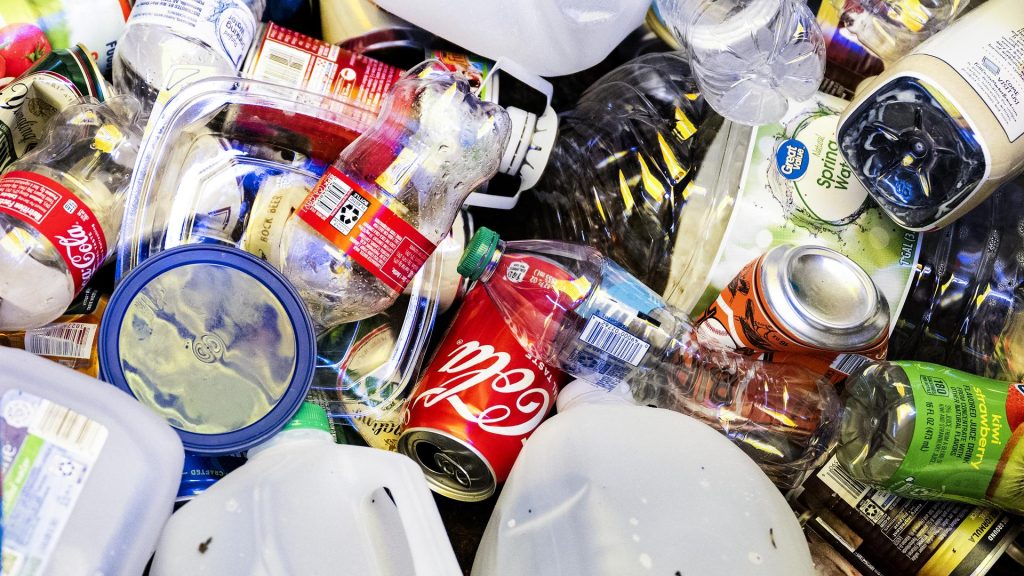
A plastic bottle is placed into a recycling bin, the bin is rolled out to the curb … and then what? Many Americans don’t actually know what happens next, and that uncertainty is leading to fewer and fewer recyclers, according to a new report.
The nonprofit Recycling Partnership is releasing a phased report on the 2026 State of Recycling, and its initial findings attribute the worsening state of recycling nationwide in part to high costs and a lack of education and confidence in the system.
Confusing rules + lack of education = less engagement
In its new report released Wednesday, the Recycling Partnership said many households with access to recycling do not do it consistently or properly. Americans often recycle items that aren’t recyclable, place bins out on the wrong days or simply skip steps.
“Insufficient investment in education and outreach … leads to confusing rules, inconsistent messaging and weakened confidence,” the group wrote.
And those confusing rules, the group found, are weakening confidence in the recycling system as a whole.
The Recycling Partnership said the Recycling Confidence Score — basically a credit score for faith in recycling — has declined from 627 to 609 since 2022, “indicating that public confidence is weakening rather than strengthening.”
The group says that a decline in confidence leads to less participation.
“When recycling is easy, consistent, credible, and supported by well-resourced education and outreach, people participate,” the report reads. But confusing, inconsistent, and unreliable systems lead to less engagement.
The other problem? Access
Americans can’t engage in recycling if they don’t have access. Not every home in America has access to recycling, and the ones that don’t often have to travel or even pay to get rid of their plastics.
The Recycling Partnership says roughly three-quarters of all U.S. households have active recycling service, leaving a quarter of the country without access.
“Without universal access, recyclable materials are lost before they enter the system,” the report reads. “Access is not just about convenience or equity. It determines whether the system can achieve scale.”
And as Straight Arrow previously reported, when recycling becomes inaccessible, many Americans may forgo the system altogether.
“You’ve got to make it easy for people, and if you don’t have regular pickup, then what are you going to do? You’re going to throw it in the trash instead,” Luke Metzger, executive director of Environment Texas, an Austin-based nonprofit, previously told Straight Arrow.
The key now, the report says, is to increase infrastructure, accessibility and participation, while rebuilding the public’s trust in the entire system.
Round out your reading
- Not red or blue: America’s politically homeless middle.
- Peter Thiel’s ‘Dialog’ network was super-secret. A data leak changed that.
- The novel legal strategy that Taylor Swift and Matthew McConaughey are using to fight AI.
- Illinois balances budget with new $200 million social media tax that tracks in-state users.
- When Trump serves up ‘Just the News,’ it comes with a side of bias.
Ella Rae Greene, Editor In Chief