History is everywhere, from social media to Broadway
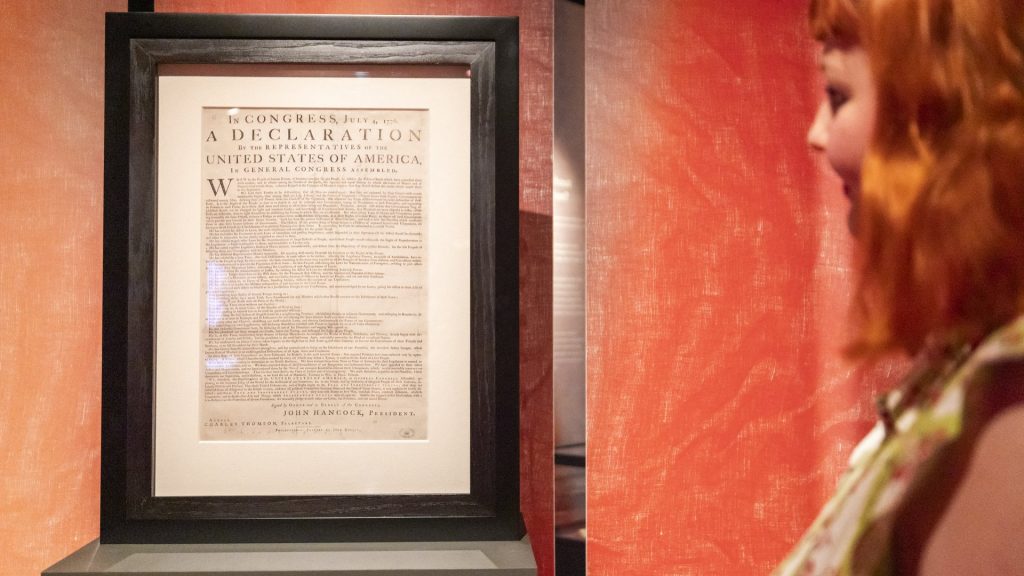
American history and how it’s taught in classrooms have become a hot-button issue, with many debating what should — and what shouldn’t be taught. That has led to significant controversy and hesitancy in public schools, with nearly half of U.S. states enacting laws restricting how history can be taught.
“Between polarized curricula, dubious pedagogy, and teachers too scared to touch anything controversial, civic education is in crisis,” journalist and educator James Traub wrote in his book “The New Cradle of Citizenship: How Schools Can Help Save Our Democracy.”
But outside the classroom and amid the controversy, Americans are finding other ways to teach and learn about the nation’s history.
History but make it a live blog
As we near the Fourth of July, one X account is becoming increasingly active, sharing updates on the Continental Congress’s actions … in 1776.
One man has been “live-posting as a reporter embedded in history,” sharing updates as they happened back in the year this nation was established. In fact, he’s been doing it for years.
On Sunday, he shared an update saying Thomas Jefferson submitted the final draft of the Declaration of Independence to the Continental Congress (250 years ago).
Other updates include British forces launching assaults, states sending delegates to declare independence from Britain and other historical news.
All this is intended to educate social media users on what was going on in our country 250 years ago. But that’s not all; the account manager also has accounts to share updates from 25, 50, and 100 years ago, meaning 2001, 1976, and 1926.
And it’s not just the posts that are educating individuals, but the responses as well. X users are replying to the posts with their own context, comments and even questions directed at the AI tool built into the platform.
It’s just one unique way Americans, and perhaps those across the globe, are learning American history.
The ‘Hamilton’ effect
How else are Americans learning the nation’s early history? You guessed it … “Hamilton,” the musical. Telling the story of Alexander Hamilton and the other founding fathers, the show has educated and sparked historical conversations across the world.
“Hamilton” even led to the creation of “The Hamilton Education Program,” which helps students in the U.S. and beyond learn about America’s founding era through the lens of the musical.
Students work with primary source materials, create their own artistic pieces and even have the opportunity to see the show, according to The Broadway Collection.
Even Traub commented on the “Hamilton” effect, saying the program shows students “that you can make something enthralling out of the materials of history. It showed them that high culture can speak in an idiom they know and enjoy, and that a complicated story about complicated people can be delightful.”
Formatting is crucial
The show, the educational program and the X accounts show that history education goes beyond the classroom, something the American Historical Association says is crucial.
The format of these educational tools also plays a crucial role in their impact. Edutopia says students learn best through active engagement, which involves repeated recall and spaced out study sessions.
With accounts like 1776 Live on X, social media users (or the students in this case) are not being bombarded with a ton of history in one sitting. Rather, it’s quick, simple and small bouts of information daily.
And repeated recall is prominent in “Hamilton” … have the songs stuck in your head? Those aren’t just song lyrics, it’s history. You may not even realize it but by learning the lyrics to “Hamilton,” you’re learning a part of history.
Round out your reading
- America at 250: Straight Arrow’s week-long look at the pressures testing modern America.
- Ketamine is booming in America. The reasons go beyond drugs.
- Cluster of AI news sites suddenly goes dark after human reporter starts asking questions.
- A 79-year-old, obese, well-connected man gained exclusive access to a new weight loss drug. Is it Trump?
- Newsom pushes national wealth tax after opposing California billionaire tax.
Ella Rae Greene, Editor In Chief