Have we reached the end of the affordable American car commute?
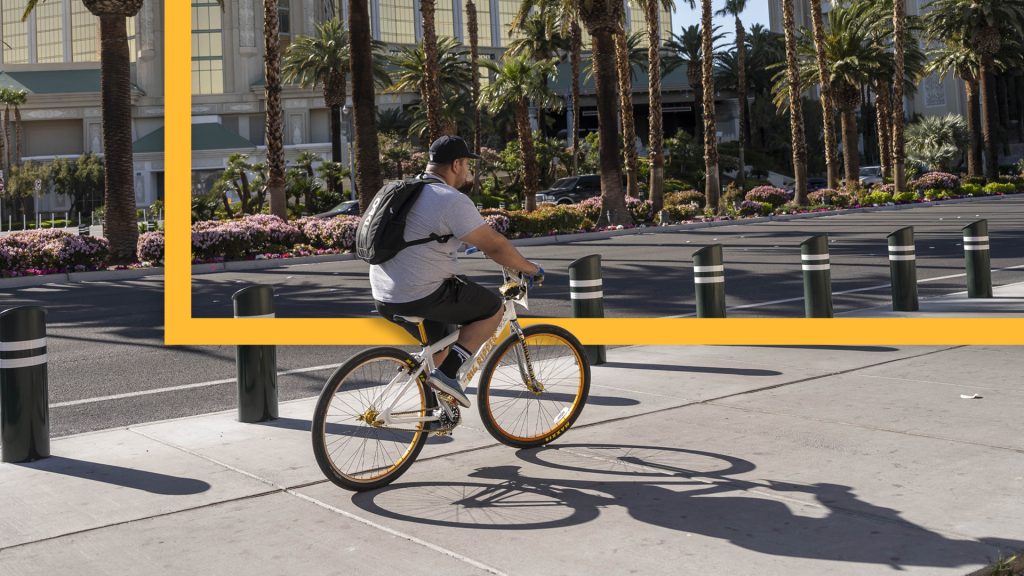
LAS VEGAS — Even as the heat exceeds 105 degrees, bar porter Arnold Arias rides his bicycle to work on the Las Vegas Strip as a means of saving at the pump, his tires hugging the shade to avoid the heat.
Arias has owned the same 1995 Toyota Celica for more than a decade. But with the rising cost of everything from gas prices to insurance premiums, he now wonders whether it’s time to sell it.
“Now that things have gone up, people [like me] have to consider whether driving is worth it,” he told Straight Arrow. “I didn’t think that would happen.”
According to a recent NPR analysis, the total cost of vehicle ownership – which includes fuel, maintenance, repairs and insurance – has risen dramatically in recent years, thanks to inflation and supply chain disruptions. USA Today reported that 40% of Americans say owning a car is becoming unaffordable as insurance premiums and repair costs continue to climb.
In Las Vegas, where driving has long been viewed as a necessity, workers are now reimagining their daily commute.

Why is car ownership unaffordable for so many Nevada drivers?
Nevada finds itself in a difficult bind. It has the highest price for car insurance in the nation, with an average of $335 per month. And the state already boasted the nation’s fourth-highest gas prices, even before this spring’s conflict with Iran, which pushed prices as high as $5.25 per gallon.
These stressors come at a precarious moment for Southern Nevada’s Regional Transportation Commission (RTC), which is considering raising bus fares to address a $118 million deficit. According to RTC planning documents, this could potentially force fare increases and service reductions of up to 40% in the coming years. That, coupled with an increase in rideshare drivers for companies such as Uber and Lyft quitting nationwide in the wake of rising gas prices, could seriously alter transportation access for wide swaths of the population.
READ MORE: How Waymo is changing the playbook for teens learning to drive
“We are facing similar challenges to other major cities, and we are trying to educate the community to let them know we need help,” said Catherine Busche, RTC’s senior director of engagement. “Transit needs a sustainable funding solution.”
Nevada is one of only three states that does not use statewide funding for public transit. Instead, the agency relies primarily on local sales tax revenue and fuel tax revenues that have remained largely unchanged for decades. It’s a funding system that Busche said has been outdated for several years.
“Our funding model hasn’t changed and our transit budget was only $237 million, which is the same budget we had in 2002,” Busche told Straight Arrow. “We’ve added new stadiums and sports teams, but the model hasn’t been keeping pace with the growth of the city.”
Nevada is among the fastest-growing states in the country, according to U.S. Census Bureau info. Hence the local jokes that Nevada’s state flower is the orange traffic cone.

Yet despite these archaic funding systems and rapidly growing population, the RTC remains both efficient and busy. Busche said the agency operates one of the busiest paratransit systems in the country, serving seniors and residents with disabilities who often have few alternatives.
“Many people told us transit is their lifeline to the community,” Busche said. “Two out of every three RTC riders do not have access to a car. Without it, they would be homebound.”
Can private tech project replace public transit?
RTC’s challenges arrive as the broader Las Vegas economy faces uncertainty. Tourism has softened in recent months, while consumers nationwide grapple with rising living expenses.
“As groceries, gas and rent rise through the roof with no end in sight, it gets harder for folks to get around,” said Ted Pappageorge, secretary-treasurer of Culinary Workers Union Local 226.
Although he strongly supports public transit, Pappageorge said he is unsure whether the RTC will be a priority in the next legislative session. Elected officials seem more interested in private-public transit investments like Elon Musk’s Boring Company, he said. The Boring Company developed the Vegas Loop, an underground tunnel network that transports passengers in Tesla vehicles beneath portions of the Las Vegas Strip and Convention Center. The project emerged from Musk’s earlier Hyperloop vision, which promised high-speed travel through vacuum-sealed tubes but has largely failed to materialize as a commercial transportation system.

Supporters argue the Loop provides an innovative solution to congestion, but critics have questioned its passenger capacity, reliance on automobiles rather than true mass transit and ability to meaningfully address regional transportation needs.
The project has also faced scrutiny over workplace safety and environmental practices: Nevada OSHA cited 800 environmental violations in 2024. Lawmakers later reviewed allegations involving worker injuries such as chemical burns suffered by firefighters during a training exercise and other environmental violations tied to wastewater disposal.
“One of our [union] members is 58 years old and she is saying they have to use a scooter to save money on gas and car insurance,” Pappageorge told Straight Arrow. “They are being left behind and the discussion of infrastructure needs to include how to move workers.”
Arias told Straight Arrow he is driving less often these days, and has considered returning to RTC buses, which he used before purchasing a vehicle.
Although he lives close to the Strip for work, Arias said route cuts could put those who take long car commutes at risk.
“You’re gambling on buses stopping on time, which they often don’t do. And if there are even less routes, you have to plan around it and it will get worse,” said Arias, who remembers a three-hour journey to a doctor’s office that would have been 25 minutes by car. “We need good, reliable public transportation. If there are cuts to routes, it’s going to hurt getting around and it’s hard to get around as it is.”

How do high gas prices affect public transit ridership nationwide?
That extends beyond Las Vegas.
“It is a national trend where transit is struggling financially,” said Sebastian Petty, senior transportation policy advisor at SPUR, a public policy organization focused on urban issues in California.
Petty said transit systems have faced rising labor costs, inflationary pressures and ridership declines that began before the COVID-19 pandemic. Ride-sharing services such as Uber and Lyft have also altered commuting habits in many cities.
READ MORE: Strait of Hormuz traffic is up. But for gas prices, uncharted waters remain
Still, Petty said rising fuel costs push some commuters toward public transit, and could even do so permanently.
“For every 10% increase in gas prices, there is a 2% increase in light rail and bus ridership,” Petty said.
“As those prices remain elevated, people begin making larger changes in their lives to avoid paying more at the pump,” Petty said. “Once people switch to transit, many don’t switch back.”
That creates a difficult paradox for transit agencies as rising transportation costs could encourage more residents to consider public transit. Some systems are also confronting financial crises that threaten their ability to maintain service and addressing it by raising fees.
Transit advocates like Petty and Busche refer to this as the “death spiral,” where agencies cut routes or raise fares to close budget gaps, causing ridership to fall further and creating pressure for additional cuts.
“Transit has to remain useful and attractive,” Petty said. “There is no way to cut your way to solvency.”

Busche said RTC is currently working with lawmakers ahead of Nevada’s 2027 legislative session in hopes of securing additional transit funding. If those efforts fail, Busche said they may eventually seek voter approval for new funding through a ballot initiative. That initiative, she said, would likely be an increase in sales tax for the state, which she told Straight Arrow would be very unpopular.
Transportation advocates argue the conversation extends beyond buses. For Pappageorge, the stakes are ultimately about whether Las Vegas can continue functioning as a world-class destination while ensuring workers can afford to move around the city.
“This economy doesn’t function without workers,” he said. “They’re being left behind, and the discussion about infrastructure needs to include how to move workers and have them afford it.”
Round out your reading
- Not red or blue: America’s politically homeless middle.
- Peter Thiel’s ‘Dialog’ network was super-secret. A data leak changed that.
- The novel legal strategy that Taylor Swift and Matthew McConaughey are using to fight AI.
- Illinois balances budget with new $200 million social media tax that tracks in-state users.
- When Trump serves up ‘Just the News,’ it comes with a side of bias.
Ella Rae Greene, Editor In Chief