Fruit farmers still feeling fallout from April freeze that killed their crops
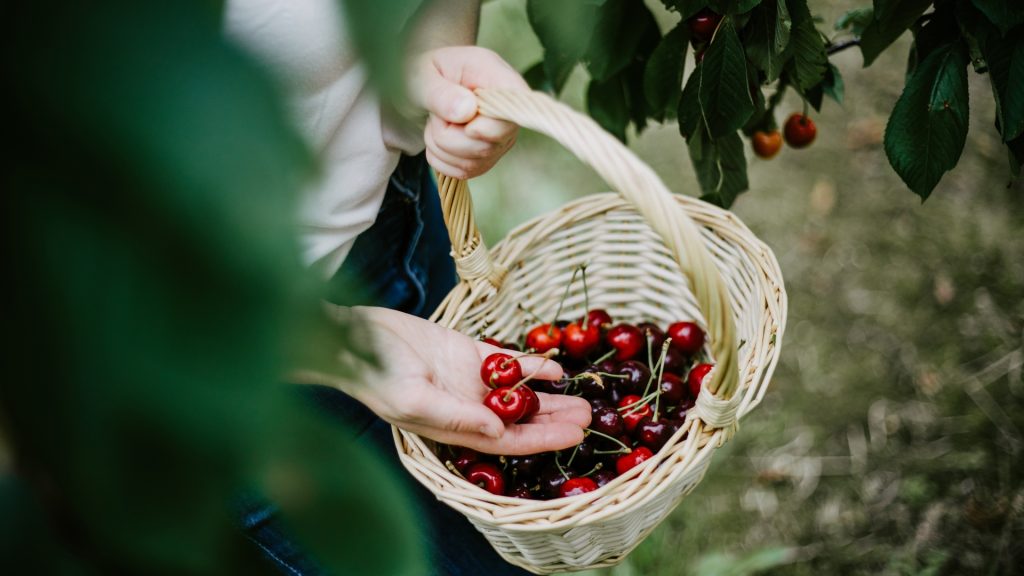
When unseasonably freezing temperatures in early April wiped out most of the fruit on one of Utah farmer Kent Pyne’s orchards, he was still hopeful he’d have at least some to sell.
He had a second orchard, which still had a full crop.
But then, two weeks later came a second freeze, “and we lost pretty much everything,” Pyne told Straight Arrow.
“When you have really cold temperatures and snow on the ground, and it’s windy, it’s kind of like a perfect storm,” Pyne said. “There’s nothing you can really do to mitigate that.”
Pyne, who grows fruits such as tart cherries, apples, peaches and pluots, says 99.9% of his harvest was affected.
“We’re talking well into six figures of loss,” Pyne estimated.
Pyne is one of many fruit farmers across the West, Mid-Atlantic and Northeast still feeling the effects of the April frost that killed their harvests.
Honey Bear Orchards in Pennsylvania lost 100% of its fruit crops for the year during the overnight hours of April 20, when it dropped to a low temperature of 24 degrees in Lebanon County.
The orchard estimated it lost around $200,000, local outlet WHP reported, but owner Nelson Heagy said the worst part is the “emotional” impact.
At Ela Family Farms in Colorado, Regan Choi and her husband, Steve Ela, have had to make “difficult logistical and financial decisions” due to the freeze, which left them unable to find a single live fruit, KUSA wrote.
“It’s not just our family that depends on this,” Choi said to KUSA. “There are a lot of families… who have worked for us for multiple years, and we’re having to reach out to them and say we have some sad and bad news.”
Finding enough labor is already a challenge in agriculture, with many farms relying on H-2A visas to bring in workers from other countries, Matt Hargreaves, vice president of communications for the Utah Farm Bureau, said in an interview with Straight Arrow.
With no harvest and not as much work for them to do, some of these workers had to go home, Hargreaves said. While many of them have worked with the same farmers for decades, and come back year after year, there’s no guarantee they’ll return, he added.
“There definitely can be impacts there,” Hargreaves said.
Crop loss of this magnitude doesn’t mean farmers aren’t still working just as hard.
“Part of the irony is that the trees are still alive, just all the fruit buds died, so they have to do everything still,” Hargreaves said. “They have pruning, they still have to water the trees, they still have to take care of all those things — they just don’t get a harvest at the end to offset that.”
Pyne says he’s “just as busy” as he’d normally be around this time. With no fruit, there’s less spraying, so he’s concentrated on fixing equipment and completing projects put on the back burner for the last few years.
Some farmers Hargreaves spoke to picked up other jobs to pay the bills, whether it’s hauling equipment for other agricultural equipment dealers or flipping houses.
With other crops, such as tomatoes, or watermelons or onions, farmers can replant after adverse weather conditions. They can’t do the same with fruit trees.
“You get one crop a year, and you can’t rip out trees,” Hargreaves said.
Assistance for fruit farmers
Many farmers have insurance, but Hargreaves said this can be somewhat limited.
“Some growers may get about 50% coverage or return of their revenue, some may get up to 70%,” Hargreaves said.
The United States Department of Agriculture has been designating counties in affected states as “natural disaster areas” because of the freeze. Just last week, 17 New Jersey counties and 12 in Maryland were given this designation, which allows the USDA to give emergency loans to farmers.
These loans can be used for a variety of needs, such as replacing equipment or livestock, reorganizing a farming operation and refinancing some debts. Such loans are given out based on “the extent of losses, security available and repayment ability,” according to the USDA.
“Maryland’s farmers are the backbone of our state’s economy, our heritage and our food security,” Gov. Wes Moore said in a statement. “When our agricultural community faces unprecedented climate challenges through no fault of their own, it is our duty to respond with urgency. We are grateful to [Agriculture] Secretary [Brooke] Rollins and our federal partners at the USDA for their swift, collaborative response.”
William Anderegg, a climate scientist at the University of Utah and the former director of the Wilkes Center for Climate Research and Policy, told High Country News that while scientists can’t tie a single frost-caused crop failure to climate change, warming springs are changing the odds, which effectively “loads the dice” for damaging frosts in the near future.
Customers remaining loyal through challenges
Even without his usual fruit, Pyne’s been able to generate some money through selling apple cider kept in the freezer from last year’s crop, along with cider treats.
“I’ll make it through the year, but it’s going to be definitely a lean year,” Pyne said. “I just have to watch my expenses, and just take it easy.”
A concern that crossed Pyne’s mind through this was losing some of his customer base because he didn’t have fruit to sell. But his customers are pretty loyal.
During his first big weekend at the farmers’ market, he sold apple cider slushies and cider donuts.
“We had a lot of people turn out,” Pyne said. “It was actually a really good weekend.”
People recognize farmers are in a tough spot right now. One of Pyne’s customers even set up a GoFundMe for him.
“A lot of people have come up and talked to us about the crop loss, and their hearts go out to us,” Pyne said.
This has given him “the motivation to hope for a better year, and to make the customers happy.”
Farmers, Hargreaves noted, are an optimistic bunch.
“They’re always hopeful that it’s going to be better next year,” he said. “We’ll get through, but it’s going to be tough.”
Round out your reading
- Not red or blue: America’s politically homeless middle.
- Peter Thiel’s ‘Dialog’ network was super-secret. A data leak changed that.
- The novel legal strategy that Taylor Swift and Matthew McConaughey are using to fight AI.
- Illinois balances budget with new $200 million social media tax that tracks in-state users.
- When Trump serves up ‘Just the News,’ it comes with a side of bias.
Ella Rae Greene, Editor In Chief