Federal judge pauses executive order on mail-in ballot lists, USPS’ role in elections
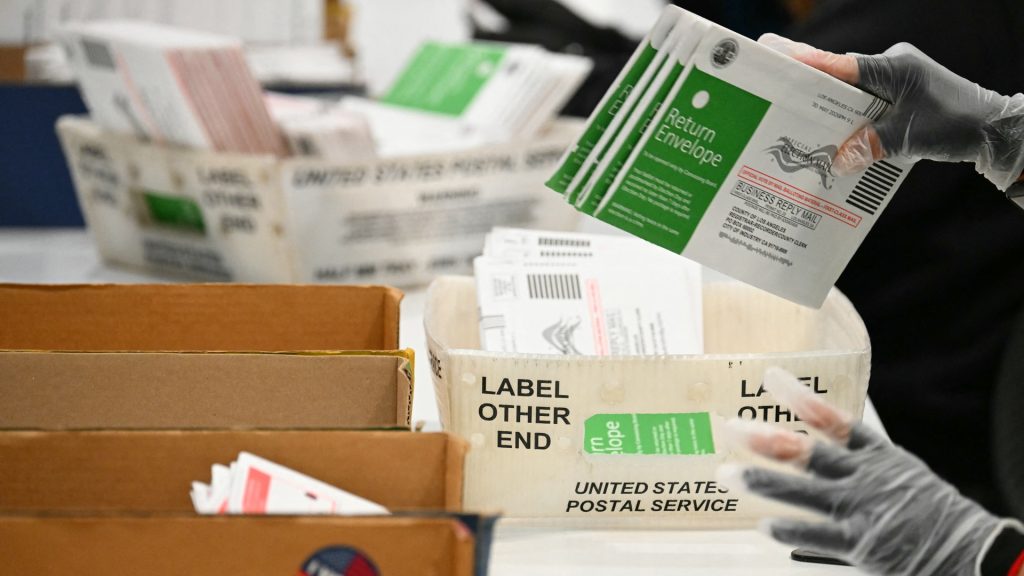
A federal judge blocked Postmaster General David Steiner’s plan to withhold ballots from the 23 states refusing to comply with an executive order on voter rolls. The Massachusetts judge also nullified the order as unconstitutional, killing President Donald Trump’s plan to establish a national voter list.
Judge Indira Talwani struck down Trump’s March 31 executive order, writing that despite its target on federal elections (presidency, vice presidency and congressional), the order violated states’ rights to maintain their own elections. She added Congress had not authorized the U.S. Postal Service to maintain such a list or to withhold ballots from states that refuse to comply.
Steiner informed senators on Wednesday at the Senate Homeland Security Committee that he sought to retain ballots, as written in the executive order. The plan was formally proposed in the Federal Register, adding that the Postal Service would establish a digital platform and other means to verify people’s eligibility to vote.
“All that does, senator, is make sure that we match the ballots that a state believes they’re sending out to what actually gets sent out,” he told U.S. Sen. Gary Peters, D-Mich., who questioned him about the rule.
Talwani kept the ruling narrow, only applying to federal elections held between Thursday and Nov. 3.
The Trump administration hasn’t commented on the order or Steiner’s comments as of Thursday afternoon.
Order established federal list, investigations
Despite having voted by mail in Florida elections, Trump signed the order in the spring, saying voting by mail isn’t secure and needs reform. He intended the order to give states a “comprehensive view of who the eligible voters in their jurisdiction actually are.”
But as Talwani wrote, states retain control over their elections, even when it involves electing someone to federal office.
In the order, Trump directed the U.S. Department of Homeland Security to compile a list of voting-eligible citizens using multiple federal databases and then send the information to states ahead of the elections. One of the programs to be used is the Systematic Alien Verification for Entitlements program, which has faced previous criticism on its verification of an immigrant’s legal status in the U.S.
The House passed legislation in February that built on Trump’s plan to strengthen voting eligibility in U.S. elections with the SAVE America Act. It has stalled in the Senate. The act is not named after the verification program.
Trump’s order also gave the Justice Department authority to investigate violations and withhold funds from states that refuse to comply with the national voter database. Other provisions in the order violated states’ authorities to administer elections, Talwani wrote.
No rolls, no vote
Section three of the order directed Steiner to establish the contested rule to only furnish ballots for people on the mail-in or absentee ballot list. Steiner expanded the requirement in vowing not to deliver ballots in states that refuse to comply with the rule.
“Any state that intends to receive mail-in or absentee ballots from individual voters through the Postal Service must ensure that such individuals have been enrolled with the Postal Service for inclusion on the state’s Mail-In and Absentee Participation List,” according to the rule.
The federal judge in Massachusetts added that the USPS’s provision to withhold ballots lacks authorization and is “merely recommended” as Congress never permitted the Postal Service to control mail-in voting. The judge added the timeline given in the executive order, and the rulemaking left Congress little to no time to debate the rule.
If it had proceeded, the rule would have affected the District of Columbia, California, Colorado, Hawaii, Nevada, Oregon, Utah, Vermont and Washington, all of which primarily vote by mail, according to the National Conference of State Legislatures.
“Other than the president, defendants and their officers, agents, servants, and employees are hereby enjoined from implementing or giving effect to Sections 2 and 3 of the EO with respect to the November 3, 2026 or any earlier federal election in the plaintiff states,” the judge wrote.
Round out your reading
- Not red or blue: America’s politically homeless middle.
- Peter Thiel’s ‘Dialog’ network was super-secret. A data leak changed that.
- The novel legal strategy that Taylor Swift and Matthew McConaughey are using to fight AI.
- Illinois balances budget with new $200 million social media tax that tracks in-state users.
- When Trump serves up ‘Just the News,’ it comes with a side of bias.
Ella Rae Greene, Editor In Chief