Companies reduced support for LGBTQ+ in the face of politics, legal issues
Layne Ingram has worked at Lansing Community College in Lansing, Mich., for nearly 14 years, but not always as Layne Ingram. He told Straight Arrow that about four years into the job, he came out as a transgender man.
Ingram said he came out through a local newspaper as his family is well-known at the college. Days later, he said the college changed his nameplate, email address and “welcomed and supported me,” he said.
“When I fast-forward to now, there’s some security in presenting and just people meeting you as you, but I certainly don’t shy away from the topic,” Ingram said. “I don’t care if anybody knows, but it is interesting to know the difference between people who know I’m trans at work versus people who don’t.”
Lansing Community College is special, he said, as various levels of management are proud to support him and him being trans. But, Ingram’s story might be turning into an exception rather than the norm. A Harris Poll survey of 650 LGBTQ+ adults found that about 64% of those polled have self-censored or changed behaviors at work due to the current social and political climate.
The survey also revealed that 62% of LGBTQ+ respondents noticed a drop in how their jobs talk about LGBTQ+ employees or issues. It’s trickled down to workers who aren’t part of the LGBTQ+ community, where just over half said a company’s support of LGBTQ+ employees affects their perception of leadership.
Ingram is in an online support group for trans men and has heard from people aged 19 to 55 who either came out or are still closeted due to the dangers of harassment.
“I’ve heard stories from the guys about people outing on purpose or people making jokes or asking very forward questions that you wouldn’t ask in real life,” he said.
One of the country’s largest employers is the federal government. After taking office, President Donald Trump directed the administration to change how transgender people are treated by the federal government. He said in a day-one executive order that the change was necessary to reflect a belief that a person’s gender cannot be changed.
“It is the policy of the United States to recognize two sexes, male and female,” Trump wrote. “These sexes are not changeable and are grounded in fundamental and incontrovertible reality.”
Decline in DEI support didn’t materialize
The Trump administration’s change in how diversity, equity and inclusion is promoted at work has forced many companies to end support efforts in fear they’d face lawsuits. In addition to Trump’s executive order, the Departments of Justice and Labor have threatened legal action against companies for DEI practices they label as discriminatory.
HR Brew, a trade publication, reported in January that 63% of the nation’s Fortune 100 companies rebranded or eliminated DEI messaging that many implemented following the 2020 protests against George Floyd’s murder and racial inequalities.
The Human Rights Campaign has rated companies on its Corporate Equality Index since 2002, assigning scores for places it says have implemented rigid non-discrimination policies, equitable benefits for LGBTQ+ employees, inclusive internal culture and external outreach and engagement.
For 2026, the HRC said 534 companies earned a perfect score of 100 on the index, a 30.2% decrease from 2025. The top companies represented nearly 6 million employees. Some of the top scoring companies included Adidas North America, Apple, Marriott and Stellantis.
The campaign contacts employers on Fortune magazine’s 1,000 largest publicly- and privately-traded businesses, the American Lawyer magazine’s top 200 revenue-grossing law firms and any private or for-profit employees with at least 500 full-time U.S. employees.

“While in total, 2026 CEI-rated companies employ over 22 million U.S. employees,” according to HRC, “fewer employers chose to publicly document their practices through CEI submissions, with a 65% drop among Fortune 500 companies this year (from 377 Fortune 500 companies in 2025 to 131 in 2026), many of whom hold federal contracts.”
Despite the drop, the HRC found that companies participating in the index were expanding their employee policies and benefits. That’s true for Ingram, who said Lansing Community College’s president was slow and deliberate in amending the college’s programming and internal practices on DEI.
“While we may have had to update some language here or there because you do want to stay off the radar, we’ve certainly stuck to our principles.”
Increasing support where it doesn’t exist
For non-LGBTQ+ employees, The Harris Poll found that just over two-thirds said their employers’ treatments of LGBTQ+ employees is important to them and assures trust in leadership.
Of the 2,432 non-LGBTQ+ employees surveyed, 47% said they notice it when a company becomes quieter about inclusion. Harris Poll also found that the majority of LGBTQ+ employees identified at least one action item that would make them feel more supported at work.
Those changes, selected in a multiple-choice format, included implementing clear anti-discrimination policies, inclusive health benefits, visible senior leadership support and showing public support during debates.
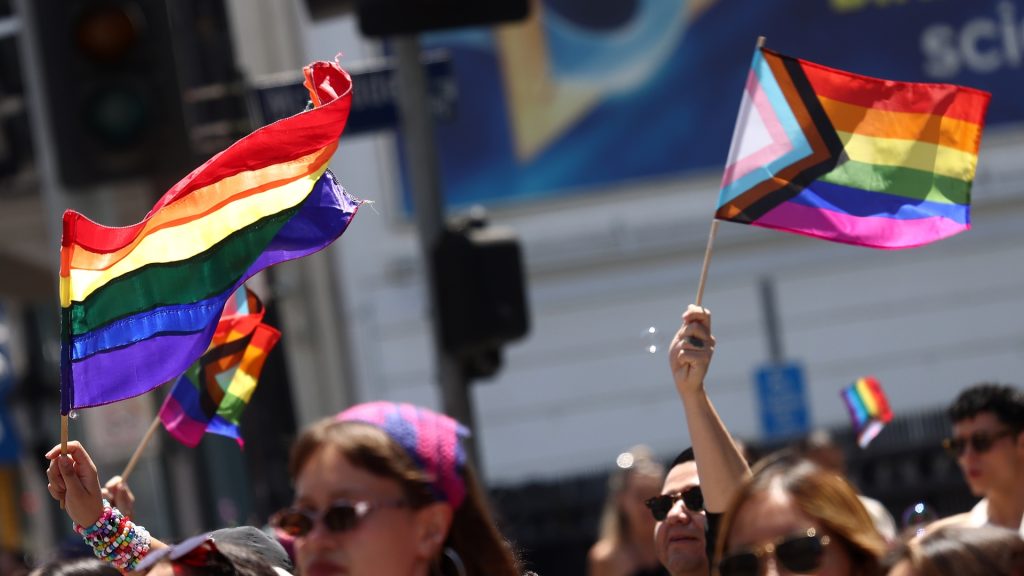
Ingram said that people can signal support by allowing display of pronouns in signatures, allowing affinity groups, displaying Pride flags or other items that show they’re a safe person to confide in.
“It’s such a low bar that there’s so many, very simple things that can signal to people that they’re seen, that you care or that they’re valued,” Ingram said.
Round out your reading
- Could a common dietary supplement accelerate Alzheimer’s?
- NY AG Letitia James gets hundreds of taunts, racial slurs in ICE public reporting portal.
- As Musk becomes the first trillionaire, historian sees warning signs.
- An experimental weight loss drug is so effective, many Americans don’t care it’s not FDA approved.
- How search engine optimization reduced Simone Biles to an ‘NFL wife’.
Ella Rae Greene, Editor In Chief