Chicago’s parking saga: What other cities can learn from ‘the worst deal of the century’
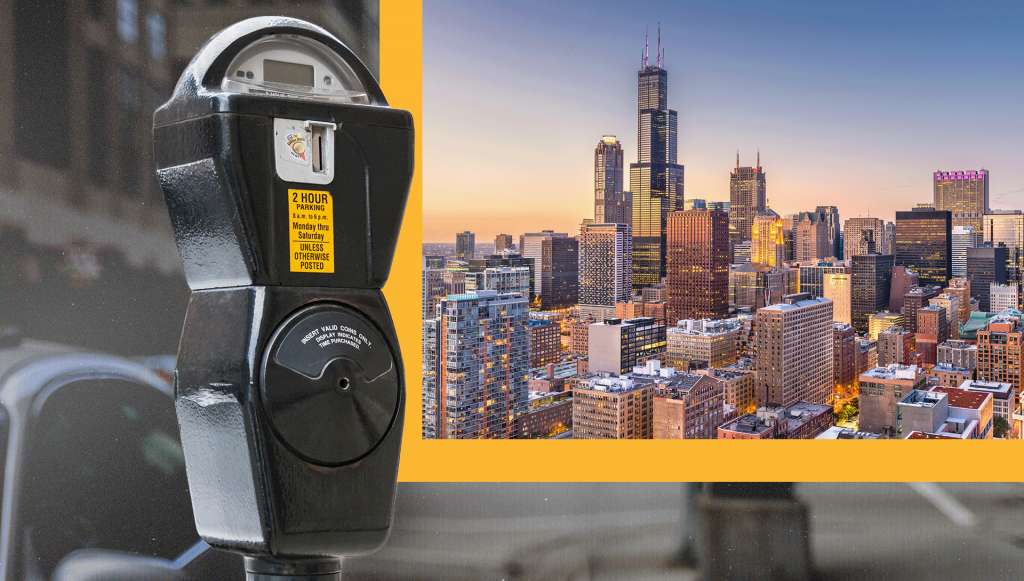
Chicago’s struggle to reclaim its streets from a 75-year private parking lease has morphed into a what-not-to-do case study for city planners across the U.S. While the deal originally provided a $1.2 billion “quick fix” for a 2008 budget crisis, Mayor Brandon Johnson told Straight Arrow News that the cost to buy back the meters now is “far too high.”
Experts told SAN that the situation serves as a high-stakes warning for other cash-strapped cities: An upfront cash infusion today could result in a loss of local control and revenue that can last for generations.
City officials have been forced to retreat from plans to buy out the lease for the parking meters it sold nearly two decades ago. The lost revenue and increasing ticket prices for Chicagoans has made the deal, set to expire in 2083, burdensome to residents.
The meters went up for a bid last summer, and multiple bidders, including the city, were interested. But Johnson told SAN that the city decided against it due to the cost.
“The final purchase price is far too high, much more than we initially received for the sale and higher than most reasonable assumptions would support,” Johnson said.

Why did Chicago sell off its parking meter revenue?
Under Richard M. Daley in 2008, the city inked a deal with a private company, Chicago Parking Meters, LLC, in which the company paid $1.2 billion upfront for 75 years worth of parking revenue. According to the Chicago Sun-Times, the investors recouped their investment by 2022 and have since turned a profit.
The city is now facing a $1.2 billion budget shortfall for the 2026 fiscal year, with a $146 million deficit that must be filled by the end of the year. A city-commissioned audit commissioned indicates that the parking meters generated $160.9 million in income for the parking meter owners in 2024.
Chicago Parking Meters, LLC — operating as ParkChicago — is a partnership consisting of Morgan Stanley, Allianz Capital Partners and the Sovereign Wealth Fund of Abu Dhabi. In addition to plugging holes in the budget, the 2008 deal was also prevented a rate hike on Chicago’s historically high property taxes.
Chicago resident Kyle Cotsones told SAN he is both frustrated and angry about the long-term damage caused by the deal.
“This is like having our own land sold out from under us,” he told SAN. He added that the city is staring down “75 years of money that could be put back into our own communities.”
Alderman Scott Waguespack — one of five votes against the 2008 parking meter deal — told SAN the deal has panned out even worse than he anticipated.
“This was the worst deal of the century for any [American] municipality. It locks the city into a lease for several lifetimes that nobody can break,” said Waguespack, the only naysayer from 2008 who is still in office.
Waguespack’s ward, which consists of upper-middle class neighborhoods like Wicker Park on the west side of the city, has seen parking meter rates increase from $0.25 an hour to $4.25, he said. Now, an hour of downtown parking can cost $7. The city has the highest parking fees in the country and second highest in the world only behind Amsterdam.
As meter costs rise, so does the amount of meters in previously free areas. As many as 400 meters were installed in the West Loop in 2024 alone, with more planned throughout the city.
Justin Marlowe, a public policy professor at the University of Chicago, told SAN that while privatization deals can allow a government to leverage private sector expertise and save money over time, the city’s deal was far too costly and put Chicago at a massive disadvantage.

A lasting legacy
“I think it’s fair to say the Daley administration did not understand what they were giving up. There was no good benchmark for these types of deals, and they really didn’t have any leverage in the negotiation,” Marlowe said. “The investor group knew the city was desperate to take down the upfront payment and leveraged that to full effect.”
Cotsones said he’d like to see the city remove meters, or simply stop enforcing them. But that would be legally damaging: According to the deal, Chicago must compensate the parking meter company for lost revenue if metered spaces are removed or rendered unusable, due to street construction, bike lanes, bus lanes, festivals or for other public uses.
Attempts to break up the deal in court have also fallen short, with the U.S. Court of Appeals for the Seventh Circuit striking down an antitrust challenge in 2023. Last year, the city settled a lawsuit with Chicago Parking Meters, LLC over its lack of parking meter enforcement during the pandemic.
In addition to the parking tickets, red light and speeding cameras — which issue tickets to motorists going even 6 miles over the speed limit — also generate a high number of tickets and frustration. In recent years, Chicago issued more tickets to drivers than there were people living there.
And those tickets aren’t always distributed equitably. Black and Latino motorists are far more likely to be issued fines for traffic lights, parking meter enforcement, vehicle booting and traffic stops, even in white areas of the city.
“I’m very fortunate to be more than gainfully employed, but I can’t imagine how it affects those in a less fortunate position,” said Cotsones, who pays about $20 a week in parking. “We are giving money away to already rich groups for the privilege of parking on our own streets. This makes no sense.”
Like many Chicagoans, he has a list of stories about friends parking in what they thought was a legal fashion, only to face a steep ticket or three-figure impound fee after being towed.
“It’s not the cost that bothers me,” Cotsones said. “It’s the fact that our streets were sold out from under us and the fees we pay are only enriching the wealthy, and not going towards our city. I feel a moral obligation to be fully against this.”
Public-private partnerships are not inherently bad ideas, Marlow said. They can address numerous fiscal issues such as aging infrastructure, constrained budgets and deliver projects while shifting financial risk to private investors.
“Privatizations like the Chicago parking meters, Chicago Skyway and Indiana Tollway have generally not worked well in the U.S.,” Marlowe said. “That model is much more common in Europe and in other places where those types of public infrastructure have been provided mostly by the private sector.”
Other cities have also had similar parking meter deals over time. In 2010, Indianapolis entered a 50-year parking meter concession agreement with ParkIndy, receiving a $20 million payment with a two-tiered revenue-sharing model.
Unlike Chicago’s model, Indianapolis receives 60% of revenue, and that revenue has grown from approximately $340,000 in 2010 to $8.9 million in 2024. The Indianapolis deal has faced criticism for doubling parking rates and requiring the city to compensate the vendor for lost revenue during street closures.
Wauguespack said that city officials in Indianapolis, Toronto and Dallas have leaned on his expertise on what not to do with privatization efforts.
Despite the cost, neither Marlow nor Wauguespack see a path forward for unraveling the deal that doesn’t involve paying $3 billion to the investors. Wauguespack told SAN that there will be an eventual financial “curve” that would allow the city to buy back the meters when they become less profitable — but, he noted, the revenue will never reach the value it once held.
“I can understand the Mayor’s desire to explore it. This is a visceral, emotional issue for many Chicagoans,” Marlowe told SAN. “Many consider it a real injustice. If the Mayor could address that injustice, he’d endear himself to many likely voters. But it’s just not financially feasible.”
Ella Rae Greene, Editor In Chief