Can a $17.5B federal loan for 10 nuclear plants solve America’s power crunch?
The U.S. taxpayer will help the nuclear power industry construct 10 new power plants under a proposal from the U.S. Department of Energy (DOE). A $17.5 billion loan package announced Tuesday aims to assist power companies in financing long lead times in the nuclear supply chain that have hampered reactor construction.
Energy Secretary Chris Wright framed the loans as accomplishing President Donald Trump’s call for a “nuclear renaissance.” In a Tuesday press release, Wright said, “these conditional loans will play an important role in reviving the supply chain needed for America to once again build large-scale commercial reactors.”
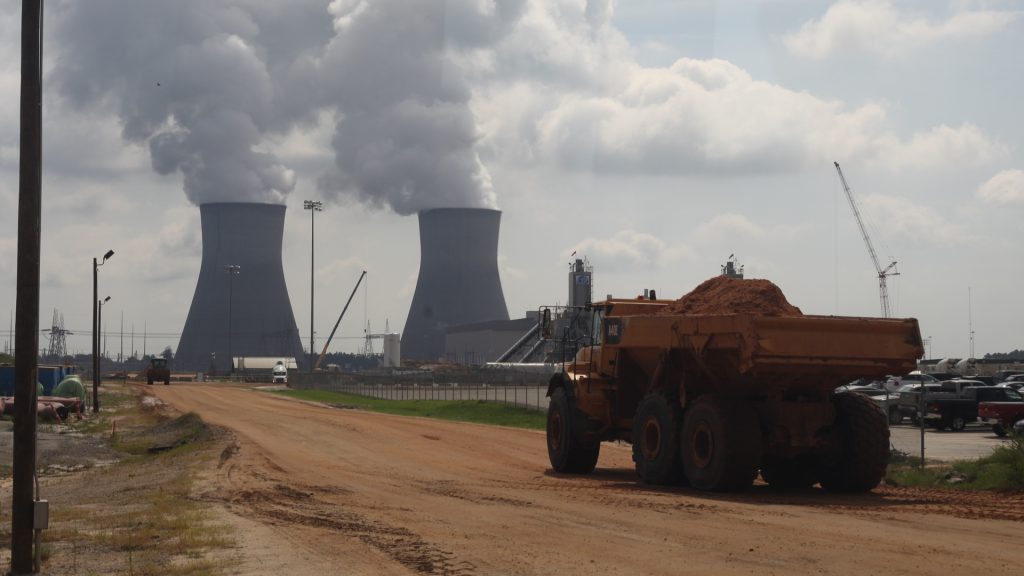
In the past 30 years, the U.S. has only built three new large-scale nuclear reactors. The two most recent constructions — Georgia Power’s Vogtle units 3 and 4 — took more than 14 years to complete.
Electricity demand is projected to rise due largely to data centers that run artificial intelligence tools. By 2028, data centers are expected to use 7% to 12% of all the electricity produced in the U.S., according to the DOE. Big Tech has become a major nuclear power investor. The technology also has bipartisan appeal because it provides around-the-clock electricity, and although nuclear waste must be managed, electricity production does not produce climate-warming emissions.
The nearly $18 billion loan offering is the largest effort to build power plants yet from an administration that has prioritized nuclear alongside coal and natural gas while sidelining renewable energy.
What are the details of the DOE loan proposal?
The DOE loans include a partnership with Westinghouse Electric Company, the designer of the nuclear power units in Georgia. To qualify for the loans, potential developers must build Westinghouse’s AP1000 nuclear reactor model; funded projects will be jointly owned by Westinghouse and a partnering utility company.
The loans are intended to help procure materials needed for construction, which is one of the longest, costliest bottlenecks to nuclear power development.
The DOE outlines the goal to fund five power companies that will build two AP1000 reactors alongside Westinghouse, with construction underway on all 10 by 2030. Both Westinghouse and the partner company are required to commit $500 million upfront for their projects to qualify for federal funds.
The projects could each receive $3.5 billion in federal funds. The Vogtle nuclear plants cost an estimated $30 billion to complete, according to the U.S. Energy Information Administration.
Each of the Westinghouse AP1000 reactors will be capable of generating 1.1 gigawatts of power, according to the DOE. That’s half the output of the Hoover Dam and enough power for several hundred thousand to 1 million homes, depending on seasonal demand.
How is the nuclear industry reacting?
Within the nuclear industry, the loan announcement has triggered a rush of excitement.
In a statement shared with Straight Arrow, the Nuclear Innovation Alliance President and CEO Judi Greenwald called the initiative “game-changing” and welcomed the “approach to finance the purchase of long-lead components, rebuild the supply chain for nuclear energy, and deliver lower and more predictable costs.”
Westinghouse CEO Dan Summer pointed to why the financing matters now.
“If we want to lead in artificial intelligence, advanced manufacturing and the industries that will define the next century – we need more American baseload energy,” Summer said in a press release celebrating the announcement.
Nuclear power also has its share of skeptics who point to high upfront costs and the need to manage nuclear waste. On the 40-year anniversary of the Chernobyl disaster, industry analysts spoke with Straight Arrow, warning that ongoing rollback and revision of rules by the Nuclear Regulatory Commission raises the nuclear industry’s risk profile.
And there are others who believe the government should not put its weight behind one energy technology over another.
“Remove the state barriers and the federal favoritism and let companies build the power plants that pass the market test,” Travis Fisher, director of energy and environmental policy studies at the libertarian-minded Cato Institute, told The Associated Press.
Round out your reading
- Not red or blue: America’s politically homeless middle.
- Peter Thiel’s ‘Dialog’ network was super-secret. A data leak changed that.
- The novel legal strategy that Taylor Swift and Matthew McConaughey are using to fight AI.
- Illinois balances budget with new $200 million social media tax that tracks in-state users.
- When Trump serves up ‘Just the News,’ it comes with a side of bias.
Ella Rae Greene, Editor In Chief