California workers say Newsom’s return-to-office order is environmentally illegal
Getting almost every American to agree on one thing is a tough sell, but not when it comes to working remotely. A whopping 95% of workers want at least some form of it.
That includes state workers in California who may be losing some of their remote options. Now, those state workers are threatening to use a controversial state environmental law to block Newsom’s order.
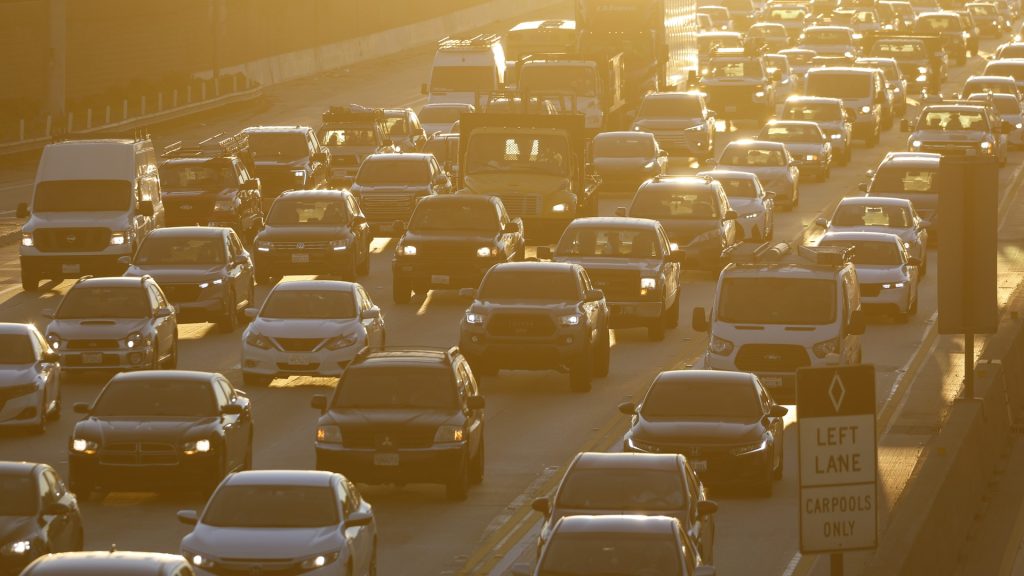
A union representing thousands of those workers argues that returning people to the office will put tens of thousands more cars on the road and thus undermine California’s efforts to move closer to carbon neutrality.
Newsom order
Gov. Gavin Newsom issued a return-to-office executive order last year.
“In-person work makes us all stronger — period,” Newsom said at the time. “When we work together, collaboration improves, innovation thrives, and accountability increases.”

His order required state agencies to require people to be in the office at least four days a week by July 1, 2025.
When Newsom originally put this order on the table, state workers used AI to make billboards saying Newsom was mandating more traffic on the roads.
That mandate was postponed for one year after intense pushback from several unions.
CEQA push
Now one union is citing the California Environmental Quality Act, or CEQA, to prevent that order from taking effect on July 1 this year.

Enacted in 1970 by former Gov. Ronald Reagan, it requires public agencies in the state to consider the environmental consequences of their actions before taking them.
The California Attorneys, Administrative Law Judges and Hearing Officers in State Employment, or CASE, represents some 5,000 state workers.
They wrote a 194-page letter to the Attorney General’s office explaining why Newsom’s order cannot be allowed to stand right now.
“The Agency/Department’s RTO order will require hundreds of thousands of additional monthly commutes by state workers, creating hundreds of thousands of new car trips and thousands of tons of additional air pollution from automobile tailpipes,” the letter reads.
They’re proposing that agencies planning to follow through on Newsom’s order must conduct environmental studies before that’s allowed.
They’re now demanding an environmental impact review.
“A lot of times, when people sue under CEQA, they just want to kill the project, they want to set it aside, they don’t want it to happen,” Art Coon, shareholder with the law firm Miller Starr Regalia, told Straight Arrow. “Sometimes, they really do want to study, and sometimes they really do want feasible mitigation measures.”
CASE has made it clear that they will move forward with legal challenges if their demands for these reviews are not met.
Will it work?
The union’s vice president, Matthew Gauger, told The Merced Sun Star they “expect to be very successful.”
But will they?
“It’s a complex question,” Coon said.
Numerous state agencies are subject to this executive order.
“There may be some state agencies that are bound to follow it, and there may be other state agencies that don’t have to, as a matter of law,” Coon said.
The governor’s office is not a public agency within CEQA, so the order is not directly subject to CEQA.
The union’s argument is that the choice to follow the order is a discretionary one. If that’s the case, it would fall under CEQA rules.
And their argument is that more traffic means more pollution.

Newsom seems ready to move forward with his plan. He sent a letter to his cabinet secretaries last month telling them to prepare for workers to be back in the office on July 1.
“A lot of times the feasibility of mitigation is a policy matter,” Coon said.
Even if the unions are successful in obtaining an environmental impact report (EIR), it doesn’t necessarily mean they’ll achieve their long-term goal.
Conducting that review could again postpone Newsom’s order, but may not keep them out of the office indefinitely because of Newsom’s goals with the order, which include more interaction, accountability, efficiency and more.
“Even if the plaintiffs filed suit and succeeded against some agencies that were subject to CEQA in getting an EIR, that it might ultimately just be an interesting study, and conclude that, well, the mitigation that they want, which is to keep the status quo, isn’t feasible because it doesn’t achieve the governor’s objectives,” Coon said.
Ella Rae Greene, Editor In Chief