Brass tacks on the gas tax, and hidden hurdles to Trump’s proposed pause
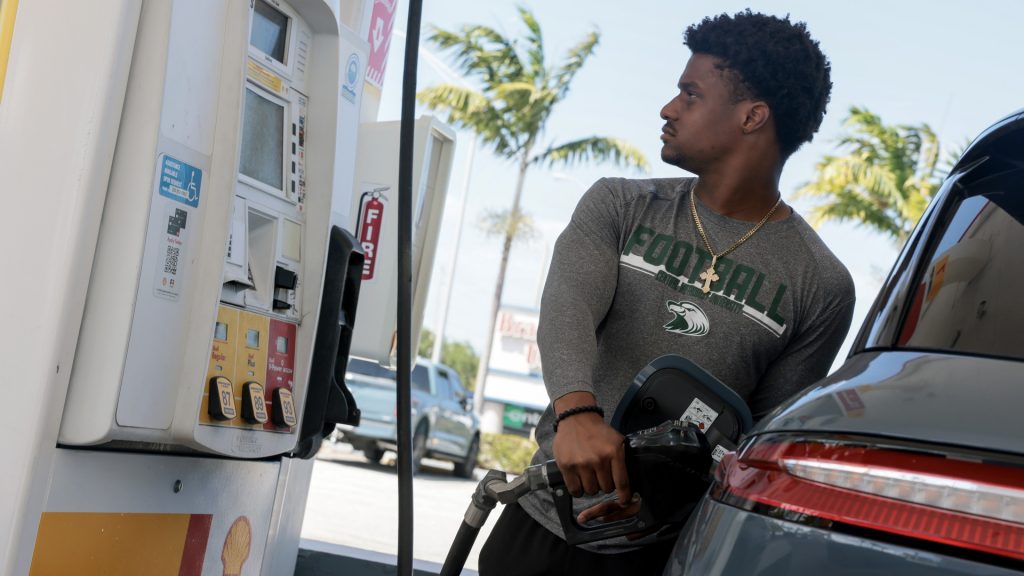
President Donald Trump said that he wants to suspend the 18.4-cent federal gasoline tax to help drivers save at the pump. The announcement comes after talks with Iran fell apart over the weekend, sending oil prices on yet another incline as U.S. consumers face gasoline prices north of a $4.50 national average.
Oil and gasoline prices will “drop like a rock” once the war ends, Trump said Monday; until then, he said, he wanted to waive the federal fuel tax. Gas now costs Americans about $1.35 more per gallon than before the onset of the war with Iran.
Revenue from the gasoline tax and a 24-cent tax on a gallon of diesel fund two Department of Transportation accounts within the Highway Trust Fund: a large share for highway maintenance and a smaller amount for investment in public transportation. To suspend the tax, Trump would need Congressional Republicans to pass a bill.
How is Congress reacting?
Republicans in the House and Senate reacted swiftly with plans to introduce bills that would suspend the gas tax — but support is not universal.
Sen. Josh Hawley, R-Mo., put forward the Gas Tax Suspension Act, which would pause the gasoline and diesel taxes for 90 days after the bill is signed. Rep. Anna Paulina Luna, R-Fla., said in a social media post she would introduce similar legislation in the House of Representatives.
“American workers and families deserve immediate relief and this legislation will do just that,” Hawley said, in a press release.
But for now, the GOP does not appear united.
“Instead of suspending the tax, we should suspend the war,” said Sen. Rand Paul, R-Ky., The Associated Press reported.
Democrats have pushed for a gas tax holiday since March with a proposal to suspend the tax until Oct. 1.
“Let’s get it done,” Sen. Mark Kelly, D-Ariz., posted on X. Kelly is a co-sponsor of the Democratic proposal in the Senate.
The role of state taxes
Every state apart from Alaska has state taxes and fees on gasoline that exceed the 18.4 cents-per-gallon federal tax. While Alaska’s state taxes amount to about 9 cents, the other 49 states range from 19 in New Mexico to 71 in California.
The difference in state taxes is a main driver of regional price variations in how much a gallon of gasoline costs, according to Patrick De Haan, head of petroleum analysis at GasBuddy.
Several states have already suspended their gas tax. Georgia lawmakers were the first to act in March, suspending gas taxes via legislation for 60 days. Last week, Indiana Gov. Mike Braun renewed his state’s gas tax holiday for another 30 days after first taking action in April. Utah and Kentucky have opted for a temporary reduction in the gas tax rather than a complete pause.
Pausing state gas taxes is “ becoming a pretty popular refrain,” De Haan told Straight Arrow, in part because the policy “eases political pressure” that’s building over high prices.
Are there potential downsides?
Much like the federal government, states typically use gas tax revenue for transportation projects. But the money has also been allocated to education and other public services, or even used to plug holes in general budgets. A gas tax holiday means states must make cuts or find the money another way.
Nationally, the balance in the Highway Trust Fund has been declining since September 2025, according to data from the Federal Highway Administration. And an April report from the Bipartisan Policy Center shows the fund has run at a $13 billion deficit through the previous fiscal year.
“A suspension would provide modest, temporary relief to consumers at the pump, but in doing so, would blow another hole in the federal deficit,” the report stated. It found that five months of a gas tax holiday would cause the fund to lose out on $17 billion in revenue — a figure that translates to about $3.4 billion per month.
There’s also a risk that if consumers suddenly see gas prices drop by 18 cents — or more when couples with waiving state gas taxes — it could induce more gasoline demand, according to De Haan. As drivers weigh potential summer road trip plans against high prices at the pump, more drivers may choose to hit the road if lawmakers suspend fuel taxes.
“When you do this in the summer, Americans are going to take full advantage,” De Haan said. “You want to be careful because it can backfire and it can drive prices higher.”
Round out your reading
- Are aliens real? Pentagon’s newly released UFO files suggest the truth is out there.
- A million Americans get this knee surgery every year. But does it work?
- Is the apocalypse now? One man is tracking flights by the rich to find out.
- ‘No Mow May’: A boon for the bees or a well-intended mistake?
- We’re building a new Straight Arrow. Help us shape our future by taking our survey.
Ella Rae Greene, Editor In Chief