As diesel prices climb, truckers start cutting back – and slowing down
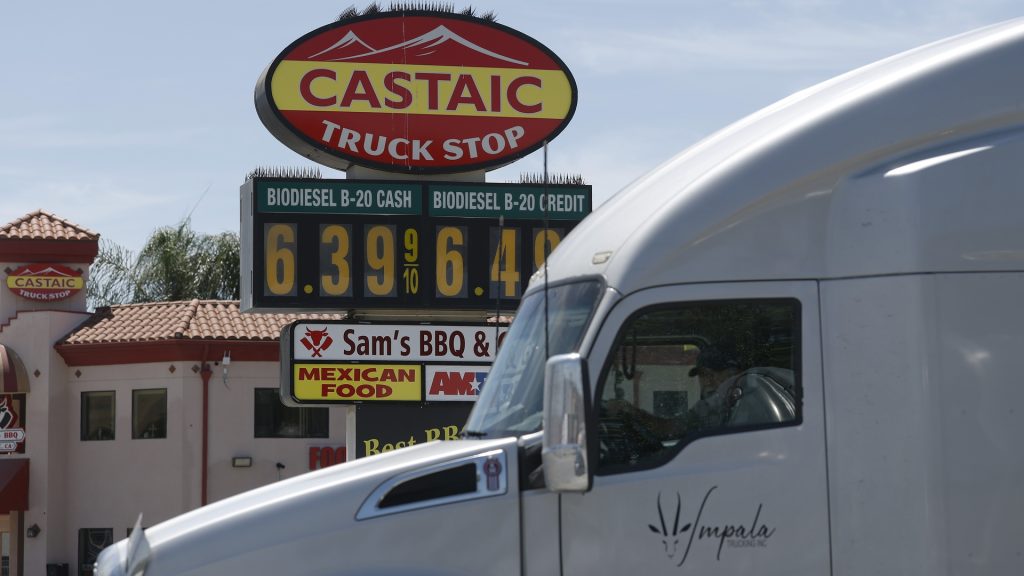
While most Americans are still driving much as they always have, new data suggests truckers and transportation companies are already changing their habits to cope with rising fuel costs.
Millions of truck routes studied
Transportation analytics firm INRIX shared its findings with Straight Arrow after analyzing roughly 60 million commercial vehicle trips across 10 major U.S. metro areas during the first four months of 2026.
The data showed little change in overall trip volume, but companies that depend heavily on fuel appear to be making small adjustments. Average trip lengths fell about 2%, while average driving speeds declined roughly 4%.
“What we’re seeing in 2026 is an early-stage adjustment, one led not by consumers, but by the businesses most exposed to fuel costs,” INRIX wrote in its analysis. “Freight operators are already fine-tuning how they operate, making incremental changes.”
Diesel prices drive changes
INRIX said the trend is consistent with what transportation companies typically do when they believe higher fuel costs are not temporary.
According to AAA, the national average price of diesel stood at $5.39 per gallon on June 4, up from $3.51 a year ago.
The analyst said it costs between $120 and $150 per hour to operate a typical 18-wheeler on the highway, with the truck burning 9 to 10 gallons of fuel per hour. That means every additional dollar per gallon of diesel can add roughly $9 to $10 in fuel costs for every hour a truck is on the road.

One of the easiest ways to offset that expense is simply driving a little slower.
Reducing speed lowers aerodynamic drag and improves fuel economy, potentially saving hundreds of dollars a week for drivers and transportation companies.
Small changes, real savings
The Wall Street Journal reported some owner-operators are already adjusting their driving habits.
Peterbilt driver Michael Whitaker told the outlet he used to travel between 65 and 68 miles per hour while hauling heavy equipment across the Midwest and South. Now he typically drives between 62 and 65 miles per hour.
“That’s the best fuel mileage,” Whitaker said. “We want the best bang for our buck for the money we spend on fuel.”
Whitaker estimated it now costs about $1,200 to fill his truck, compared with roughly $750 before diesel prices surged following the conflict with Iran.
The tradeoff is that many independent truckers are paid by the mile. Driving slower can improve fuel economy, but it can also mean spending more time on the road for the same paycheck, according to the Owner-Operator Independent Drivers Association.
Larger transportation companies often have another option: passing some of those higher fuel costs on to customers through fuel surcharges.
Round out your reading
- Plea bargains keep America’s courts running. Guilt or innocence barely matters.
- Trump says the media isn’t covering one of his biggest accomplishments. We checked.
- Mike Lindell denied MyPillow was hacked. Its private data is now online.
- Red meat allergy rises with ticks as HHS targets Lyme disease, alpha-gal syndrome.
- We’re building a new Straight Arrow. Help us shape our future by taking our survey.
Ella Rae Greene, Editor In Chief