Army wants drone testing to look more like Ukraine’s battlefield
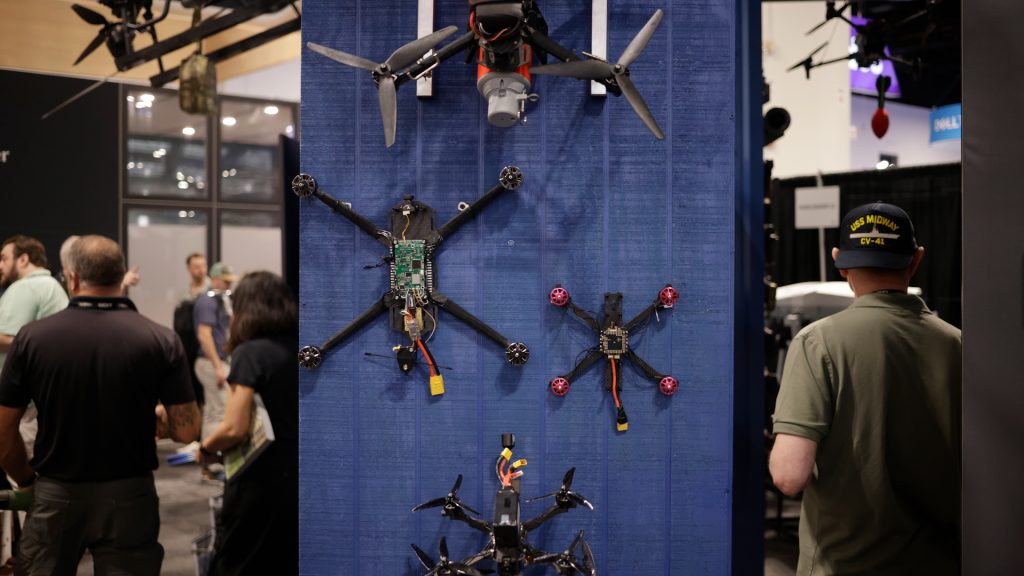
The Army wants to test new low-cost drone defenses in conditions that look more like Ukraine. The U.S. Army plans to establish at least two domestic testing ranges over the next four to six weeks that simulate battlefield conditions in Ukraine.
Army Secretary Dan Driscoll said the ranges would let drone manufacturers, counter-drone developers and soldiers train in a contested electronic warfare environment, CBS reported. Defense Scoop reported the Army also wants to expand industry access to domestic ranges so defense vendors can test new systems faster.

“You can have a kind of electronic warfare and all of the contested environment created,” Driscoll told reporters, according to CBS.
Why it matters
The plan reflects a larger Pentagon concern: The U.S. needs cheaper ways to shoot down mass-produced drones and missiles.
Defense Scoop reported that Army officials warned that the current defense model is too costly for conflicts where adversaries launch large numbers of inexpensive systems. Dwayne Hynes, an Army intelligence official, said firing a $2 million interceptor at a $20,000 drone is not sustainable.
CBS reported that the war in Iran exposed vulnerabilities in U.S. defense production, particularly in speed and cost. Some companies expected to attend — including Lockheed Martin, Boeing and L3Harris — produce parts for high-end weapons such as Patriot interceptors, which The Wall Street Journal said can cost $4 million each.
What Army officials say
Driscoll said the lower-cost systems the Army seeks should supplement existing weapons.
“This is not intended to replace the solutions that we have — they’re incredible,” Driscoll said, according to CBS. He described those high-end systems as the “Ferrari” of products, but said the Army needs other tools to support them.

Army officials described Russia’s drone output as a warning sign. CBS reported that Dwayne Hayes of the Army’s Strategic Threats Office said Russia produces about 3,000 to 5,000 Shahed-type one-way attack drones per month, along with roughly 600,000 smaller first-person-view drones. He said Ukraine produces about 30,000 interceptor drones per month.
Hynes cited similar figures and said Russia launched an attack this month using 70 missiles and more than 600 long-range drones against Ukrainian forces.
How the situation is evolving
The Army is trying to shorten testing timelines for companies, especially smaller firms.
Defense Scoop reported that some vendors now wait 12 to 18 months to book Army ranges. Brent Ingraham, the Army’s top acquisition official, described that delay as a limitation on new companies and innovation.
Driscoll said the Army is also looking at a range outside the U.S. where it can conduct “much more aggressive testing,” including with hypersonics, according to CBS. He declined to identify the locations of the domestic or international ranges until planning is further along.
CBS reported that some current counter-drone training does not include electronic jamming, partly because the U.S. restricts jamming domestically.
What’s next
The Army is seeking more industry proposals in the coming months for lower-cost interceptors, according to CBS.
Defense Scoop reported that Army officials told vendors they need systems that can scale, adapt and be produced with supply chains in mind from the start. Brig. Gen. Guy Yelverton III told companies that enemies will not wait for the U.S. to finish a traditional development cycle.
“We need capabilities that can be adapted as the threat changes,” Yelverton said.
Round out your reading
- Not red or blue: America’s politically homeless middle.
- Peter Thiel’s ‘Dialog’ network was super-secret. A data leak changed that.
- The novel legal strategy that Taylor Swift and Matthew McConaughey are using to fight AI.
- Illinois balances budget with new $200 million social media tax that tracks in-state users.
- When Trump serves up ‘Just the News,’ it comes with a side of bias.
Ella Rae Greene, Editor In Chief