Another police officer has been charged for abusing Flock surveillance technology
Premium content: This is a sneak peek at our forthcoming subscriber-exclusive Confidential Informant newsletter, your essential guide to privacy in a world under surveillance.
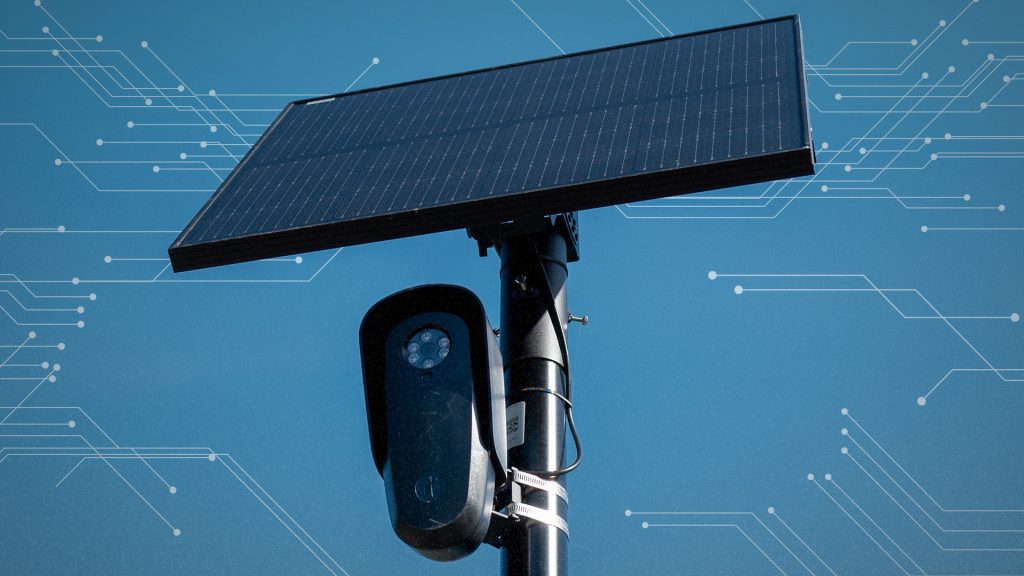
Flock Safety, the company that has deployed more than 85,000 license plate reader cameras across the country, is arguably one of the most controversial names in surveillance.
A primary reason for the controversy is the growing number of law enforcement officers who’ve been caught abusing the company’s powerful technology, which uses AI-powered cameras to photograph every single license plate it sees.
And while the tool has enabled law enforcement to track the movements of criminals, it’s also been used to monitor protesters, immigrants and, among others, the ex-girlfriends of police officers.
In total, according to a study by the civil rights group Institute for Justice, there have been at least 21 cases nationwide since 2024 in which law enforcement officers used the technology for personal use.
Just last week, Straight Arrow covered the case of a police detective in Milwaukee who was charged with felony misconduct in public office and misdemeanor misuse of GPS after he reportedly used Flock to stalk a victim and their family.
That very same detective had been tasked just months earlier with investigating a fellow officer who was accused of abusing Flock’s tool.
One Straight Arrow reader on social media summed up the issue perfectly: “Who will watch the watchers of those abusing the watchers of *the* watchers of which they are watching?”
In other words, if a police detective chosen to investigate abuse of surveillance tools can’t keep himself from abusing them as well, what does that tell us about the current state of surveillance?
If you’ve followed SAN’s coverage of Flock, you’ll know that this is just one of several controversies. And concerned citizens across the country are taking notice.
In response, city councils have canceled their contracts with Flock to appease outraged constituents. Some citizens, seemingly uninterested in debating the issue with their elected officials, have taken it upon themselves to physically destroy Flock’s cameras.
Regardless of the pushback, Flock, at least for the near future, appears here to stay. This also means that we’ll almost certainly see more instances of the technology being abused by law enforcement.
The question remains whether the benefits provided by the tool will, at least in the eyes of the public, be enough to outweigh the negatives.
Register now to receive a discount code for when our subscription launches to continue to receive content like this plus more!
What I’m reading
- Wired got its hands on drone surveillance footage from the San Francisco Police Department after two security researchers discovered it had been exposed online. The leak contained, according to the reporting, “all of the real-time footage from five of its surveillance drones, including both color and thermal imaging, accompanying location metadata, and the drone pilots’ names and email addresses.”
- The Los Angeles Times reports that the city’s police department has stopped using its Flock license plate reader cameras “amid mounting concerns over who controls the data and how it may be shared with other agencies, including immigration authorities.” The decision was made after an inspector general’s audit called for a pause on a contract renewal “until enforceable privacy, security and oversight rules are in place.”
- TechCrunch is reporting on Meta’s decision to remove an AI feature that it only just introduced to Instagram last week after public backlash. The feature, known as Muse Image, allowed users to manipulate photos from public Instagram accounts. Meta said in a statement that it “missed the mark” when introducing the tool.
What do you want to know?
Reader Alan J. of Marietta, Georgia, asks: I’m concerned about being recorded by Meta’s smart glasses. Is there anything I can do?
Meta’s smart glasses, and those by other manufacturers with a camera built inside, are becoming increasingly common. Understandably, this has many people concerned. So much so that Meta’s smart glasses are being referred to as “pervert glasses” online by mostly women who fear they will be filmed without their consent.
To make matters worse, some smart glasses owners have even begun to remove the recording light placed on the glasses by Meta to alert others when the camera is on, in order to record without people’s knowledge.
The reality, of course, is that there is no expectation of privacy in public spaces. But that doesn’t mean you can’t know whether someone nearby has a pair of smart glasses on.
To combat this issue, multiple tools and apps have been introduced to alert users to the presence of these types of devices. While they aren’t foolproof, you can easily download and deploy these tools and decide whether to leave an area where someone may be recording.
I reported in February about one such app called Nearby Glasses, which uses Bluetooth to scan for the unique signatures given off by Meta products. The app also detects the unique signature used by Snapchat smart glasses known as “Spectacles.”
There are other apps as well, and as time goes on, I’m sure newer methods for detecting smart glasses will arrive. It’s too early to know whether society will happily accept smart glasses, put up with them as a nuisance, or run their wearers out of town.
That’s all for this week. If you have a question you’d like me to answer about privacy, send me an email at mthalen@san.com or share them below. I’ll keep all your personal details private.
 Follow me on
 Get notified whenever I publish new stories by signing up for alerts in the Straight Arrow app.
MORE STORIES FROM MIKAEL
Smart glasses users were secretly recording others. Meta says it found a fix
After a Flock device appeared on her lawn, Virginia woman wondered ‘who’s listening’
Congressman says hack of his Signal account proves app is unsecure. Is it true?
Ella Rae Greene, Editor In Chief