America mastered medicine. Why can’t it fix healthcare?
If the 20th century was America’s age of progress, medicine was among its greatest triumphs.
At the dawn of the 1900s, infectious diseases routinely killed children and young adults. Thousands of women died from pregnancy and delivery complications each year, and nearly one in 10 babies did not survive their first birthday. Many medical treatments were ineffective, dangerous and based on tradition rather than scientific evidence.
Over the next century, that changed.
American physicians and scientists helped usher in an era of extraordinary medical advances. Antibiotics, first developed in 1910 and mass produced during World War II, transformed once-fatal infections into treatable illnesses. Vaccines eliminated or sharply reduced diseases that had plagued humanity for centuries. The discovery of insulin in the 1920s transformed Type 1 diabetes from a fatal disease into a manageable chronic condition. Open-heart surgery, dialysis, organ transplantation, intensive care units, CT scanners, MRI machines and increasingly effective cancer treatments dramatically expanded what medicine could accomplish.
“The second half of the twentieth century to me was a renaissance in healthcare,” said Robert Pearl, a professor at Stanford University School of Medicine and former CEO of Kaiser Permanente. “We led the world in the healthcare revolution.”
The impact was profound.
In 1900, life expectancy in the U.S. was 47 years. A century later, it had risen to 77.
But then, around the turn of the millennium, the extraordinary progress slowed as the healthcare system built around it began to falter.
“This is where I think medicine has failed,” Pearl said. “Twenty-five years after that, we’ve made very little progress.”
As the nation marks its 250th anniversary, the foundation of American healthcare is cracking.
Life expectancy today remains below its pre-pandemic peak and is little different from a decade ago. Nearly half of physicians report symptoms of burnout, and surveys suggest roughly one-third are considering leaving medicine because of working conditions and a loss of professional autonomy.
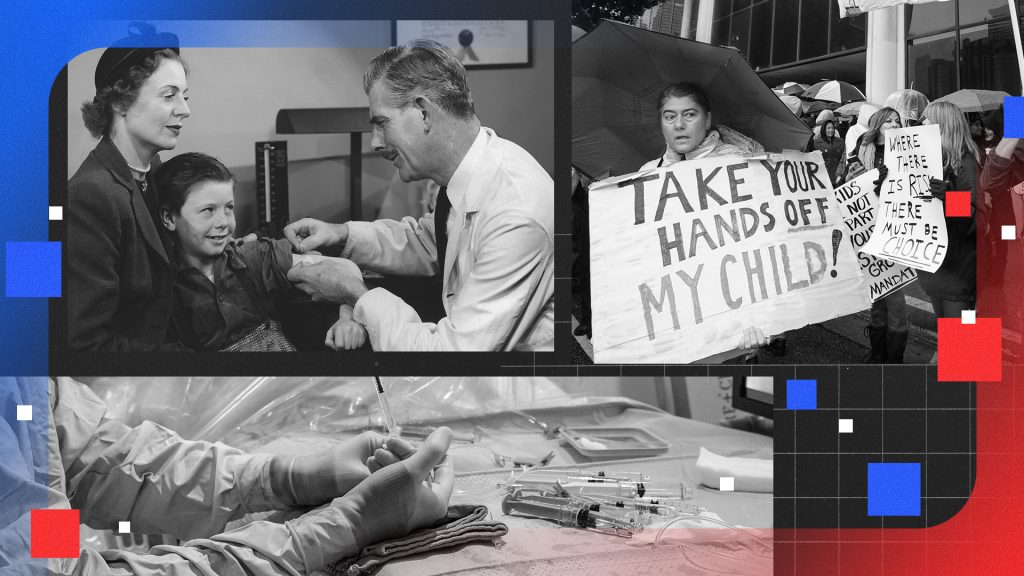
More than half of Americans say they struggle to afford healthcare even as U.S. spending skyrockets. Chronic diseases such as diabetes, obesity and heart disease continue to rise, including among younger adults. Vaccination rates are falling as parents turn away from the once-trusted guidance of medical professionals.
READ MORE: The demoralization of America’s doctors
“It’s not a temporary blip,” Pearl said. “I think what it really says is that the healthcare system of the past 100 years is not able to take care of the problems of the United States today.”
Modern medicine continues to advance at a breathtaking pace. New cancer treatments, gene therapies, artificial intelligence tools and precision medicines rewrite what is possible. Yet patients, physicians and public health experts increasingly warn that America’s healthcare system is failing both those who provide care and those who depend on it.
The corporatization of American medicine
For generations, the relationship between a doctor and patient formed the foundation of American medicine. Patients trusted physicians to put their interests first, and physicians largely had the autonomy to make decisions based on their training and judgment.
That changed as healthcare evolved from a profession dominated by independent physicians into an industry increasingly shaped by insurers, hospital systems and corporate ownership.
In the 1980s, most physicians either owned their practices or worked in physician-led groups. Today, the majority are employees of hospitals, insurers or health systems.
“Doctors are basically line employees now,” former physician Dike Drummond said. “They might as well be a punch press.”
Insurance companies increasingly influence which medications, procedures and tests are covered, sometimes hampering adequate medical care.
Christie Mulholland, a palliative care physician at Mount Sinai Hospital in New York, can still remember calling an insurer repeatedly to secure hospice placement for a dying patient. After days of delays, a physician reviewing the case for the insurance company finally answered her phone call.
“Oh,” the insurance company physician told Mulholland. “She didn’t die yet?”
The comment crystallized what Mulholland and many other physicians describe as a growing disconnect between patient needs and the financial incentives driving healthcare.
“Over time, it has felt to me more that my efforts are benefiting patients less and benefiting corporations and for-profit entities more,” Mulholland said.
An increasingly complex health insurance industry also means physicians spend more time doing administrative tasks and documenting patient visits than they do actually seeing patients.
As hospital systems face pressure to increase revenue and private equity firms acquire medical practices and healthcare facilities, many physicians say medicine has become increasingly driven by business metrics such as patient volume and productivity targets. Combined with a growing physician shortage, those pressures mean many patients often wait weeks for appointments only to spend a few rushed minutes with a physician burdened by paperwork, billing requirements and insurance approvals.
Erosion of trust
As the U.S. health system grapples with rising costs, physician burnout and corporate consolidation, it is also confronting a crisis of confidence. Over the past decade, medicine has increasingly found itself pulled into the nation’s political and cultural battles, reshaping how many Americans view physicians, scientists and public health institutions.
Since the pandemic, trust in many of the nation’s leading health institutions has declined. Surveys show confidence in medical scientists, public health agencies and organizations such as the Centers for Disease Control and Prevention fell sharply during COVID-19 and has yet to fully recover.
Vaccines have become a particular flashpoint, with Americans increasingly divided along partisan lines over their safety, effectiveness and role in public health.
Rana Alissa, a pediatrician and president of the Florida chapter of the American Academy of Pediatrics, said she has witnessed a profound shift in parents’ attitudes toward vaccines. Before the pandemic, she typically encountered a parent refusing vaccines about twice a week. Now, vaccine refusals occur four or five times a day.
“We’re seeing more and more a change of tone of our parents, especially the disrespect and the distrust,” Alissa said. “The patient-physician relationship has eroded.”
Alissa said some parents who refuse vaccines are also declining other medications and, in some cases, avoiding medical care altogether to sidestep vaccine discussions.
“It’s extremely concerning,” she said. “I feel this is just the beginning.”
A new system
Amid fraying trust, mounting paperwork and rising corporate influence, some physicians are leaving traditional healthcare altogether.
A growing number have opened cash-based clinics that bypass insurance, allowing patients to pay directly for care. The model has expanded rapidly in recent years as physicians seek greater control over how they practice medicine and patients seek longer appointments, transparent pricing and easier access to their doctors.
READ MORE: Why more doctors are billing their patients like it’s the 1920s
Pearl sees the appeal, but he does not believe cash-based medicine can solve the broader problems facing American healthcare.
While the model may work for wealthier patients and employers, many Americans simply cannot afford to pay thousands of dollars out of pocket each year for enhanced access to care. And the model does little to address the underlying incentives driving the healthcare system.
“The fee-for-service system, where the more you do, the more you get paid,” Pearl said, “fundamentally needs to change.”
Instead, Pearl advocates for “value-based” or “capitated” care, in which providers receive a fixed payment to manage a population of patients and are incentivized to prevent disease, reduce complications and coordinate care.
“What do you want?” Pearl asked. “Do you want me rewarded for keeping you healthy, or do you want me rewarded for reversing the disease when you have it?”
Pearl points to organizations like his former employer, Kaiser Permanente, where physicians are paid to manage patients’ overall health rather than generate more visits, tests or procedures.
If the American health system could better control chronic diseases such as diabetes, hypertension and obesity, the country could dramatically reduce heart attacks, strokes and some cancers while lowering healthcare costs. But as of now, there is little evidence that the industry is moving in that direction, Pearl said.
Nearly every major player in healthcare — insurers, hospital systems, pharmaceutical companies and private equity firms — benefits in some way from the current structure, he said. As a result, meaningful reform remains difficult.
“It’s obvious the system is collapsing,” Drummond told Straight Arrow.
It is unclear how much longer the healthcare system can absorb rising costs, physician burnout and declining public trust without fundamental transformation.
“I think it will get worse until there is a crisis,” Pearl said.
On at least one point, many physicians, patients and policymakers agree: The status quo is becoming increasingly difficult to sustain. Yet, despite years of warnings, Americans remain deadlocked over how to fix it.
Round out your reading
- America at 250: Straight Arrow’s week-long look at the pressures testing modern America.
- Ketamine is booming in America. The reasons go beyond drugs.
- Cluster of AI news sites suddenly goes dark after human reporter starts asking questions.
- A 79-year-old, obese, well-connected man gained exclusive access to a new weight loss drug. Is it Trump?
- Newsom pushes national wealth tax after opposing California billionaire tax.
Ella Rae Greene, Editor In Chief