Alexis Wilkins, country singer and Kash Patel’s girlfriend, sues MS NOW for defamation
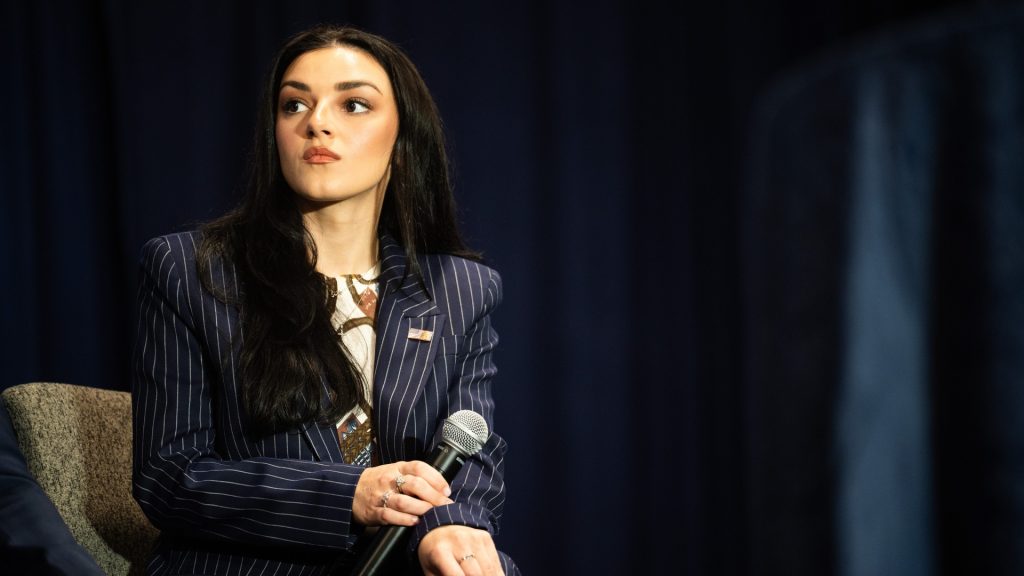
Cable news network MS NOW faces a defamation lawsuit from Alexis Wilkins, a country singer and girlfriend of FBI Director Kash Patel, who alleged the network intended to harm her in a December report. The story was the latest in a series published that examined Patel’s behavior and actions as the nation’s top cop.
The story in question surrounded reporting from the news network about Patel’s growing use of FBI agents and property for his girlfriend. It detailed a night where Patel allegedly ordered agents to give Wilkins’ friend, who was inebriated, a ride home following a night of partying. Wilkins alleged MS NOW “knowingly, intentionally, willfully, wantonly, and maliciously” published the story with the intent of harming her.
“Defendants presumed they could get away with this fiction by citing to ‘anonymous sources,’ disingenuously claiming ‘nonpublic’ and ‘inside’ knowledge,” according to the lawsuit. “This was hogwash and they knew it. Journalists cannot avoid accountability by hiding behind fabricated ‘anonymous’ sources.’”
Wilkins named MS NOW, its parent company, Versant Media Group, and journalists Carol Leonnig and Ken Dilanian in the lawsuit.
She seeks a jury trial, with a hopeful reward of $75,000 in damages. The lawyers representing Wilkins, Binnall Law Group, are the same attorneys representing Patel in his libel lawsuit against The Atlantic for erratic behavior and on-the-job drinking.
MS NOW President Rebecca Kutler said in a statement to Straight Arrow that the company stands behind the reporting and declined to comment on the lawsuit.
Wilkins claimed that she’s not a public figure. Wilkins is a country music singer, as noted on her website, having released songs and albums since 2020. Private figures face a lower bar in proving liability in a libel lawsuit than public figures or politicians, according to the libertarian Foundation for Individual Rights and Expression.
“The private plaintiff usually must show simply that the defendant was negligent, or at fault,” the foundation said. “However, the Supreme Court also ruled that private defamation plaintiffs could not recover punitive damages unless they showed evidence of actual malice.”
MS NOW reported Patel gave Wilkins a security detail that consisted of agents typically assigned to a SWAT team in the FBI’s Nashville field office, based on tips from anonymous sources. Wilkins reportedly lives in the city, while Patel has a home in Las Vegas and travels to Washington, D.C. for work. The FBI confirmed to the publication in November that she’s received a security detail due to reported death threats, but didn’t confirm when they were assigned.
Lawsuit relies on shaky claims
Wilkins’ lawsuit claimed that the December 2025 MS NOW said she “demanded” Patel give a friend a ride home, but the story doesn’t state that.
“Defendants falsely asserted that Ms. Wilkins demanded, and Director Patel ordered, that federal agents assigned to her security detail—which did not even exist at the time—escort an intoxicated friend home after a ‘night of partying,’” according to court papers. “They falsely portrayed Ms. Wilkins as being intoxicated even knowing that she does not drink.”
The MS NOW story noted that the request happened in the spring of 2025.
Instead, the story said Wilkins made at least two requests for the ride. Agents objected as it would divert them from their assignment, but Patel insisted, at one point yelling at Wilkins’ security leader to follow through.
Wilkins also claimed in the lawsuit that the story said she was inebriated. It, however, just stated that a friend was drunk following a night of partying. It doesn’t state whether Wilkins was with that friend or if she was also drinking.
The lawsuit contended the request never took place, and MS NOW allegedly published knowingly false information in an effort to defame Wilkins. It added that FBI Spokesperson Ben Williamson’s text exchange with Dilanian was misrepresented in the story.
It included a transcript of the exchange where Williamson pressed Dilanian for details about the allegations, and Dilanian clarified the reporting didn’t characterize Wilkins as drunk.
“Not only did Defendant Dilanian recklessly disregard this fact,” according to court papers, “claiming ‘we are comfortable with our sourcing,’ but Defendants omitted this information from the Article, falsely implying that the FBI made only a reflexive and broad denial, and falsely claiming that the FBI had refused to answer questions.”
Wilkins’ lawsuit went on to say that if Dilanian gave further details, the bureau “could, and would have even more conclusively refuted the story.” The MS NOW story attributes claims to anonymous sources.
Patel’s leadership as FBI Director
Patel has faced criticism for how he’s led and behaved as the director of the FBI, with allegations that he illegally fired employees and wasted resources for dates with Wilkins.
The allegations led to a contentious Senate Oversight hearing that was supposed to focus on the FBI budget but instead scrutinized Patel’s behavior. Sen. Chris Van Hollen, D-Md., referenced The Atlantic story that detailed Patel’s excessive drinking and unexplained absences.
Patel has denied the allegations.
The director has since been named in several lawsuits for his conduct. In one, two agents alleged that Patel fired them without an internal investigation because they were connected to the probe into President Donald Trump’s efforts to overturn the 2020 election. In another lawsuit, former department leaders sued Patel and the Trump administration over what they called a political purge of the bureau.
One of those who sued was Brian Driscoll, who joined other former FBI leaders in establishing the FBI Support Network on Monday. The network is a support group for all former Justice Department employees reportedly targeted by the administration.
“It’s time for those of us who also once carried credentials, badges, and sidearms alongside our FBI colleagues to offer tangible assistance when they are faced with the choice between an order and what they know is just, and to help them when they have to weather the consequences of upholding their oaths,” said Michael Feinberg, FBI Support Network director, in a news release. He worked as an assistant special agent in charge until last June.
Round out your reading
- Plea bargains keep America’s courts running. Guilt or innocence barely matters.
- Trump says the media isn’t covering one of his biggest accomplishments. We checked.
- Mike Lindell denied MyPillow was hacked. Its private data is now online.
- Red meat allergy rises with ticks as HHS targets Lyme disease, alpha-gal syndrome.
- We’re building a new Straight Arrow. Help us shape our future by taking our survey.
Ella Rae Greene, Editor In Chief