After silence from data centers, Texas asks again for water use numbers
The drought-stricken state of Texas has a question for its booming data center industry: How much water are data centers using to keep their computers cool? But the answers are proving hard to come by.
The Public Utilities Commission of Texas (PUCT) is attempting for a second time to gather information on how much electricity and water data centers are using. The commission re-opened a survey intended to help state agencies understand how the growing industry is consuming natural resources after a disappointing response rate to a survey conducted this spring.
Texas has the second-most data centers of any state. Still, much like the rest of the nation, Big Tech projects have faced backlash from both political parties. Local concerns often revolve around water and electricity consumption, and these are especially potent in Texas, where grid reliability has been a major concern since blackouts during a 2021 winter storm, and cities like Corpus Christi are running out of water. The state’s power grid operator predicts a surge in electricity demand, but the exact size and scope remain unknown.
State planning efforts rely on gathering accurate data on a new but growing industry. So far, the data has eluded state lawmakers and policy experts.
“We need to know what’s coming,” said Robert Mace, executive director of the Meadows Center for Water and the Environment and a professor at Texas State University.
What is the data center energy and water use survey?
As part of budget appropriations passed by the Texas Legislature in 2025, state lawmakers directed the PUCT and the Texas Water Development Board to survey data centers and cryptocurrency mining facilities.
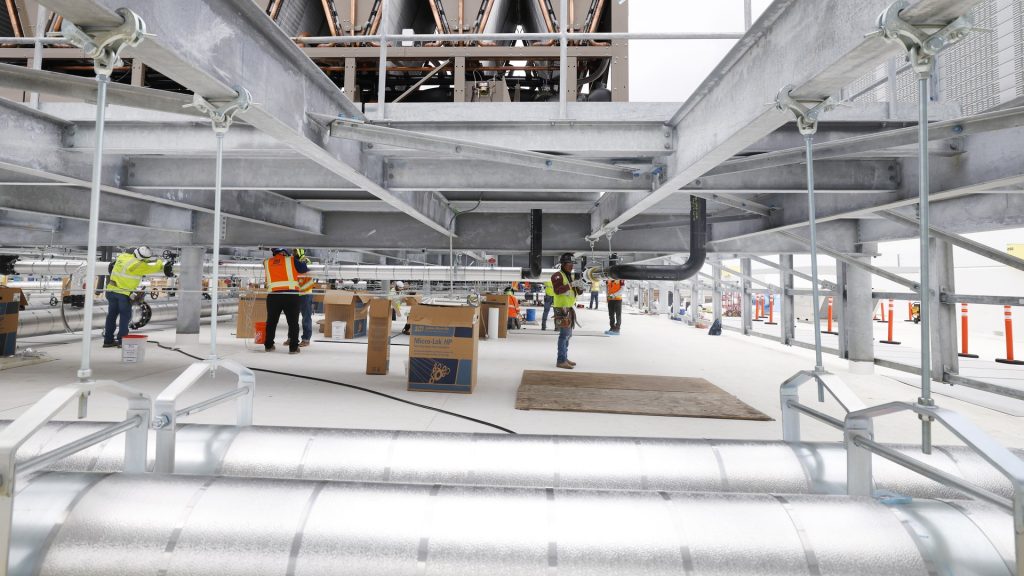
At their core, both of these types of facilities are rooms or warehouses full of computers that need electricity to run and often consume water to prevent overheating. The survey asks about how much water and power the facilities consume, where it’s sourced from and the type of cooling technology used.
By 2040, data centers could consume up to 9% of the state’s water, according to a recent study from the University of Texas at Austin. That’s a significant increase from the 0.4% used in 2025.
“Participation in the survey is critical to meeting the legislative directive and supporting statewide water planning efforts,” wrote the PUCT in a public filing to extend the survey response period.
The initial survey was open in April and May. At a hearing last week in the Texas House Natural Resources Committee, Chris Brown, a program manager at the PUCT, said the agency received responses for 92 facilities. That’s less than 16% of Texas’ 582 operational and planned data centers identified by the Texas Tribune.
The survey is open again from July 1 to July 10, following a request from lawmakers who questioned whether the commission did enough to promote the voluntary survey. At the hearing. Brown said the PUCT sent mail notices directly to facilities and partnered with industry groups and utility providers to promote the survey.
“This is not like filing your taxes where you’ve got to do it,” said David Eaton, a professor of natural resource policy at the University of Texas at Austin.
The low response rate “leaves us with a gap of information to make the policy decisions we need to make considering this really critical conversation.” said Mary Gonzalez, a Democratic state representative from near El Paso.
Why is Texas’ water at stake?
The survey aims to “understand the relationship between energy and water use,” according to the PUCT. Data centers cooled with fans will consume less water than facilities that use water for cooling, but they will need more electricity.
Water-cooled systems also vary in how much water they consume, depending on whether they use more efficient “closed-loop” technology that does not need to continuously pull water from wells or municipal sources.
“These are major players in both the water and the electricity market,” Eaton told Straight Arrow. He added that the survey is a “normal activity for both water planning and energy planning.”
The Texas Water Development Board works continuously on a state water plan that’s released every five years. The next edition is coming in 2027. The process started in 2022, after the previous water plan was finished.
In the beginning of water planning, Mace said the water development board evaluates population growth, water consumption data and new industries coming to Texas. That all started before the surge in data centers to power artificial intelligence. Mace added that it’s possible a majority of data centers are using closed-loop systems, but without adequate data, water planners can’t count on that.
“Data centers at the scale that they’re being proposed have the potential to use a tremendous amount of water,” Mace told Straight Arrow. “You need good data to develop good policy.”
Round out your reading
- America at 250: Straight Arrow’s week-long look at the pressures testing modern America.
- Ketamine is booming in America. The reasons go beyond drugs.
- Cluster of AI news sites suddenly goes dark after human reporter starts asking questions.
- A 79-year-old, obese, well-connected man gained exclusive access to a new weight loss drug. Is it Trump?
- Newsom pushes national wealth tax after opposing California billionaire tax.
Ella Rae Greene, Editor In Chief