Spokane wildfires highlight insurance crisis for homeowners across US
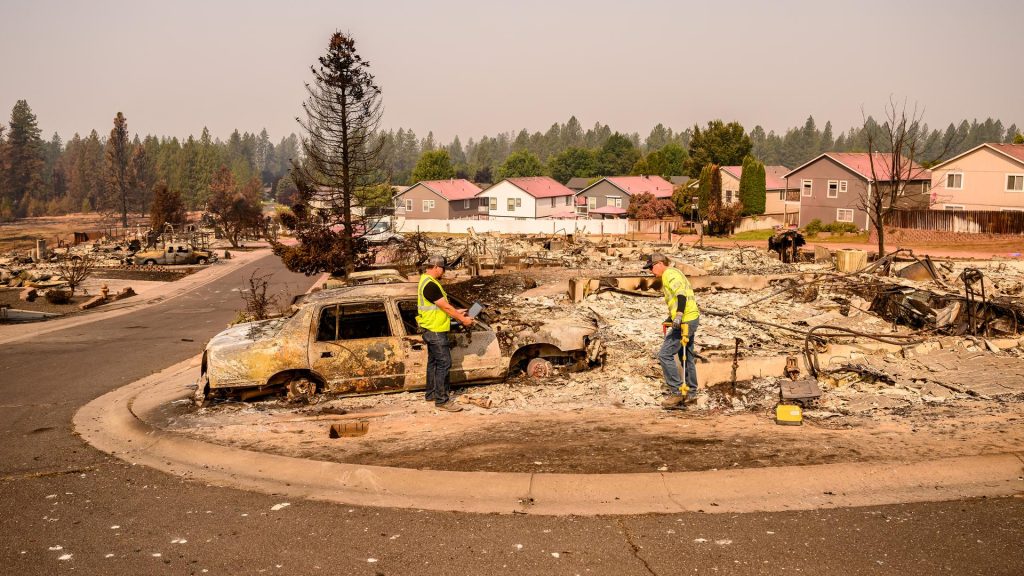
The fires burning in Spokane, Washington, mark the third time since 2020 that a major wildland fire has become an urban wildfire, where instead of trees as tinder, it’s homes. Just like in California in 2025 and Colorado in 2021, the hundreds of families now without a home may have trouble rebuilding — because their insurance payouts don’t match the costs.
It’s long been a problem in the West. As wildfire season expands in length and intensity, insurance companies are becoming less likely to insure homes in areas they deem high-risk for wildfires. And with these fires burning closer to — or within — densely populated areas, insurers are rapidly raising rates or stopping coverage altogether.
A report from the Insurance Information Institute found that about a third of all homes in the continental U.S., about 46 million homes, are located within the Wildland Urban Interface. That’s insurance speak for developed properties that are adjacent to undeveloped vegetation. Prolonged drought and summer heat waves increased that risk in both the West and in less common fire areas like Florida, Georgia and Nebraska.
“Wildfire is increasingly a national risk issue rather than a regional one,” the report said.
Several states are introducing legislation to help residents protect themselves and their homes from wildfires. But those bills don’t address the private insurance problem.
The insurance problem
According to a Brookings Institute report, climate change and related natural disasters are creating significantly higher operating expenses for those companies. State Farm, a major operator in California, said it had paid out more than $3.5 billion in claims within the first five months after the Palisades and Eaton Fires.
In response, State Farm raised premiums by more than 17%, one year after a 20% increase. It’s not the only company raising rates. The Brookings report showed between 2018 and 2022, people living in the 20% of ZIP codes with the highest expected losses from climate-related events paid more than $2,300, on average, for premiums — more than 80% higher than those living in the lowest climate risk ZIP codes.
While states can dictate how much private insurance companies can raise rates by, if those companies aren’t happy with the states’ decision, they can leave the area. While many states including California offer state-sponsored insurance — Fair Access to Insurance Requirements (FAIR) plans — coverage limits are often a lot lower than private companies can provide, leaving homeowners underinsured in the event of a disaster.
“Insurance is a major issue for us,” Mark Smith, a Pacific Palisades resident who lost his home in the Palisades fire, told Straight Arrow in January. “This HOA had $48 million of coverage as of late 2024. A few months before the fire, we were dropped, the reason being that we’re in a high-risk fire zone, and we had to go with California FAIR Plan, which, at the time, was capped at $20 million coverage for the entire association. That’s about a 60% drop in the coverage and that leads to our challenges.”
As more people enroll in FAIR plans, the costs of operating those plans in disasters skyrocket. California paid out $250 billion after the 2025 fires, and asked private insurers who help fund the program to chip in $1 billion to help cover costs. As insurers also struggle to pay out large claims from the fire, many continue raising premiums or leaving the area altogether, leaving fewer sources for funding the program. In Florida, similar cycles after hurricanes meant the state had to restrict eligibility for FAIR plans, sending residents back to private insurers with even higher rates.
Mitigating for wildfires
As coverage wavers, the burden can fall on homeowners to protect their properties before a fire. Wildland firefighters have consistently said the best way to protect a home from a fire is to create a defensible space around it. Defensible space consists of the area within 100 feet of a home.
Utah Living with Fire, a new state resource designed to help residents figure out the best ways to protect themselves and their homes, recommends taking care of the space in three zones: 0-5 feet, 5-30 feet and 30-100 feet.
Within five feet, they recommend removing branches above the home and pruning trees up to 10 feet from the ground. They also suggest replacing flammable mulches with stone or gravel, creating a ground buffer so fire can’t run directly up to your house.
Within 30 feet, they recommend keeping grasses short — at or below four inches — removing vegetation under trees, and using noncombustible fencing like metal or vinyl instead of wood. Out to 100 feet, property owners should keep the yard clear — pick up dead leaves, remove vegetation around sheds and outbuildings and keep ample space between the canopy tops of trees.
Communities in fire-prone areas often hold town hall-style events to answer questions about defensible space and how it could impact insurance premiums. Spokane was scheduled to hold a free event Wednesday.
States addressing the defensible space issue
As part of legislation passed in 2025, Utah officials announced the state is raising property taxes for those in the High Risk Wildland Urban Interface — areas in the foothills and mountains that border open space areas prone to burns.
As part of the raise, local fire authorities will grade each property as part of a statewide assessment program to standardize creating and assessing a property’s defensible space. The program — and tax increases — go into effect next year. However, insurance companies aren’t required to use the new ratings, meaning premiums won’t necessarily drop for those living in the Wildland Urban Interface.
On a national level, Oregon Sen. Jeff Merkley, a Democrat, announced plans for the Wildlife Insurance Affordability Act. The bill, according to Merkley’s office, would create grant programs for states to help homeowners pay for renovations and projects to reinforce defensible space. It would also provide vouchers for state insurance commissioners to give to low-income families that create defensible space.
The bill, Merkley said, would give “insurers peace of mind to lower rates.” Whether they will, however, is still to be seen.
Round out your reading
- Why Gen Z is staying home on the weekends.
- Autism research is entering a new era. Here’s what scientists are learning.
- The big reason small cities want data centers. Hint: It’s not permanent jobs.
- High school teacher arrested at city meeting after clapping for anti-data center speech.
- Off Script: Everyone’s watching Michigan. Our reporter explains why the race just changed.
Ella Rae Greene, Editor In Chief