Is AI helping students learn — or just helping them look like they are?
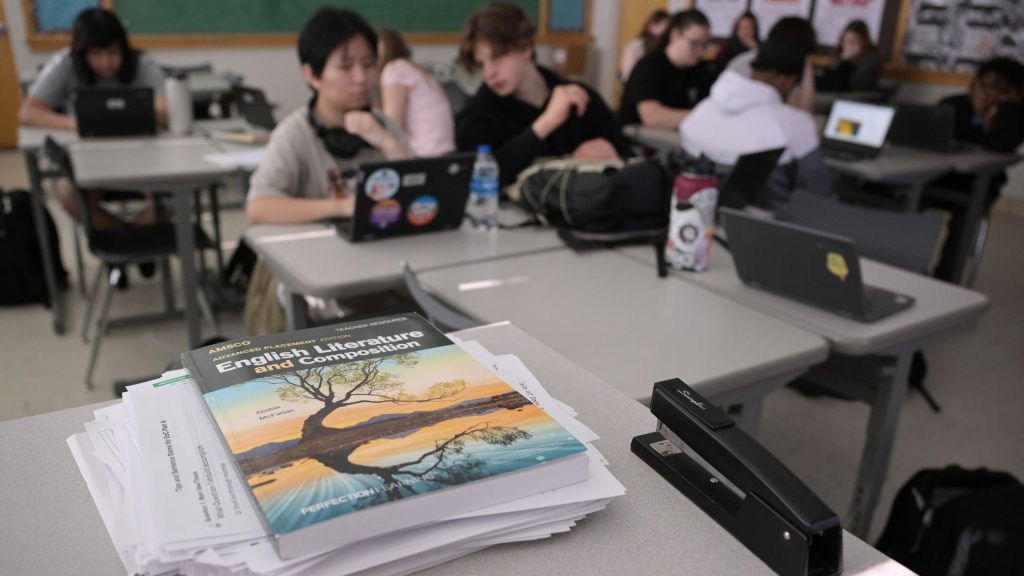
Schools are seeing students use artificial intelligence more than ever. Their grades are going up when AI is allowed, but how much they’re actually learning appears to be going down.
The World Bank today released its “World Development Report: 2026.” The 380-page report examines how AI is affecting economic growth in developing countries worldwide.
Buried deep in the report is a citation to a 2026 study tracking secondary students in China as AI use spread through the country’s schools. Over about three years, AI use among the students studied rose from nearly zero to about 80%. As it did, their homework scores rose by 18%, but their scores on in-class exams, where AI wasn’t allowed, fell by 20% over the same stretch.
So that settles it — AI is bad for the classroom. Well, not exactly. That’s only one study, from a single country, and it hasn’t been peer-reviewed yet. Other research Straight Arrow examined paints a far more complicated picture of how AI is shaping what students actually learn.
What have researchers found?
In a study published in 2025, researchers from the Wharton School at the University of Pennsylvania studied nearly 1,000 high school math students in Turkey. They split the students into three groups: one only used a textbook, the second group got a regular AI chatbot and the third got an AI tutor with built-in guardrails. The guardrails included a feature that gave students hints without outright telling them the answer.
During practice, the students in the plain-AI chatbot group scored 48% higher than the textbook-only group. The students using the AI tutor did even better, with scores 127% higher than the control group.
But when AI access was removed for a real exam, the results shifted. Students who’d used the regular AI chatbot scored 17% lower than the textbook-only group. Students who’d used the AI tutor, however, scored about the same as the textbook-only group.
The study suggests AI, without the right guardrails, can end up hurting students more than it helps.
Teachers see this play out, Joseph South, chief innovation officer at the International Society for Transforming Education, told Straight Arrow. Students sometimes use AI to complete homework and “get caught at test time when they don’t actually know the material.” He said sometimes it’s deliberate, other times it’s because “they think they’re just going to get a little bit of help from AI, and they don’t realize how much they’re relying on it.”
“If we are thinking of this tool as an assistant and doing the higher-level tasks, checking its outputs and so on, it can be a huge benefit,” Hamsa Bastani, a Wharton professor and co-author of the paper, told Wharton’s Knowledge at Wharton. “But if we use it sort of lazily and kind of outsource the work that we’re supposed to be doing and completely trust the machine learning model, then that’s when we could be in trouble.”
South told Straight Arrow that there are ways schools are currently using AI effectively.
“There’s two really productive ways that schools are using AI,” South said. “One is putting guardrails on the AI that lead it to act more like an assistant to the teacher, tutoring the student.”
What else have studies shown?
Bastani’s study wasn’t a one-off thing. Other studies have found that AI use could inhibit learning or critical thinking.
Another study from 2025 surveyed 666 people across a range of ages and education levels. It found a negative correlation between how often people use AI tools and their critical-thinking scores.
The researchers point to something called “cognitive offloading,” or people leaning on the tools instead of doing the thinking for themselves. The results were worse for the younger participants, who showed both a greater AI reliance and lower critical-thinking skills than older participants in the study.
But other studies have shown that AI use and its negative effects aren’t just relegated to the classroom. The 2026 International AI Safety Report, compiled by an international panel of AI safety experts, points to AI’s effects in the medical field.
The report cites a study finding that three months after clinicians began using AI diagnostic support, their ability to detect tumors without the software dropped by 6%.
Where things get complicated
But research on AI’s effects doesn’t stop there — some studies complicate the picture further, especially when it comes to digital tools more broadly.
A study from Chengdu University of Technology published earlier this year surveyed 468 undergraduates across multiple Chinese universities. It found that relying on digital tools was positively associated with higher outcomes in critical thinking, task persistence and learning depth, which means the students understood the concepts and didn’t just memorize information.
The researchers found that offloading tasks to digital tools boosted students’ confidence in their thinking, something they called cognitive self-efficacy. They also found that offloading helped students plan and monitor their learning. But researchers stated it wasn’t the offloading that was helping drive up the outcomes. Instead, they said it was the confidence and self-regulation that the digital tools provided that helped with better scores.
The researchers said that reliance on digital tools doesn’t automatically help or hurt learning. They concluded that it depends on whether students experience it as support that builds their confidence or as a substitute for their thinking.
Disparity in AI rollout
But all of this — guardrails, structure, thoughtful design — assumes a school has resources to build it in the first place. That’s not true everywhere.
The disparity, South said, predates AI by decades.
“In schools that are less resourced, the technology that is implemented is used more passively by the students, and in [better-resourced] schools, it’s used more actively,” South told Straight Arrow.
He said the danger is treating AI as a substitute for what underfunded schools actually need.
“If we just throw AI into a classroom, thinking that it’s going to make up for insufficient teaching or a lack of resources, we’re going to make things worse, not better,” he said.
The guardrails that separate helpful AI from harmful AI, in other words, aren’t equally available to every school, which means the same design gap driving the research findings is also a resource gap.
The research doesn’t let AI off the hook. Unguided use of the technology caused real, measurable harm to students’ learning. But that harm wasn’t constant.
Where researchers built in guardrails, guidance or structure, the damage shrank or disappeared.
South cautioned against reducing the debate to a simple yes-or-no.
“Nobody would say having access to the internet definitively increases everyone’s ability to discern fact from fiction, or makes it all the worse,” he said. “They’d say, ‘Well, it depends how you’re using it, what you’re using it for.’ AI is just as broad and powerful a technology in a lot of ways as the internet, and has all the same nuances associated with it.”
Round out your reading
- Why Gen Z is staying home on the weekends.
- Autism research is entering a new era. Here’s what scientists are learning.
- The big reason small cities want data centers. Hint: It’s not permanent jobs.
- High school teacher arrested at city meeting after clapping for anti-data center speech.
- Off Script: Everyone’s watching Michigan. Our reporter explains why the race just changed.
Ella Rae Greene, Editor In Chief