Trump revives tariffs after Supreme Court defeat with new legal strategy
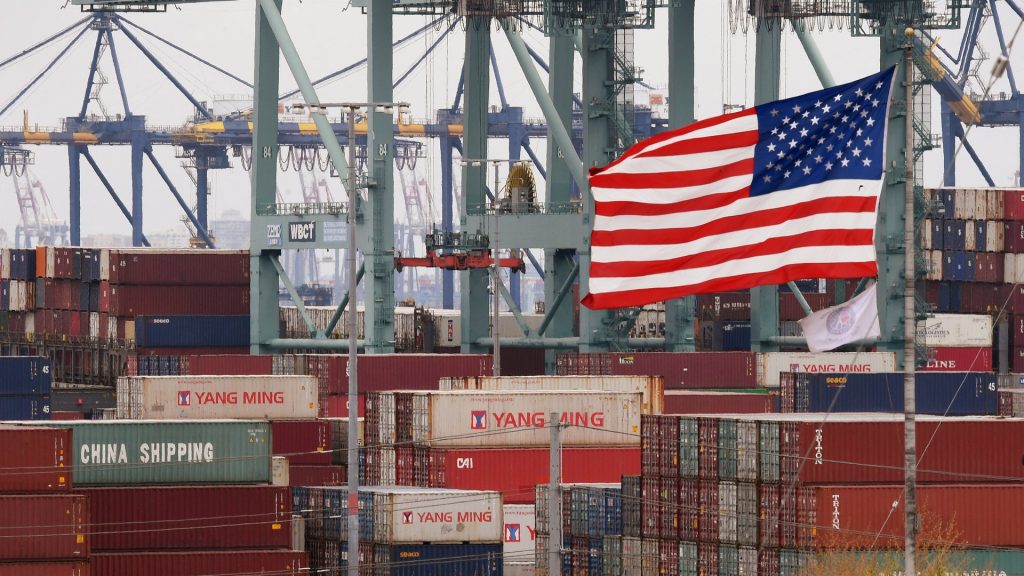
President Donald Trump’s latest tariffs took effect just after midnight Friday, replacing the temporary import taxes that expired overnight and imposing new duties on dozens of major U.S. trading partners under a different trade law than the one the Supreme Court rejected earlier this year.
The tariffs apply to imports from 60 of the nation’s largest trading partners.
The White House says those countries have failed to adopt or effectively enforce bans on goods produced with forced labor, and the Office of the U.S. Trade Representative says they account for more than 99% of U.S. imports covered by the action.
White House turns to different trade law
The new tariffs were imposed under Section 301 of the Trade Act of 1974 after the Supreme Court ruled earlier this year that Trump could not rely on emergency powers to impose broad import taxes.
The temporary worldwide tariffs expired at 12:01 a.m. Friday. The new Section 301 tariffs took effect at the same time, allowing the administration to continue collecting import taxes under a different legal authority.
Trade Representative Jamieson Greer said the tariffs are intended to pressure trading partners to strengthen enforcement against goods produced with forced labor while protecting American workers.
“The United States has had a forced labor import ban for nearly a century, and rigorously enforces it; it’s well past time for our trading partners to do the same,” Greer said.

Greer said the tariffs are meant to address both forced labor and what the administration considers an unfair trade practice. Countries that enforce import bans on forced-labor goods face a 10% tariff, while those that do not face a 12.5% rate. Certain products, including some fuels, fertilizers, pharmaceuticals and goods already covered by other tariff programs, are exempt.
Kagan cites earlier tariff ruling
During a judicial conference in Washington state Thursday, Supreme Court Justice Elena Kagan defended the court’s independence by pointing to its earlier decision striking down Trump’s previous tariff strategy.
Asked whether the court had become too closely aligned with the president, Kagan cited the ruling as evidence that the justices had rejected one of his central policy priorities.
“Tariffs is probably the key policy issue for this president. I mean, something he campaigned on, he ran on, he cared an enormous amount about,” Kagan said. “I don’t think that there are all that many decisions in recent times where a court strikes down such an important policy to a sitting president.”

Another tariff investigation remains open
The forced labor investigation is not the only Section 301 trade case underway.
The U.S. Trade Representative is also examining whether 16 economies have overproduced goods in ways that undercut American manufacturers. That investigation remains open and could result in another round of tariffs.
Round out your reading
- From Obama to Trump to Biden: When networks said ‘no’ to presidential speeches.
- ‘The end of American science as we know it.’ White House funding plan sparks alarm.
- AI data centers are popping up everywhere. What exactly do they do?
- The Trump administration is accused of breaking a law built to target the KKK.
- One Republican senator is dead, another is still alive. Both are the center of conspiracy theories.
Ella Rae Greene, Editor In Chief