Black mothers more likely to be flagged to police over alleged pregnancy drug use: Report
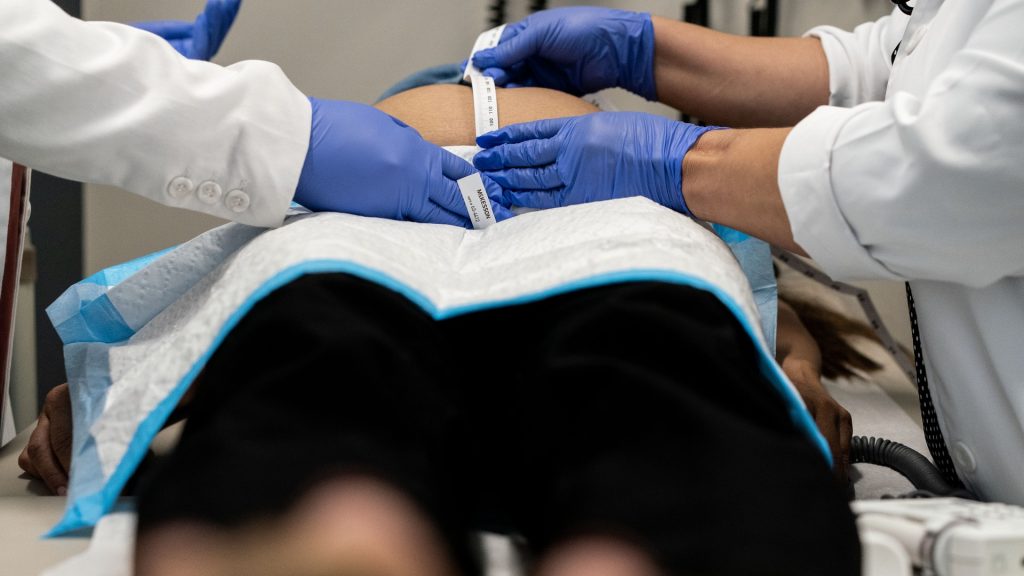
A new analysis affirmed what researchers have long hypothesized: Police receive more referrals to drug test pregnant Black people far more often than their white counterparts.
The findings came from an analysis that The Marshall Project, Mother Jones, CBS News and Reveal jointly published Thursday after reviewing child welfare data from eight states. Referrals stemmed from positive drug tests from health care professionals who are legally required to report child abuse.
If a nurse or doctor spots the positive, it could trigger a formal investigation with law enforcement and child welfare agencies. The report analyzed seven years’ worth of welfare referrals across 20 states from the National Data Archive on Child Abuse and Neglect, a federal repository. Eight states had data showing that referrals to police or prosecutors were more common with Black families.
Minnesota had the highest rate, at 3.6 times more often than white babies.
In more than half of the cases, agencies referred families to police when parents were cleared of allegations or if they found no evidence of imminent danger. Analysts released similar data in 2007, finding Black women and their newborns were 1.5 times more likely to be tested for illicit substances compared to others.
Drug testing in maternal wards expanded over the years to combat substance abuse with crack cocaine in the 1980s and opioids in the 2000s. It’s become a controversial measure that Massachusetts General Hospital said in a 2023 post can harm families instead of addressing substance abuse.
“Toxicology testing in this setting can have far-reaching consequences, including the introduction of child welfare surveillance into the family’s life, loss of parental custody and criminal charges,” Massachusetts General Hospital said.
An issue also arises in everyday foods or items people consume that can generate false positive results like a poppy seed bagel, hemp products or fermented items like kombucha. Several of those products are considered safe to eat while pregnant or nursing.
Disparities grow involving marijuana
The Marshall Project zeroed in on two cases out of a South Carolina hospital where a Black mom and a white mom were drug tested after giving birth. Both tested positive, but investigators with the state Department of Social Services referred the Black mom to police. The agency didn’t press charges against the white mom.
According to the reporting, investigators didn’t interview the Black mother or make attempts to identify a possible reason for the positive test before arresting her for child abuse. Investigators said that the white mom ate a single cannabidiol edible she bought and didn’t believe there was a threat to the child.
Researchers with Michigan Medicine, operated by the University of Michigan, analyzed data from 26,366 births between 2014 and 2020 and found babies born to white parents were 24% less likely to be drug tested for THC than those born to Black parents. They noted the white newborns were more likely to test positive for opioids.
The study covered the years before and after Michigan legalized cannabis for recreational use in 2018. Subsequently, the state health department changed its practice on child welfare referrals to state that it’s possible for parents to use cannabis and still safely care for children.
“This suggests that clinician implicit biases may lead to undertesting of White newborns and a missed opportunity to detect and treat opioid use disorder,” researchers wrote. “We view overtesting of Black newborns as a legacy of the culture of White supremacy in reproductive health care in which the conduct of Black women, specifically regarding prenatal substance exposure, is criminalized via the CPS system.”
Parents, clinicians against the practice
Several parent and healthcare advocacy groups have fought to get the measure changed to better address substance abuse and systemic racial disparities.
The American College of Obstetrics and Gynecology wrote in 2025 that suspected drug use should be treated on a case-by-case basis. It broadly recommends hospitals to minimize post-delivery opioid prescriptions and maximize medical intervention for the livelihood of the parent and newborn.
“The first year postpartum is the highest-risk period for maternal drug-related deaths,” according to the report. “Deaths involving synthetic opioids, primarily illicitly manufactured fentanyl, continued to rise, with 73,838 overdose deaths reported in 2022.”
The body warned clinicians that some resistance to rehab is due to affordability, access to care and cultural boundaries. They also encouraged gynecologists to consult with a medical team to develop a care plan for patients after they give birth.
The American Medical Association has filed friend of the court briefs in cases involving the use of drug screens in maternal wards without consent and “criminalizing” patients suffering from substance use disorder. A 2001 Supreme Court opinion held that nonconsensual drug tests violated patients’ rights and didn’t fit the special needs doctrine. The association has since filed court briefs to prevent medical tests from being used in criminal investigations without the patient’s consent.
The AMA said in an Ohio brief that jail isn’t the place for pregnant people in active substance abuse. The case surrounded a pregnant woman who disclosed to her doctors about illicit drug use during her pregnancy. A state appellate court overturned a guilty jury verdict for the woman.
“Feeling threatened that they could face criminal charges and distrustful of the system, pregnant people are also discouraged from sharing information about drug use to their physician, information that is vital in helping physicians treat mothers, fetuses and newborns.”
Round out your reading
- With more prison space than prisoners, correctional facilities are shutting down.
- ‘Game changer’: New cancer treatment turns major surgery into an outpatient procedure.
- Viewers overwhelmingly support ‘The View’s’ fight against the FCC. Will that matter?
- Why an ICE shooting in Houston isn’t leading to mass protests.
- Milwaukee detective is the latest officer charged with misusing Flock cameras.
Ella Rae Greene, Editor In Chief