The Border Patrol program meant to save lives can’t prove it’s working
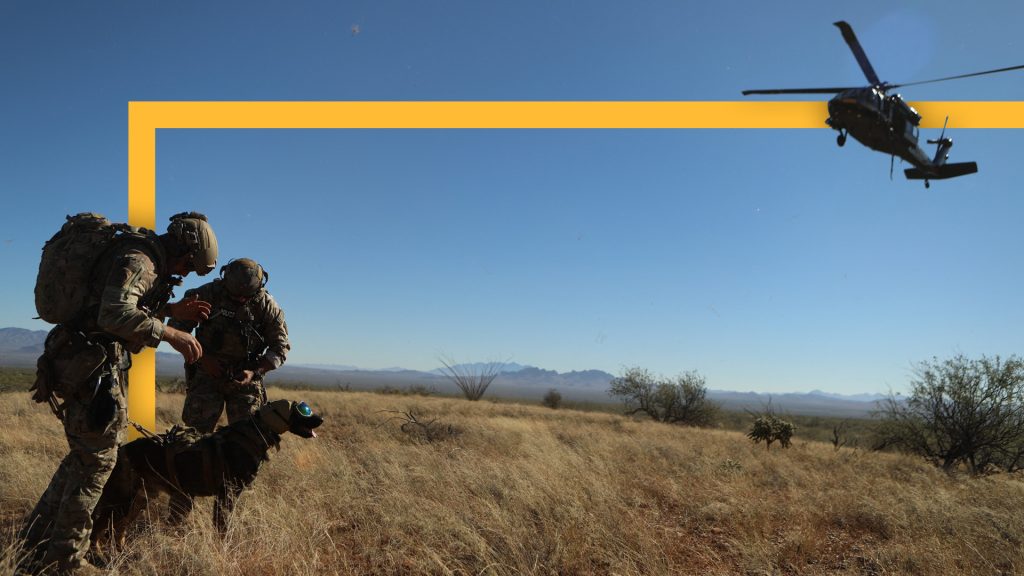
U.S. Border Patrol gets millions of taxpayer dollars every year to save people who are trying to cross the border but end up in life-threatening danger. Is the agency doing that?
According to a new report from the nonpartisan Government Accountability Office, no one can tell.
“There’s really two concerns,” Josiah Heyman, professor and director of the Center for Inter-American and Border Studies at the University of Texas at El Paso, told Straight Arrow. “One: Is the government actually doing what they’re supposed to do? And the other is, they’re getting all this money. Are they spending it correctly?”
The Border Beacon Program allows migrants in distress to call Border Patrol for a rescue. They do so by placing solar-powered beacons in remote areas that the agency knows are treacherous for migrants.

Those who call are typically given medical treatment and then processed under immigration law.
“The border is extremely dangerous,” Andrew Arthur, resident fellow in law and policy at the Center for Immigration Studies and a former immigration judge, told Straight Arrow.
New report
As part of that program, Border Patrol is supposed to collect and share a wealth of data on the program’s activities.
That includes rescues, deaths, beacon deployments, types of emergencies, identity and much more.
According to the report, a Border Patrol official said the agency inadvertently omitted some of that information and wasn’t even aware of the requirement.
“It’s basically saying to the Border Patrol, ‘Hey, you have this legal requirement to run these rescue locations that people can go to, and you need to actually do a good job of that,’” Heyman said.
Some of that information appears to have been omitted because Border Patrol’s internal operating procedures don’t “specify the reporting requirements” to the program manager who puts together the report.
That information also helps with future program budgeting and seeing if it’s meeting its purpose.
One of the most important pieces of information that’s supposed to be in the report is the location and number of times people, law enforcement or anyone else has found the human remains of someone who tried to cross the border.

“It is extremely rural, and so consequently, a lot of people fall into distress when they’re attempting to cross illegally into the United States, particularly in the western part of Texas,” Arthur said.
Of particular importance is that the agency can use data on those deaths to inform them about new beacon placements.
The most recent data shows 895 people died near the southwest border in 2022, by far the highest in more than a decade.
“They die from heat, they die from lack of water,” Heyman said. “That’s really what kills people, is the lack of water, or they fall, or they drown in irrigation canals.”
History of the program
In 1994, former President Bill Clinton, backed by conservative majorities in Congress, put in place tougher immigration policies. That included stricter border enforcement.
Prior to that, migrants often crossed the border in places like southern San Diego County or El Paso.
“Those were places where there were a lot of people around, and they were relatively easy places for the border patrol to detect people, but it was also easy places for people to cross and not be at serious risk,” Heyman said.

Once those areas got stricter on those crossings, migrants started attempting to cross in more remote and dangerous places.
In 2001, 14 Mexicans died in 115-degree desert heat near Yuma, Arizona.
The first beacons were placed and the BORSTAR, or Border Patrol Search, Trauma, and Rescue team, was born the following year.
“Those are specially trained agents trained in first aid,” Arthur said. “They can minimally set bones so that people can be transported out, they can stabilize individuals, they can revive individuals, do CPR, and they have the tools that they need to run a hydration line into individuals.”
Over the next two decades, more and more beacons were placed, and the initiative became part of the larger Missing Migrant Program, which enlists other agencies to help protect people trying to cross the border.
What’s next?
GAO’s report recommends that Customs and Border Protection (CBP), which is in charge of Border Patrol, update its internal operating procedures to get that data in future reports.
The Department of Homeland Security agreed.
“This is a situation in which CBP needs to respond, to comply with Congress’s reports,” Arthur said.
When it comes to budget, this program gets $4 million, or about 0.02%, of the entire CBP budget.

That’s the same amount as the prior year and twice as much as FY2024.
“It is a fraction of the border budget,” Arthur said.
Meanwhile, the number of people crossing the southwest border has plummeted in recent years.
“That’s because people have no chance of getting asylum,” Heyman said.
There are volunteer groups that also collect data and try to rescue people on the border.
No More Deaths released a count that showed there were 20-40% more migrant deaths than CBP reported, depending on the sector.
GAO wants the most accurate data possible to shape legislation.
“Do we have a policy that respects human life and dignity that does not put people at risk, does not push them out into the most remote and most dangerous parts of the desert?” Heyman said. “That’s been the process.”
Round out your reading
- With more prison space than prisoners, correctional facilities are shutting down.
- ‘Game changer’: New cancer treatment turns major surgery into an outpatient procedure.
- Viewers overwhelmingly support ‘The View’s’ fight against the FCC. Will that matter?
- Why an ICE shooting in Houston isn’t leading to mass protests.
- Milwaukee detective is the latest officer charged with misusing Flock cameras.
Ella Rae Greene, Editor In Chief