How climate change could cause your water bill to double
Nearly two out of three people believe climate change is driving up their utility bills, according to a recent survey by the Yale Program on Climate Change Communication. According to a new study, they’re not wrong.
Climate change is stressing urban water systems nationwide, driving up household costs for millions of Americans – and it’s only getting worse. A new study reveals that, because of climate change, people’s water bills are expected to nearly double in some U.S. cities over the next two decades.
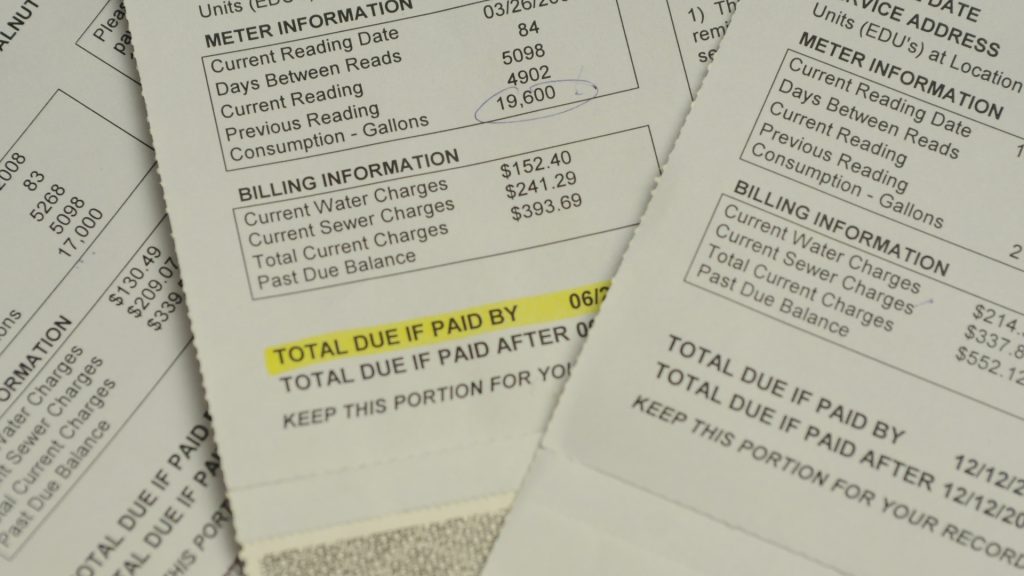
Water prices have been rising faster than overall inflation, with average U.S. household water and sewer bills up 5.1% in 2025 – the steepest annual increase in five years, according to Bluefield Research. Since 2020, water costs have risen nearly 25%.
And while there are plenty of factors driving up costs, including energy, labor, and water treatment chemicals, climate change has a unique impact. Megan Bondar, a water utility analyst at Bluefield Research, called extreme weather “one of the most important emerging cost drivers we’re seeing.”
“And it’s going to increase in importance as climate change only gets worse,” she added.
The new research, published in “Nature Sustainability,” looks at how climate change, infrastructure and water demand come together to drive up prices in an environment where affordability is already an issue.
How climate impacts infrastructure
Unbiased. Straight Facts.TM
An EPA report released in 2023 estimated that it would take $625 billion over the next 20 years to meet the U.S. need for safe drinking water.

The average cost of tap water in the U.S. has increased three times faster than inflation over the past 20 years. Aging infrastructure and deferred maintenance often drove the price hikes.
Extreme weather events are putting even more strain on those aging systems.
For example, when Hurricane Helene hit North Carolina in 2024, it caused nearly $3.7 billion worth of damage to the region’s water systems, according to a state assessment. That storm all but destroyed the water systems in Asheville. The city was able to secure a loan from the Environmental Protection Agency to pay for repairs, but it still needs $250 million for upgrades.
Clay Chandler, a spokesperson for the city’s water department, told The Washington Post that the cost amounts to five times the agency’s annual operating revenue.
“We can’t raise rates to the point where people can’t pay for their water service,” Chandler said. “But we need to give our system a fighting chance against the next extreme weather event.”
While utility companies can apply for federal help with issues like this, federal government funding for water infrastructure has dropped drastically over the past 50 years. According to the American Society of Civil Engineers, the total federal capital spending on water infrastructure fell to 9% in 2017 from 63% in 1977.
“Climate change stresses water supplies and forces utilities to build expensive new infrastructure to maintain reliability,” the study’s lead author, Jennifer Skerker, said. “In cities already struggling with affordability due to aging infrastructure, the additional costs passed on to ratepayers to pay for additional infrastructure and reliability measures can push a substantial share of households into crisis.”
How Santa Cruz is helping us see into the future
For the study, researchers looked at Santa Cruz, California, which relies almost entirely on local surface water and a single reservoir. To lower costs, the local utility has implemented things like water-saving appliances and reduced irrigation, which required infrastructure investments for climate resilience.
Using a modeling framework developed with data from Santa Cruz’s water department, the researchers linked plausible future climate scenarios with utility adaptation decisions, such as building a wastewater reuse facility, methods for pricing water and household-level water demand.
Researchers found that measures taken to adapt to reduced water availability could nearly double the median water bill in Santa Cruz by 2050. Rising bills increase the number of households paying more than the EPA’s affordability threshold. Right now, that’s at about 19%, but could reach 35% by 2050, according to the study.
It also says the median water bill for Santa Cruz’s poorest residents could rise from around $60 to $111 per month under a dry climate scenario. That would force more than 5% of households there to spend up to a third of their income on water alone.
And while the study only looked at Santa Cruz, researchers say the model they used to make their determinations can be adapted to assess water affordability risks in other cities facing vulnerabilities similar to those of Santa Cruz, according to Phys.org.
“The bottom line is that under today’s financing and regulatory models, climate adaptation and water affordability are on a collision course,” senior author Sarah Fletcher said. “Ensuring reliable water access for everyone is going to require interventions at the state and federal level that go far beyond what individual utilities can do on their own.”
Round out your reading
- Scientists are now eyeing a possible ‘Mega El Niño’.
- Critics mocked Mamdani’s AC request. Republicans made the same ask.
- Social Security was supposed to be a safety net. To young Americans, it’s a broken promise.
- What happens when the water dries up? Much of the American West is close to finding out.
- Political insiders are targeting the two-party system’s grip on America.
Ella Rae Greene, Editor In Chief