GOP takes fight to overturn Florida’s 2020 census to Supreme Court
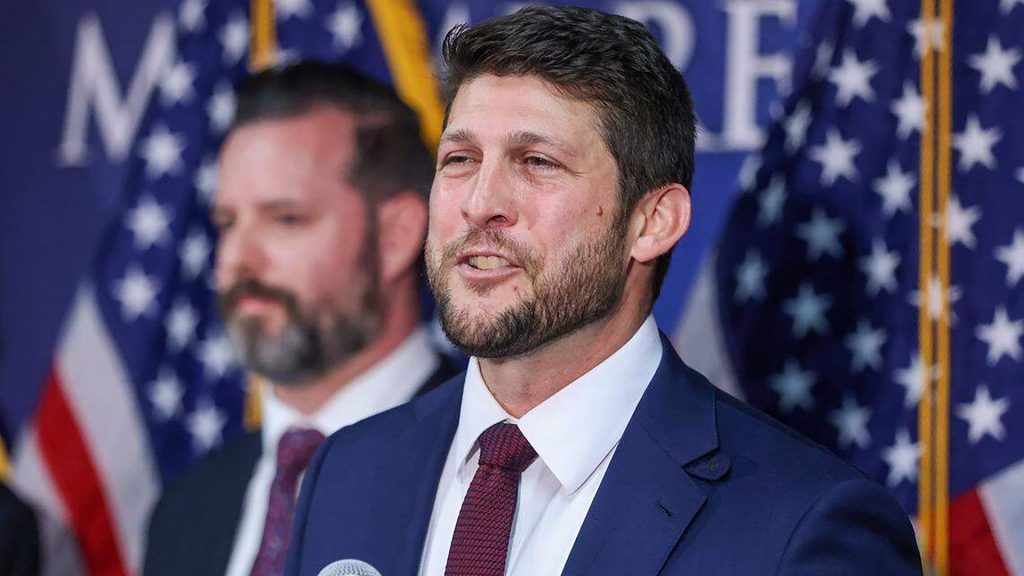
The 2020 census counted 21,538,187 residents of Florida, but a legal organization founded by a top aide to President Donald Trump says that number is way low. The Supreme Court may decide who’s right.
America First Legal, a nonprofit law firm created by Stephen Miller, Trump’s deputy White House chief of staff, is trying to overturn the 2020 census for Florida. It argues that an accurate population count would give the state another congressional seat — one that likely would be filled by a Republican.
The group appealed to the Supreme Court after a three-judge panel in the Middle District of Florida dismissed its lawsuit.
The appeal faces significant legal hurdles, experts say.
Lawsuit challenges long-used methodology
Miller’s group originally filed the lawsuit last year on behalf of Florida College Republican groups. It was eventually joined by Byron Donalds, a Republican candidate for Florida governor.
The suit claims an improper census count cost the GOP an additional House seat and vote in the Electoral College. The state now has 28 House districts and 30 electoral votes.
The case centers on a part of the census process known as imputation — a statistical method used to fill in gaps, such as when people don’t fill out forms or give incomplete information.
“It is a scientifically based and evidence-based method for filling in missing data when having a full set of data would be more accurate than publishing data with a lot of missing information,” Terri Ann Lowenthal, a consultant on census issues, told Straight Arrow.
Essentially, it’s a way to make sure people still get counted even if they don’t participate in the census.
“If the Census Bureau is sure that there’s a household at a certain address, and the address just doesn’t respond, then the bureau has administrative data about that household, then they impute that household into the overall tabulation,” Jan Vink, a demographer and professor at Cornell University, told Straight Arrow. “So, they still account for the household, even if the household didn’t respond themselves.”
The process has been used, in some form, since 1890. It was developed by Herman Hollerith, who used data and mechanical coding to help speed up the census, which at the time took years to complete. Hollerith went on to found the Tabulating Machine Company, now known as IBM.
“He developed a system using coach cards, which were used for every home and household in the country to indicate if nobody responded to the knock on the door,” Lowenthal said. “But if it was clear that somebody lived there, the characteristics of a nearby household would be used as a replacement to fill out the count.”
The plaintiffs in this lawsuit argue that the Census Bureau relied too heavily on imputation and want the courts to rule the data was not lawfully produced.
Seeking Supreme Court intervention
A three-judge panel dismissed the original version of the lawsuit, essentially saying the plaintiffs waited too long after the census to file.
An amendment complaint claimed the Census Bureau cut corners in 2020 because of the COVID-19 pandemic. But this week, the judges once again dismissed the suit, this time with prejudice — meaning it cannot be refiled.
“The arguments that they’re making are really more political ones than substantive,” Jeffrey Wice, a professor at New York Law School, told Straight Arrow.
Nevertheless, the plaintiffs are trying to take the case directly to the Supreme Court — a process that comes with its own challenges.
“The first hurdle they’re going to face is whether they have standing to go directly to the Supreme Court, without going through the federal appellate court first,” Wice said.
Most often, that happens when issues are time-sensitive, such as when the Trump administration tried in 2019 to add a citizenship question on the 2020 census.
Overturning a census
It has never happened, but what would be the result of an overturned census?
“Nobody really knows,” Vink said.
“It would be simply impractical and not doable,” Lowenthal said.
“To try to invalidate the 2020 census is both unprecedented, illogical and impractical,” Wice said.
Censuses determine not just a state’s congressional representation and electoral votes but also federal funding for state and local governments. The repercussions of overturning a census would ripple into so many areas it’s hard to comprehend what that would actually mean, experts said — especially when the 2030 census is closer in the future than the 2020 census is in the past.
“The very first official operation for the 2030 census starts next year, in 2027,” Lowenthal said. “The 2020 census ship has failed, and it’s not coming back.”
Round out your reading
- Scientists are now eyeing a possible ‘Mega El Niño’.
- Critics mocked Mamdani’s AC request. Republicans made the same ask.
- Social Security was supposed to be a safety net. To young Americans, it’s a broken promise.
- What happens when the water dries up? Much of the American West is close to finding out.
- Political insiders are targeting the two-party system’s grip on America.
Ella Rae Greene, Editor In Chief