Metals found in tampons don’t pose a risk to women’s health: FDA
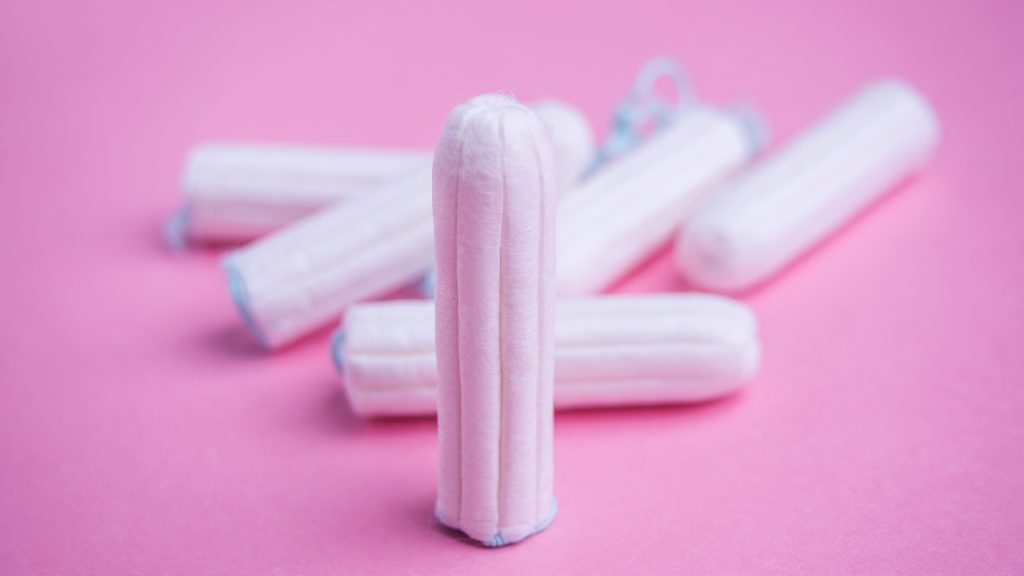
Two years after a study in the scientific journal Environment International found 14 different tampon brands contained toxic metals, the Food and Drug Administration has concluded its own study into the effects of those metals.
In July 2024, Environment International found evidence of arsenic, lead, mercury, nickel and other metals in both organic and non-organic tampons.
At the time, it caused some worry amongst women, but doctors and experts spoke out, saying that levels of the metal were low and that the news wasn’t, at the time, a cause for concern.
They even pushed for more research to determine what risk the metals posed. Now, the FDA has come to a conclusion.
The FDA’s latest conclusion
In an updated conclusion this week, the FDA said its study found the level of metals released when a woman uses a tampon is so low that it doesn’t pose a risk.
“While trace metals are present in tampons, the amount released during use is too small to cause harm,” the FDA wrote.
They tested the tampons under conditions similar to those of the female body to see which metals were released and to measure the level of exposure.
Researchers at the FDA studied 11 tampons from six brands and confirmed the presence of 19 metals, including lead.
They continued by measuring metal levels and determined a “worst-case risk of exposure from metals in tampons when used over a lifetime.”
“The FDA found that the levels were far below what would be considered harmful,” the study says.
Low levels, but what are the effects of the metals?
While the FDA says metal levels are so low they don’t affect the human body, the metals themselves do at higher concentrations.
Researchers across various national agencies and forums have studied some of the metals found in tampons, including lead, cadmium and calcium.
Generally, researchers have found that exposure to heavy metals through drinking water, food, air pollution, industrial workplaces, tobacco smoke, and other environmental sources has been linked to a number of health issues, including neurodevelopmental impairment in children.
These heavy metals include arsenic, lead and mercury — all of which were found in tampons, but at significantly lower levels.
Some metals, such as arsenic, come from a tampon’s cotton picking up what naturally occurs in the ground. Rice, which is submerged in water for much of its growth, also absorbs arsenic that ultimately ends up in your pantry. Corn-based products often carry trace amounts of arsenic, cadmium, lead, and mercury that the plant naturally absorbs from the soil in which it’s grown.
Arsenic and cadmium are both considered carcinogens. Arsenic has been linked to cardiovascular disease, lung cancer and diabetes, while cadmium has also been linked to kidney and bone density issues.
What the general public is saying
Since the FDA shared its conclusion this week, the public response has been widespread. Users have taken to social media, with some expressing concern and doubt while others claim there’s nothing to worry about.
On Reddit, one user wrote, “Why would anyone listen to the current FDA about anything?” And another casts doubt on the Trump administration, saying they have “made it abundantly clear that you can’t trust them.”
On the other side, users on Reddit are trying to explain the FDA’s conclusion and express support for it.
“Heavy metals in tampons are there because they’re made of cotton, and they will always be in there,” one user wrote. “It’s genuinely just natural levels of heavy metals you find in textiles derived from plants, and they’re trace amounts.”
Either way, it’s a decision that’s highly discussed on social platforms.
What experts are saying
Despite the latest conclusion and recent studies, Abee Boyles, a health scientist administrator in the Population Health Branch at the National Institute of Environmental Health Sciences, said there’s a lot we don’t know about feminine products.
“There is surprisingly little information available about the long-term safety of feminine hygiene products,” she said.
That is to say, this FDA study likely won’t be the last.
Round out your reading
- Scientists are now eyeing a possible ‘Mega El Niño’.
- Critics mocked Mamdani’s AC request. Republicans made the same ask.
- Social Security was supposed to be a safety net. To young Americans, it’s a broken promise.
- What happens when the water dries up? Much of the American West is close to finding out.
- Political insiders are targeting the two-party system’s grip on America.
Ella Rae Greene, Editor In Chief