How Trump Accounts compare to IRAs and other investment methods
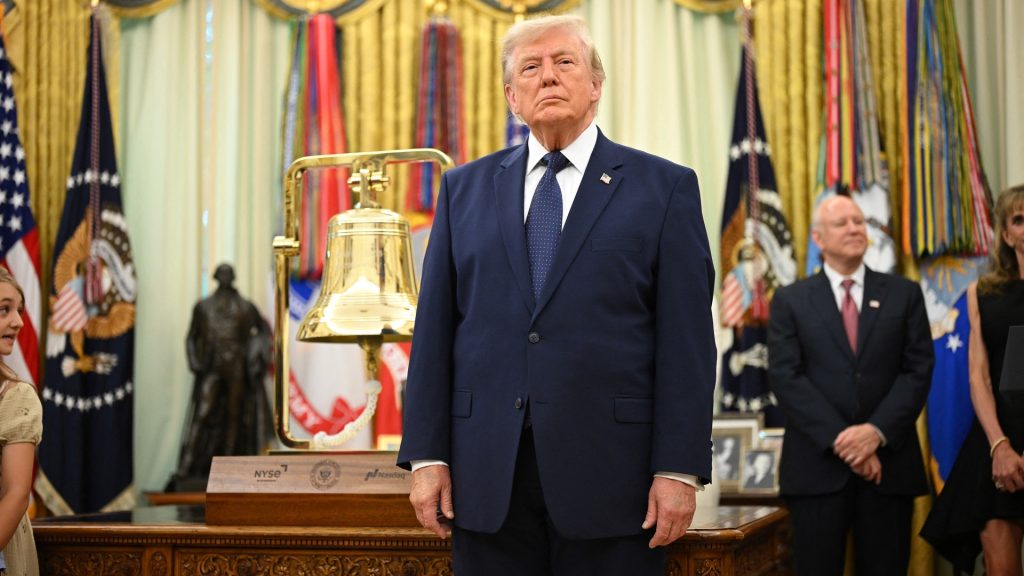
Americans already have a handful of ways to invest in their children’s financial futures. With Trump Accounts now available, how do they stack up to what’s already out there?
Trump accounts officially opened following the Fourth of July holiday. While most investment vehicles carry certain advantages, each is unique. Trump Accounts are no different.
“They’re basically a special type of traditional individual retirement account that can be opened for children under 18,” Olivia S. Mitchell, professor of business economics and policy at the Wharton School of the University of Pennsylvania, told Straight Arrow.
What are Trump Accounts?
Trump Accounts are essentially a different kind of individual retirement account, or IRA.
The idea behind Trump Accounts dates back to the 1990s with what were called Baby Bonds.
In 1990, economist Michael Sherraden published a piece arguing public policy should help people build long-term wealth, but the idea got little traction in Washington.
“A long time ago, progressives, liberals decided that one of the things to do to make the country less unequal is to make sure that kids have some wealth from the time that they are born,” Joshua Gotbaum, scholar in economic studies at the Brookings Institution, told Straight Arrow.
In a rare moment of semi-bipartisanship, conservatives have recently taken up that mantle.
“Conservatives decided that that was a good thing, because if kids had had investments as they were growing up, they would have an incentive to do something with their lives to make those investments work,” Gotbaum said.
So, in President Donald Trump’s so-called “One Big Beautiful Bill,” Trump Accounts were born.
Those accounts are established for people under 18 and cannot be accessed until they turn 18.
They are essentially a typical IRA, meaning any money goes into the account pre-tax and is taxed when it’s withdrawn.
That money grows in several ways, the first being that it cannot be touched until the owner turns 18.
Second, the funds are invested in a broad-based index, similar to a major stock index like the S&P 500.
Third, the money comes from numerous places.
“They use tax incentives to encourage a wide weight range of investors in a child’s future,” Ray Boshara, senior policy adviser at Washington University in St. Louis, told Straight Arrow. “Philanthropy, nonprofit, cities, states, employers, they can all contribute to the account prior to age 18.”
For some, that includes the U.S. government.
Any child born between Jan. 1, 2025, and Dec. 31, 2028, will receive $1,000 to that account from the federal government.
Kids born after July 2026 can be enrolled before they ever get home.
“When a child is born in the hospital, parents sign a form to create a Social Security account, and what the Social Security Administration just announced is that they will essentially use that form to open a [Trump] Account,” Gotbaum said.
Trump Accounts also received one of the most charitable gifts in U.S. history from Michael and Susan Dell. They pledged more than $6 billion to the new program.
That’s another area where Trump Accounts differ. Under current law, a charitable organization cannot make a donation to one individual child because it would be viewed as an impermissible private benefit.
Giving that much to the children with Trump Accounts is different.
“A 501(c)(3) can make a grant to all the kids in an area, all the kids in a town, and so that’s another innovation that these accounts can do,” Gotbaum said.
One Big Beautiful difference
When it comes to a traditional IRA versus a Trump Account, they are relatively similar.
Nearly one-third of Americans have a form of an IRA.
However, there’s a major difference between an IRA and a Roth IRA.
While an IRA goes in pretax and gets taxed when you withdraw, a Roth IRA gets taxed as it goes in and then can be withdrawn tax-free.
“Think about it as how you can frontload a traditional IRA, and then basically all the rules around traditional IRAs take over starting at age 18,” Boshara said.
Trump Accounts are built like the traditional IRA but can be converted to a Roth IRA after the child turns 18.
Meaning you’d need to pay the taxes for what’s in there, but the rest of the growth moves like a Roth IRA.
“Somebody under existing law could take a traditional IRA and do a Roth conversion,” Boshara said. “Pay whatever taxes they have to do that conversion, so that for the remainder of its growth it would be a Roth IRA.”
Then there’s the 529 college savings plan.
That essentially is a tax-advantaged investment account that allows families to save and invest money for a child’s future education expenses. It comes with massive tax breaks.
The investments grow tax-free, with withdrawals generally being tax-free when used for qualified education costs such as college tuition, certain K–12 expenses, and some apprenticeship or student loan expenses.
What’s the right move for you?
“I worry that there are so many different named accounts and numbered accounts that it gets very confusing for the average person because it’s hard to keep track of all these different types of accounts,” Mitchell said.
If you’re a parent or expecting and reading about all the options, it can be understandably confusing about what’s best for you and your child.
At the end of the day, experts say it’s most dependent on your income.
Starting with Trump Accounts, is this a good idea for you?
“The advantage of the Trump Account is that you have a wide range of investors,” Boshara said.
The U.S. stock market can be volatile but has overall proven to have good returns over long periods of time.
Experts Straight Arrow spoke with said Trump Accounts are beneficial, especially for people who will have a newborn who qualifies for that $1,000 from the government.
And, unlike the 529 plan, Trump Accounts allow for that money to go to things other than an education.
“A Trump Account lets you have penalty-free withdrawals for also a first home and for retirement,” Boshara said.
If you end up with a Trump Account, the question whether you switch it from a traditional IRA to a Roth IRA at age 18.
“I really think that comes down to your tax bracket,” Boshara said.
For people in lower tax brackets, it may not make the most sense to switch that over because they may not have the current cash to pay the taxes on that switch.
The most appealing part for that group of people is the flexibility to put that money into a home rather than just education.
Whereas people in higher income tax brackets may see the benefit of the switch a little more if they even have those accounts in the first place.
“They’re going to get better tax breaks with 529 and brokerage accounts than they are with the Trump Account,” Boshara said. “But for those families that get $1,000 at birth, I can see high-income families not wanting to leave that money on the table.”
Having a Trump Account doesn’t necessarily replace a traditional IRA.
But you’ll be hard-pressed to find any financial adviser who says it’s a bad idea to invest in your child’s financial future from birth.
“It’s not a replacement for IRAs, but a complement to them,” Mitchell said.
Round out your reading
- Scientists are now eyeing a possible ‘Mega El Niño’.
- Critics mocked Mamdani’s AC request. Republicans made the same ask.
- Social Security was supposed to be a safety net. To young Americans, it’s a broken promise.
- What happens when the water dries up? Much of the American West is close to finding out.
- Political insiders are targeting the two-party system’s grip on America.
Ella Rae Greene, Editor In Chief