US commanders ignored warnings before approving strike that hit Iranian school: Report
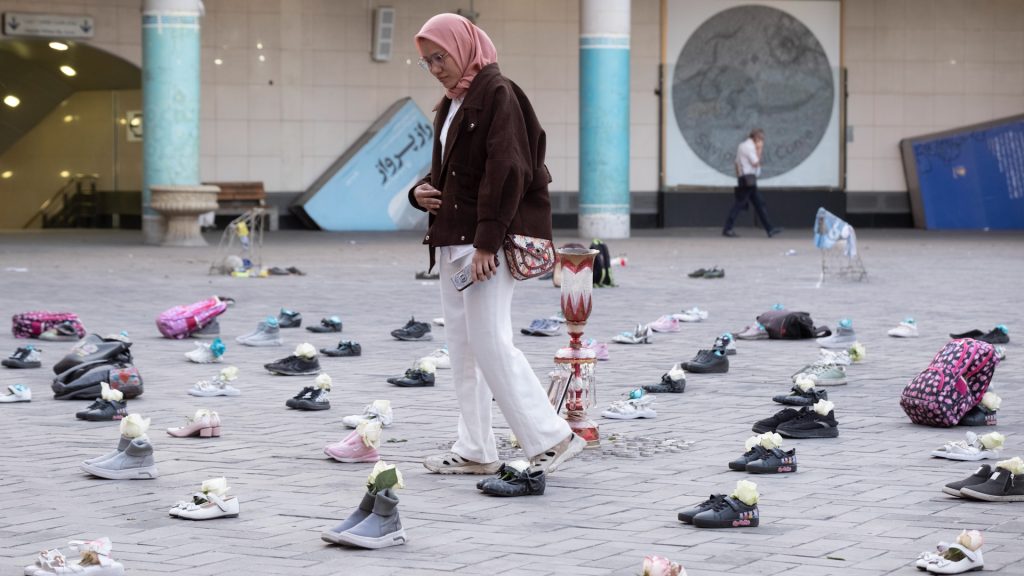
On the first day of the Iran war, a U.S. missile destroyed an unlikely target: a school for girls. Nearly 200 children and adults died.
More than four months later, a new report claims that senior U.S. military commanders approved the target after disregarding warnings that intelligence about the site was years out of date.
The allegation came in a CNN report this week about the Feb. 28 strike that hit Shajareh Tayyebeh Elementary School in Minab. The school sat next to an Islamic Revolutionary Guard Corps facility that the U.S. military was attacking.
U.S. officials neither confirmed nor denied CNN’s reporting, although a White House official told the network that the investigation is continuing.
“The United States does not target civilians,” CNN quoted the official as saying.

Warnings were in the targeting system
The central issue related to the airstrike is target validation.
The Pentagon’s targeting systems carried warnings flagging some Iran target records as outdated and in need of review. Three sources familiar with the decision-making process told CNN that senior commanders approved some strikes anyway.
Two sources said commanders moved ahead for “expediency” as the military rushed to build target lists at the start of the war. Those sources said the decision directly contributed to the strike at the school.
The older intelligence came from databases known as the Modernized Integrated Database, or MIDB, and the Machine-Assisted Analytic Rapid-Repository System, or MARS. MIDB is an older Pentagon targeting database. MARS is a newer artificial intelligence-powered platform designed to eventually replace MIDB.
An analyst had noticed that the site appeared to have changed. What may have once been part of a military compound now included a school separated by a fence. A separate intelligence tool stored that note, but the official database used to build the strike list did not include it.
Death tolls vary, but scale is clear
Reported death tolls vary. Iranian state media put the toll at at least 168 children and 14 teachers. Amnesty International put the toll at 156 people, including 120 children.
Satellite imagery showed that the school and the military base were part of the same compound in 2013. By 2016, images showed a fence separating the school from the base, as well as a separate school entrance.

That timeline matters because the warning at the center of CNN’s report was about old target information that had not been fully re-vetted before the strike.
Outside groups press for accountability
Amnesty International called the strike unlawful and said those responsible should be held accountable.
The organization said evidence indicated the U.S. failed to take “all feasible precautions” to avoid civilian harm. Amnesty said investigators should review how officials gathered intelligence, chose targets and took precautions, as well as whether AI played a role.
Amnesty also said Iranian authorities should remove civilians from the vicinity of military installations where feasible and allow independent monitors into the country.
PBS NewsHour reported from the school in May, where residents described the lasting trauma in Minab.
“The sounds of children are still here for me,” Asma Mogheirnin told PBS. “I can still hear them in my mind.”
Pentagon safeguards were already reduced
The strike is also drawing attention to changes inside the Pentagon’s civilian harm prevention system.
ProPublica reported that the Pentagon had built a Civilian Harm Mitigation and Response framework to improve planning before attacks and assess civilian harm afterward. Around 200 personnel were once assigned to the mission, including roughly 30 at a Civilian Protection Center of Excellence.
Citing former personnel, ProPublic reported that the administration has eliminated around 90% of the mission, leaving no more than one adviser at most commands. At Central Command, officials cut a 10-person team to one, though they later backfilled a handful of eliminated positions to help with the Iran campaign.
A group of Democratic senators, including Elizabeth Warren of Massachusetts and Chris Van Hollen of Maryland, pressed Defense Secretary Pete Hegseth in an April letter about civilian-harm safeguards in the war in Iran. The lawmakers asked the Pentagon to explain the status of its Minab investigation, say whether officials used AI in the target development process and state whether it would share the final report with Congress and the public.
Round out your reading
- Scientists are now eyeing a possible ‘Mega El Niño’.
- Critics mocked Mamdani’s AC request. Republicans made the same ask.
- Social Security was supposed to be a safety net. To young Americans, it’s a broken promise.
- What happens when the water dries up? Much of the American West is close to finding out.
- Political insiders are targeting the two-party system’s grip on America.
Ella Rae Greene, Editor In Chief