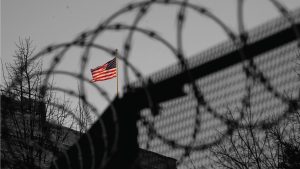
With more prison space than prisoners, correctional facilities are shutting down
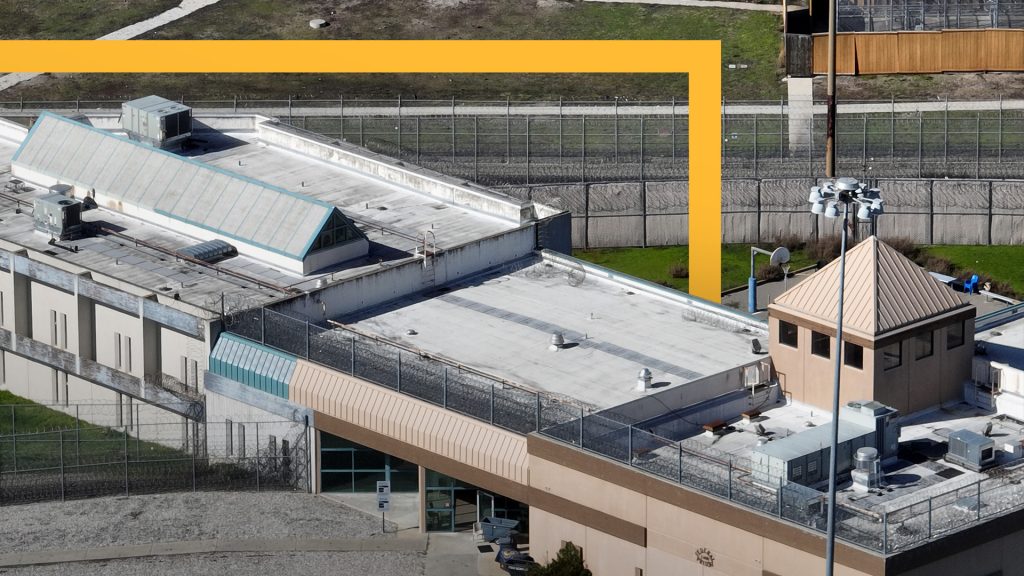
The foundations were crumbling beneath some buildings at the Maryland Correctional Institution in Jessup. Others needed new roofs, upgraded electrical systems and other repairs. Fixing the 45-year-old prison would cost hundreds of millions of dollars.
So, Maryland officials decided to shut it down. When MCI-J, as the facility is called, closed last week, Maryland became at least the 21st state this century to partly or fully shutter a correctional facility, according to an analysis of state records by the Sentencing Project.
The trend reflects an end to an important chapter of the story of mass incarceration, an era in which drug laws became more punitive, the war on crime mushroomed and the number of people sentenced to time behind bars surged. States poured billions of dollars into new prisons.
Now, the closures reflect a broader shift. Many states have revised sentencing laws and expanded education and job-training programs that help reduce the chances that people return to prison, JC Hendrickson, senior policy strategist for the Brennan Center’s Justice Program, told Straight Arrow.
“States have similarly seen prison populations drop,” he said.
So, after decades in which new correctional facilities sprouted from the landscape and old ones added capacity, many states now find themselves with ample prison space. They also are facing challenges of outdated, crumbling infrastructure.
The closures result in significant financial savings. Maryland, for instance, says closing MCI-J and moving about 700 inmates to other facilities will save taxpayers about $21 million a year.
“MCI-J has faced escalating plant infrastructure issues in addition to the continued degradation of the facility’s foundation due to its location and ongoing water penetration,” spokesperson Ioannis Varonis at Maryland’s Department of Public Safety and Correctional Services told Straight Arrow.

Varonis continued that modernizing the prison would require “substantial capital investment in the hundreds of millions of dollars without a true long-term solution for repairing its foundation.”
The closure “will retire a prison that is well past its functional lifespan.”
Fewer prisons, new strategy
No state has embraced closures more than California, which sees shutting down prisons as a key component to shrinking its incarceration system.
Since 2019, the state has closed four state prisons, and by this fall, the California Department of Corrections and Rehabilitation said it plans to close a fifth, the California Rehabilitation Center in Riverside County.
And California officials say they are aiming to close more. The Correctional Training Facility in Soledad has been identified as the next potential candidate for closure due to huge infrastructure issues.
The California closures are both a response to declining prison populations and an effort to cut costs. Prisons get one of the largest allocations in the state budget.
Minnesota is not only gearing up to close a prison — Minnesota Correctional Facility-Stillwater is scheduled to shut down by June 2029 — it is also experimenting with a different style of management. A cell hall once known for lockdowns became an Earned Living Unit last year.
The unit includes a herb garden, a barbershop and even a tattoo shop, while incarcerated people can participate in activities like a book club, the Star Tribune reported.
The unit hasn’t experienced a single lockdown.
“Research from other states shows that incentive‑based living units like ELUs can significantly reduce violence and misconduct,” Shannon Loehrke, a spokesperson for the Minnesota Department of Corrections, told Straight Arrow. Officials, she said, are “working toward expanding incentive-based living opportunities across all Minnesota correctional facilities.”
‘More flexibility’
Federal prisons also are closing.
On July 1, the federal Bureau of Prisons announced plans to close six federal prisons in four states: California, Kentucky, Texas and Virginia. The closures, the bureau said, address “decades of deferred maintenance and extreme staffing challenges.”
“With fewer people in federal prison, Bureau of Prison officials have had more flexibility to close some facilities,” the Brennan Center’s Hendrickson said. “That’s been especially important when facilities have had systemic issues, like a federal prison in California that was closed because of a culture of rampant sexual assault by staff against the people incarcerated there.”
Hendrickson was referring to Federal Correctional Institution, Dublin, where eight employees were charged between 2021 and 2024 with sexually assaulting female prisoners. The Bureau of Prisons closed the facility in 2024.

It also has closed Metropolitan Correctional Center in New York. Repairing the facility — where convicted sex offender Jeffrey Epstein died in 2019 — was too expensive, according to BOP spokesperson Emery Nelson.
In Pensacola, Florida’s Federal Prison Camp closed “to help alleviate the staffing shortages across the BOP,” Nelson said. “The structures that make up FPC Pensacola are owned by the U.S. Navy.”
The Navy is scheduled to demolish the vacated buildings, which are in significant disrepair, Nelson said.
‘Fewer cages’
Closing the federal prisons has its critics. So does simply moving incarcerated people from one prison to another.
“Closing these facilities will make communities less safe, place greater strain on already overworked correctional staff, reduce the Bureau’s operational capacity, and eliminate federal jobs that support families and local economies,” Everett Kelley, president of the American Federation of Government Employees, in a letter to Congress last week, urging lawmakers to intervene. “It also abandons communities that have long partnered with the federal government to fulfill an essential public safety mission.”
The Bureau of Prisons is flush with cash, some argue. The One Big Beautiful Bill Act provided the agency with $3 billion for staffing and $2 billion for infrastructure.
“Those investments should be used to strengthen the federal prison system, not dismantle it,” Kelley told Congress.
Others, however, say prison closures are necessary.
“The truth is that the best fix for inhumane conditions is not prettier cages—it’s fewer cages,” Len Kamdang, the Criminal Justice Project director at the Lawyers’ Committee for Civil Rights Under Law, told Straight Arrow. “A better-prison-design movement asks how to build a nicer cage. The decarceration and reuse movements ask a better question: how many cages do we actually need?”
New uses for old prisons
Some former prisons are being repurposed. In New York, for instance, the Arthur Kill Correctional Facility was transformed into a film and television studio, while Tennessee’s Brushy Mountain State Penitentiary in Tennessee became a whiskey distillery.
“An empty building is just an empty building. What you do with it is the policy,” Kamdang said. He added that a closure “matters most when it’s paired with reinvestment and reuse.”
He cited the former Lorton Reformatory in Virginia, where he ran a tutoring program in the 1990s.
“It was a notorious maximum-security facility, and its presence defined the surrounding neighborhood — you organized your sense of the place around it,” Kamdang said. In 2001, the prison closed. “Today the site is mixed-use residential and retail, and a real neighborhood grew up where the walls used to be.”
Prison reinvention is more of an exception than the status quo.
“Unfortunately, such projects are more of an exception than the norm,” Nicole Porter wrote for the Sentencing Project. “Lack of planning for the reuse of decommissioned prisons can lead to their continued use for incarceration purposes.”
‘The punishment didn’t disappear’
Not every prison closure signals a move away from incarceration.
Some former state correctional facilities have leased the space to Immigration and Customs Enforcement, which has sought additional detention space as it ramped up immigration enforcement during President Donald Trump’s second term.
While many prisons have closed, “in the current moment, the place of growth has been in the incarceration of immigrants through immigration detention contracts, ICE contracts,” Bob Libal, a senior campaign strategist for the Sentencing Project, told Straight Arrow.
In Indiana, for example, the old Indiana State Prison will close, and people will be incarcerated beginning next year in a new $1.2 billion facility. But the old prison won’t close. Indiana plans to lease 1,000 beds to detain immigrants.
”The closures were real,” Kamdang said. “But the punishment didn’t disappear — it migrated. It changed agencies, changed populations and largely escaped the accountability that the prison-reform movement spent 20 years building.”
Round out your reading
- Scientists are now eyeing a possible ‘Mega El Niño’.
- Critics mocked Mamdani’s AC request. Republicans made the same ask.
- Social Security was supposed to be a safety net. To young Americans, it’s a broken promise.
- What happens when the water dries up? Much of the American West is close to finding out.
- Political insiders are targeting the two-party system’s grip on America.
Ella Rae Greene, Editor In Chief