What you need to know about the Senate’s $70B immigration bill
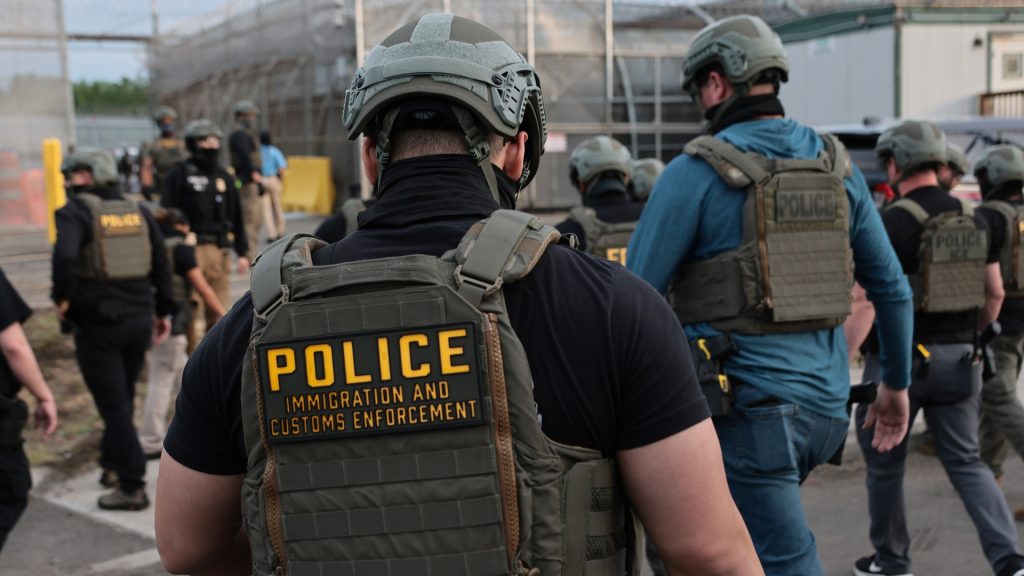
After an 18-hour vote-a-rama on the Senate floor, lawmakers passed a bill funding both Immigration and Customs Enforcement and the Border Patrol for the remainder of President Donald Trump’s term.
Senators from both parties proposed 29 amendments and motions before finally passing a rather simple, straightforward bill.
But the back-and-forth that ran from Thursday into Friday was just the end of what has been a months-long debate over immigration enforcement — a debate that wound up pulling in other issues, like funding for the White House ballroom and the recently announced “anti-weaponization” fund.
So let’s take a look back at what led to the new immigration bill, which moves to the House floor next week.
The beginning of the immigration issue
The process began in January, when government funding was set to expire. Senate Democrats, upset over the killings of two protesters by immigration officers in Minneapolis, vowed to block a new funding bill if it included appropriations for the Department of Homeland Security, which oversees both ICE and the Border Patrol.
Democrats argued new guardrails needed to be established — including a ban on face masks for ICE agents and body cams for all immigration officers — before they’d approve additional funds.
In a compromise, senators approved a plan to fund all federal agencies except DHS.
The lapse in funding created major delays in airports across the country, as the Transportation Security Agency was unable to pay officers who work on security screening checkpoints. With many officers resigning or refusing to work, ICE agents were deployed to fill gaps.
As issues at airports mounted, Congress and President Donald Trump passed a DHS funding bill that appropriated money for agencies such as the TSA, the Federal Emergency Management Agency and the Secret Service — but not for the Border Patrol and ICE.
At the time, Democrats were firm in their stance that reforms were needed before the immigration agencies received more funds.
What reforms were Democrats seeking?
Specifically, Democrats sought a bill that required immigration officials to obtain a judicial warrant before entering private property and verification that detainees were not U.S. citizens or were legal residents.
Democrats also wanted to ban immigration officials from wearing masks or face coverings and require them to wear visible identification such as the agency name, their ID numbers and their last name. Republicans argued these measures would put agents in danger.
Democrats made several other demands: new use-of-force standards and training, body cameras for all agents and a ban on conducting enforcement operations in “sensitive locations.”
They said additional funding should come only with more transparency and safeguards.
Other hiccups in the immigration bill
Other issues also delayed the bill’s passage, including Trump’s request for security funding related to his new White House ballroom and efforts by Democrats and several Republicans to prevent the Trump administration from creating an “anti-weaponization fund” to compensate the president’s allies who claimed they had been persecuted by the government.
If established, the fund could put cash in the hands of Jan. 6 rioters. However, lawsuits halted its establishment, and the Justice Department announced it was not moving forward with it.
But lawmakers still sought to add language to the immigration funding bill that would halt or limit the administration’s ability to create the fund. Those efforts were ultimately unsuccessful.
Republicans also included language that would set aside $1 billion in Secret Service funding, part of which could go to the ballroom. Democrats forced Republicans to scrap the amendment.
At the same time, Republicans rejected a proposal from Democratic lawmakers to stop housing official Bill Pulte from serving as acting director of national intelligence.
So what’s really in the bill?
After all the back and forth, additions and removals, Congress was left with a very basic bill. It would simply fund both ICE and Border Patrol.
The reforms sought by Democrats, such as the ban on facial coverings for ICE agents, were not included.
As Straight Arrow reported, if the House passes the bill next week and Trump signs it into law, it would give $38.5 billion to ICE and more than $26 billion to Customs and Border Protection.
An additional $5 billion would be set aside for dispersal at Homeland Security Secretary Markwayne Mullin’s discretion.
Round out your reading
- Plea bargains keep America’s courts running. Guilt or innocence barely matters.
- Trump says the media isn’t covering one of his biggest accomplishments. We checked.
- Mike Lindell denied MyPillow was hacked. Its private data is now online.
- Red meat allergy rises with ticks as HHS targets Lyme disease, alpha-gal syndrome.
- We’re building a new Straight Arrow. Help us shape our future by taking our survey.
Ella Rae Greene, Editor In Chief