Is the AI hangover finally happening, or is something else going on?
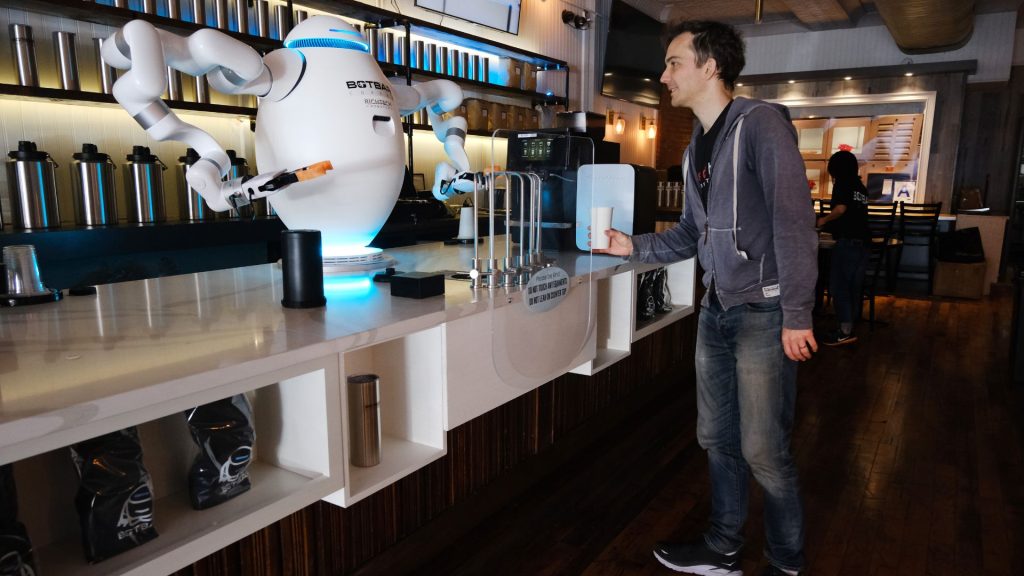
For the last nine months, Starbucks has rolled out an artificial intelligence tool that it believed would fix product shortages. But on Thursday, the company announced it would remove the tool from every location.
The tool just wasn’t working. Company officials said workers complained that it would confuse oat milk with whole milk and sometimes not even recognize other merchandise. But this isn’t the first time a large restaurant gave AI a try, and it blew back in its face.
In 2024, McDonald’s ended its AI drive-thru initiative after videos showed the bot adding multiple drinks when customers only asked for one and including random butter or ketchup packets in ice cream orders.
While embarrassing, other incidents involving the use of AI have raised bigger concerns about a company’s credibility. Take the incidents that happened at CNET and Sports Illustrated.
Both companies used AI to generate dozens of articles, and Sports Illustrated went so far as to have a fake author’s bio to use for bylines on AI-generated content. Journalists from Futurism reached out to both outlets, and Sports Illustrated deleted all content created by the not-real Drew Ortiz. After admitting to using AI, CNET editors reviewed all articles created with AI and found that more than half contained incorrect information.
AI has also burned the air travel industry. In 2024, Canadian courts ordered Air Canada to issue a refund to a customer who asked the company’s AI assistant if it offered bereavement fares. The chatbot said yes, it does and said he could receive the discount up to 90 days after flying by filing a claim.
That wasn’t true. Air Canada’s actual bereavement policy said officials must approve the discount before travel. The chatbot even linked to the company’s real bereavement policy, which contradicted what it had just told the customer. The customer took the company to court after it refused to honor the refund.
Shortly after the court ruling, Air Canada quietly removed the chatbot from its website but still uses other AI tools for customer service.
Walking back AI-powered initiatives is becoming more common. According to S&P Global Market Intelligence’s 2025 survey, about 42% of companies abandoned most of their AI initiatives in 2025. A year before, that number was only 17%.
Why does AI fail?
AI is different from other software. In the past, if a software didn’t understand a prompt or query, it would throw out an error or do nothing, telling the user there was a problem. But with AI, it’s created to please us, which has led to deadly consequences.
In the case of McDonald’s, instead of asking the customer to repeat their order, it just assumed it got it correct the first time. The same kind of mistake happened with Air Canada. Instead of saying, “I’m not sure about our bereavement fares,” the chatbot just made one up to make the customer happy.
When something sounds confident, as most AI chatbots do, people typically don’t second-guess it or verify what it said is correct. This is why issues are harder to catch and more damaging when they do arise.
What do the rollbacks actually mean?
After reading a few major examples of AI failing fairly significantly, it might be easy to discredit the entire technology. But it’s important to note that rollbacks during an adoption curve are a normal part of the process.
The 42% of AI rollbacks also seems large, but experts believe that this is a normal correction.
“We’re in the early innings,” Karin Klein of Bloomberg Beta said during a panel. “Of course, there’s going to be a ton of experiments that don’t work. But, like, has anybody ever started to ride a bike on the first try?”
Another important point is that deployment does not mean implementation. Companies often announce their new AI initiatives with the pomp and circumstance of a college graduation, but as any college graduate knows, graduation is not the finish line; it’s only the beginning.
What these rollbacks have revealed is that the finish line is much further out than company officials first thought. It doesn’t matter if the AI tool can successfully work in a test — it matters that it can keep working when a barista is slammed with dozens of orders at an 8 a.m. breakfast pop. The gap between controlled demo and operational reality is where these tools fall apart.
Since the first company to innovate is typically rewarded with more contracts and money, it’s important to get software out there fast, but that comes with consequences.
“Given that organizations are under pressure to deliver generative AI projects at pace, it is perhaps unsurprising to see increasing project failure rates,” the authors of the S&P survey wrote. “The proportion of projects failing to graduate from proof-of-concept to production capabilities has increased markedly year over year.”
Round out your reading
- They built an Epstein files library, but realized they couldn’t let everyone read them.
- The doctor who claims functional medicine reversed her MS.
- For many Americans, ‘one more round’ no longer serves their lifestyle or budget.
- Trump claimed economic data is ‘rigged.’ Former officials pledge to ‘watch like hawks’ for political manipulation.
- We’re building a new Straight Arrow. Help us shape our future by taking our survey.
Ella Rae Greene, Editor In Chief