Massive cocaine bust at Port of Los Angeles amid shifting trafficking patterns
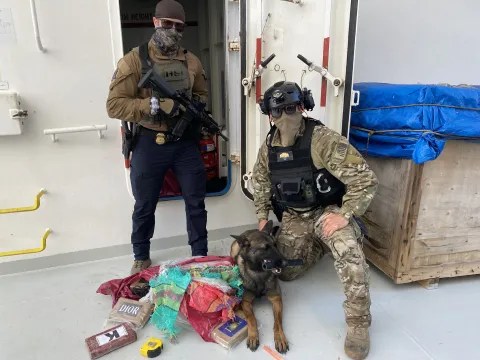
Federal authorities seized 500 pounds of cocaine worth an estimated $6.4 million during a joint boarding of a crude oil tanker at the Port of Los Angeles, the Department of Homeland Security said in a statement.
Agents with Homeland Security Investigations and the U.S. Coast Guard boarded the tanker Aquatravesia after a Coast Guard drug detection dog alerted the boarding team to suspected contraband. The boarding team uncovered more than 226 kilograms of cocaine hidden on the ship.
One person was arrested, and two others were taken into custody, authorities said.

“This operation highlights Homeland Security Investigations’ unwavering commitment to combating transnational crime and safeguarding the United States from illicit narcotics,” said Eddy Wang, the HSI Los Angeles special agent in charge.
Coast Guard officials also emphasized the multi-agency effort.
“The success of this narcotics seizure is a testament to the coordinated efforts of the DHS enterprise to dismantle the efforts of drug smugglers,” Stacey Crecy, sector commander for Los Angeles–Long Beach, said.
The seizure is part of broader counter-narcotics efforts by federal agencies, which officials say have resulted in record amounts of cocaine interdicted in recent years. HSI reported seizing more than 917,000 pounds of cocaine in 2025, while the Coast Guard reported more than 511,000 pounds seized that year.
Authorities say such operations have disrupted trafficking networks and denied criminal organizations billions in illicit revenue while preventing drugs from reaching U.S. communities.
In an interview with Straight Arrow, Jonathan Pullen, associate chief of operations for the South Central Region, said cocaine trafficking patterns fluctuate in response to enforcement pressure on other drugs, including methamphetamine and fentanyl.
“When we see pressure in other areas, cocaine tends to increase,” Pullen said, explaining that cocaine is primarily produced in South American countries such as Colombia, Ecuador and Bolivia and moves through shifting routes depending on law enforcement activity.
Pullen said traffickers continue to use a variety of concealment methods to evade detection, including masking odors with substances such as vinegar or coffee grounds, though trained detection dogs can often still identify the drugs.
He added that seized cocaine is frequently marked or “branded” on packaging, a common practice among trafficking organizations.

Round out your reading
- They built an Epstein files library, but realized they couldn’t let everyone read them.
- The doctor who claims functional medicine reversed her MS.
- For many Americans, ‘one more round’ no longer serves their lifestyle or budget.
- Trump claimed economic data is ‘rigged.’ Former officials pledge to ‘watch like hawks’ for political manipulation.
- We’re building a new Straight Arrow. Help us shape our future by taking our survey.
Ella Rae Greene, Editor In Chief