Why running coal plants beyond planned closures is costing hundreds of millions
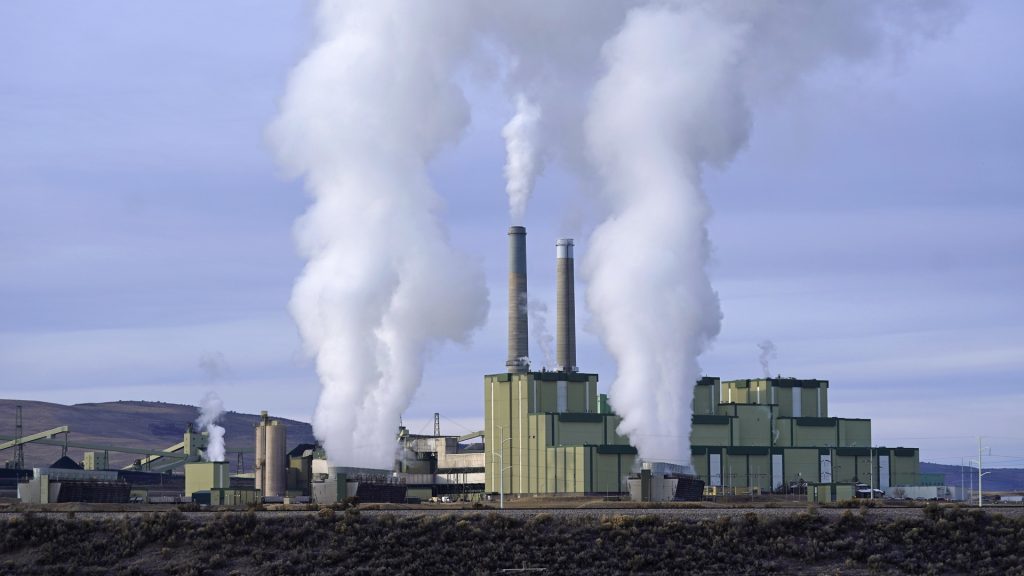
The cost of a Trump administration policy ordering aging coal-fired power plants to stay open has exceeded $200 million, but the exact dollar amount is unknown. Utility ratepayers will likely foot the bill for keeping five power plants open past their planned retirement dates — and the costs continue to rise.
Starting in May 2025, the U.S. Department of Energy (DOE) began issuing 90-day emergency orders under section 202(c) of the Federal Power Ac, which require power plant units to remain available to provide electricity to the grid. Since then, operators of five coal plants from Michigan to Washington state have delayed plans to retire the plants, and kept staff ready to fire up electricity production. So far, a continuous stream of 90-day orders have been issued when the previous ones expire.
The DOE said its decisions to prevent coal plants from shutting down have guaranteed adequate electricity supply and potentially saved lives.
It’s unclear what bar must be met in order to end the DOE’s declared emergency. A spokesperson said the department “will continue to protect energy security for all Americans,” without mentioning any specific requirements or a timeline.
“The value of any grid should be measured by how it performs when demand for electricity is at peak levels — not during regular demand periods when there are oftentimes abundant amounts of excess capacity,” the DOE spokesperson told Straight Arrow.
As the anniversary of the first order approaches, Straight Arrow contacted operators at all five coal plants. The operators were tight-lipped about how much it costs to continue running a power plant they had previously planned to shut down.
While an exact financial breakdown is unavailable, federal filings reveal how continued staffing needs and deferred maintenance costs add up. And at a time when high electricity bills nationwide are fast becoming a political hot potato, power companies are looking to utility ratepayers to recover the cost of complying with emergency orders.
How much is it costing ratepayers?
“I don’t think there’s any question that they’re going to pass [the cost] on to ratepayers,” said Seth Feaster, a data analyst with the Institute for Energy Economics and Financial Analysis. “Why wouldn’t they?”
Feaster added: “They have every right to, because they’re being ordered by the federal government to do this.”
The first plant ordered to stay open, the J.H. Campbell Generating Plant in West Olive, Michigan, was scheduled to retire at the end of May 2025. Over the following 10 months, keeping the plant operational resulted in a net loss of $180 million after accounting for electricity sales, according to filings with the Securities and Exchange Commission.
The Campbell plant’s owner, Consumers Energy, is seeking approval from the Federal Energy Regulatory Commission to pass those costs onto ratepayers across the Midwest and Great Plains.
Feaster estimates that compliance with emergency orders has cost Consumers Energy $233 million to date. That’s $18 million each month, and another $4 million in staffing retention for each 90-day order — another expense cited by Consumers Energy in federal filings.
And that cost is only the first of five coal plants. A 2025 report from Grid Strategies estimated that if more coal plants scheduled to retire before 2028 are subject to emergency orders, the total annual cost to ratepayers could top $3 billion. The report was commissioned by longtime opponents of coal power, such as the Sierra Club.
In Washington, Canada-based TransAlta was preparing to convert its Centralia coal plant into a gas-fired unit when a DOE order directed the company to keep Centralia operational past its planned retirement at the end of 2025. TransAlta is seeking federal approval to recoup $20 million in costs incurred during the first 90-day order, which expired in mid-March. That cost comes despite the fact that the Centralia plant has not provided electricity to the grid once in 2026.
“The unit is currently offline and preparing for conversion; however, employees remain on standby to support operations if needed,” a TransAlta spokesperson told Straight Arrow.
If called upon, the company said it will spend half a million dollars to start the plant, and will need another $23 million for repairs if the emergency orders continue, Utility Dive reported.
Deferred maintenance
The Centralia plant is not the only one in need of repairs to continue operating beyond a long-planned retirement date.
“Most of the time, these companies are deferring all kinds of maintenance,” Feaster said. “Why would you spend $20 million on a unit that’s going to shut down in two weeks?”
In a February letter, CenterPoint Energy, which owns the F.B. Culley Generating Station in Indiana, appealed to the DOE to reconsider its December order to keep operating Unit 2 of the plant. The company estimated it would incur $16 to $20.5 million in maintenance costs to continue running the plant beyond March.
“Extending the life of Unit 2 is neither practical nor financially responsible, underscoring the need for a more prudent and economically sound path forward,” the letter said.
Despite the letter, the DOE extended the emergency order another 90 days through June 21.
A March public statement from CenterPoint said, “at this time, there are no direct bill impacts to CenterPoint customers.” However, the company has asked federal regulators to establish a framework for recovering total costs once the orders expire.
In Colorado, deferred maintenance is also raising costs on Unit 1 of Craig Station, another coal plant unit directed to stay online, according to a challenge to the DOE’s December order. The plant operator, Tri-State Generation and Transmission Association, has not disclosed total costs.
As an electric cooperative, Tri-State is a nonprofit without shareholders. Its member co-ops that serve rural communities across the Mountain West will likely share whatever the total costs become.
NIPSCO, which owns the R.M. Schahfer Generating Station in Indiana that was ordered to keep running units 17 and 18, also declined to share exact cost estimates. But the company told Straight Arrow it had been authorized to recover costs through electricity rates.
Have the coal plants been operating?
In a statement to Straight Arrow, a DOE spokesperson did not address questions about who pays for emergency orders to keep aging plants running. Instead, the DOE emphasized purported reliability benefits.
“Emergency authorizations prevented blackouts and likely saved hundreds of lives during peak capacity events this past year,” the DOE said.
Specifically, the department referenced Winter Storm Fern, which swept through large swaths of the country in late February. During the storm on Feb. 24, the MISO grid — which covers the Dakotas, midwestern states including Michigan and Indiana, and parts of the South — had to deploy emergency electricity supplies.
From Jan. 21 to Feb. 1, the Campbell plant operated at 650 megawatts, according to the DOE.
Data from the U.S. Energy Information Administration (EIA) confirms the Campbell plant was active in January and February. But neither Consumers Energy nor the grid operator MISO could disclose the Campbell plant’s status during Winter Storm Fern.
The other coal units on the MISO grid — Culley Unit 2 and one of the two units at Schahfer — were also active in January and February, according to EIA data. The Centralia station in Washington appears not to have run a single time this year, and according to Tri-State, the Craig unit has only provided power to the grid for a 16-day period in April.
Coal consumption data offers another window into the effects of the emergency orders. Feaster analyzed federally collected data on coal consumption and found that the five power plants accounted for less than 1% of all coal consumed from June 2025 to February 2026. And Campbell consumed 89% of all coal used by the five plants affected by emergency orders, according to Feaster’s analysis.
“I don’t think there’s any feasible argument to say that this is somehow saving the coal industry,” Feaster told Straight Arrow. “You’re keeping units open that aren’t even being used.”
The next battleground: A DC Courtroom
A legal challenge to the first emergency order for the Campbell plant will be heard by a panel of judges on the D.C. Circuit Court of Appeals on Friday. The case is being brought by the states of Michigan, Minnesota, Illinois and several nonprofit groups, including the Environmental Defense Fund.
In the year since that order, Ted Kelly, a director and lead counsel at the Environmental Defense Fund, said “all it’s done is drive up costs.”
Families are paying higher bills and breathing more toxic pollution from aging, unreliable coal plants,” Kelly said.
The challenge hinges on an argument that the DOE overstepped its authority, which is meant to address “near-term emergencies,” Kelly told Straight Arrow.
Kelly said the DOE is attempting to “act as this national system planner for the entire country, drilling down to the individual power plant level,” which he said was not the intent of the Federal Power Act. Instead, states and regional grid operators have historically taken the lead on electric grid planning, which he said they did in planning for coal plant retirements with enough time to build new sources.
Similar litigation is pending for other coal plants affected by the orders, and Kelly hopes to establish a precedent that allows retirement plans to commence again.
“This interference is a really bad precedent,” Kelly said. “You don’t want the whole makeup of the grid to be shifted through new orders every new presidency.”
Ella Rae Greene, Editor In Chief