US evaluates Mexican consulates after unproven far-right allegations
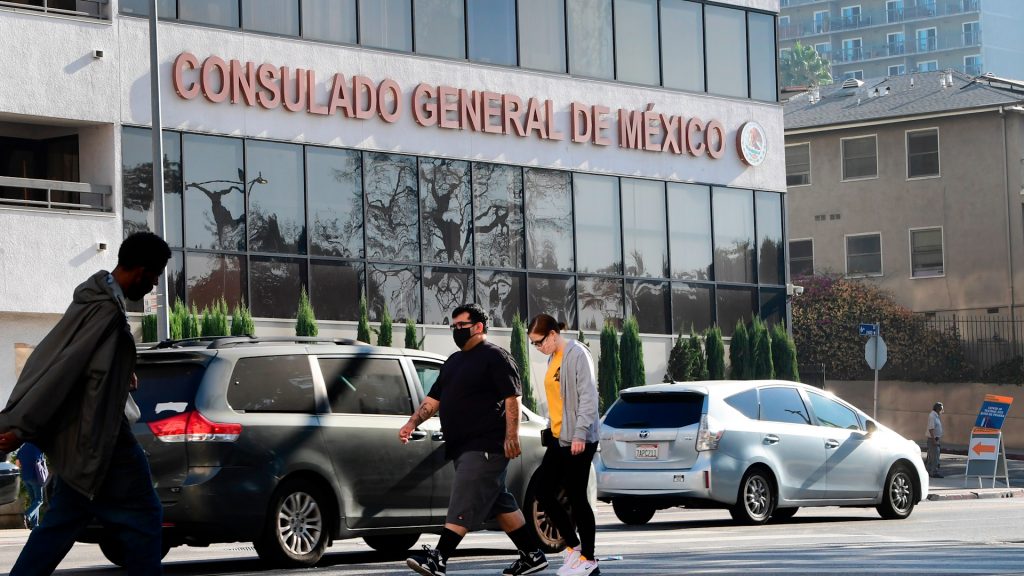
State Department officials are evaluating all 53 of Mexico’s consulates across the country, a process that could potentially result in closing some or all of the facilities. The move follows claims in conservative media that Mexican consular officials have interfered in U.S. politics — allegations the Mexican government denies.
Mexico’s diplomatic footprint in the U.S. is the largest of any foreign nation, with facilities heavily clustered along the southern border and in regions with significant Mexican-American populations. These outposts supply millions of Mexican expats with necessary paperwork, legal assistance and other critical resources.
The scrutiny arrives during escalating strain between the Trump White House and a vital neighboring ally. Recent diplomatic friction has centered around security cooperation, cartel violence and a deadly U.S. counter-narcotics operation south of the border.
The review and the claims behind it
The State Department has not said what the review will specifically involve. Dylan Johnson, a department spokesman, said the agency is “constantly reviewing all aspects of American foreign relations” to ensure they align with President Donald Trump’s “America First” agenda and advance American interests.
The accusations that appear to have prompted the review were amplified by Peter Schweizer, a far-right author and Breitbart contributor. His most recent book, “The Invisible Coup,” claims that “mass migration” has become “the most powerful political weapon ever aimed at the United States — one engineered by elites at home and aided by adversaries abroad.”
Another of his books, “Blood Money,” carries the subtitle, “Why the Powerful Turn a Blind Eye While China Kills America.” The cover features photos of prominent Democrats, including former President Joe Biden, Rep. Alexandria Ocasio-Cortez of New York and Sen. Adam Schiff of California.
In recent months, Schweizer has been among the conservative commentators who have routinely accused the Mexican consulates of meddling in U.S. elections and driving mass waves of migration.
Schweizer has publicly accused Mexican consular workers of coordinating protests, actively resisting the Trump administration’s agenda and interfering in domestic affairs. He further claims that Mexico leverages state-published textbooks and migrant assistance networks to cultivate political power on American soil.
“The Mexican government gives textbooks to school districts in the United States from Los Angeles to Orlando,” Schweizer told Fox News Digital. “Those textbooks are designed to make sure that migrant children view themselves as Mexican first, not as Mexican–American.”
While it’s true that the Mexican government provides Spanish-language textbooks to some U.S. school districts, Mexico rejected Schweizer’s claims about its intent. President Claudia Sheinbaum called his allegations “absolutely false,” and Mexico’s embassy in Washington said consulates help Mexican nationals with matters such as documentation and support for crime victims.
“There is nothing political about consular work,” the embassy added.
Strained relationship
U.S.-Mexico relations took a major hit last month following a fatal car crash during a counter-narcotics mission in northern Mexico. The accident killed two Mexican investigators and two Americans, whom CBS News later identified as CIA operatives. Sheinbaum then publicly questioned whether the American agents had authorization from Mexico’s federal government.
That friction has only escalated as American prosecutors pursue legal action against high-ranking Mexican leaders. The U.S. recently unveiled weapons and drug trafficking indictments targeting several top officials, issuing extradition demands for figures such as Sinaloa Gov. Rubén Rocha Moya.
Rocha dismissed the accusations. Additionally, The New York Times reported Sheinbaum declined to apprehend the governor, arguing that American authorities failed to hand over sufficient proof of his involvement in drug cartels. She indicated her government formally asked the U.S. Justice Department for evidence, promising a domestic investigation if the American intelligence proves legitimate.
Ella Rae Greene, Editor In Chief