Judge unseals suicide note allegedly written by Jeffrey Epstein
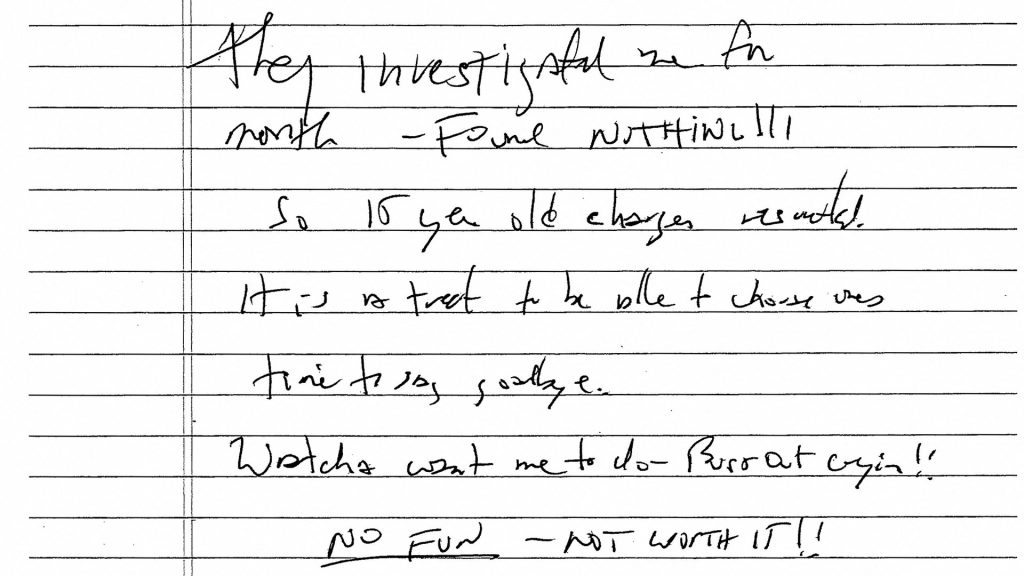
A federal judge has released a note allegedly left by convicted sex offender Jeffrey Epstein prior to his suicide. The note was purportedly found by Epstein’s cellmate after Epstein’s first suspected jail suicide attempt, less than two weeks before he ultimately died.
Editor’s Note: This story contains descriptions of suicide. If you or someone you know is in crisis, help is available. Visit the National Crisis Line website or call or text 988 for immediate support.
In the letter, Epstein claimed authorities had investigated him for months and “found nothing.” He also wrote, “It is a treat to be able to choose one’s time to say goodbye.”

The document was unsealed after The New York Times asked a federal judge to release records connected to Epstein’s former cellmate, Nicholas Tartaglione. The note was not widely known about until Tartaglione, a former police officer serving a life sentence for killing four people, said something about it on a podcast last year.
The letter has not been authenticated.
What we know about the note
Tartaglione told investigators he found the note inside a book after Epstein was discovered on the floor of their cell in July of 2019 with a strip of bedsheet around his neck.
Eleven days later, guards found Epstein dead in his cell in what authorities ruled a suicide. At the time, he was being housed alone despite the earlier incident.
The note was never mentioned in government reports about the investigation into the circumstances of Epstein’s death, nor was it included in the Department of Justice’s (DOJ) recent release of thousands of Epstein-related files.

In his ruling, U.S. District Judge Kenneth Karas said he weighed the privacy interests of third parties, including Epstein, before deciding the note could be released. He said that under current existing case law, the privacy interests deceased persons “are vastly reduced and disclosure of the deceased’s information is unlikely to ‘work a concrete harm.'”
The events leading up to Epstein’s death
Jail records show that Epstein had marks on his neck from his first suicide attempt on July 23, 2019, and that when officers found him, he was breathing heavily but responsive. One of the officers at New York’s Metropolitan Correctional Center said in the report that Epstein claimed Tartaglione tried to kill him, according to a memo that was included in the DOJ’s files.
Records also show that Epstein denied trying to kill himself and told a jail psychologist that suicide was against his Jewish religion. He reportedly also referred to himself as a “coward” who did not like pain.

After that incident, Epstein was placed on suicide watch for 31 hours before he was downgraded to psychiatric evaluation only. He was still flagged for psychiatric evaluation at the time of his death.
Files show that Tartaglione told his lawyer about the note four days after Epstein’s suspected July suicide attempt. The note was later submitted as evidence in Tartaglione’s criminal case and was placed under seal amid a dispute over his legal representation, according to the Associated Press.
At the time of his death, Epstein did not have a cellmate because Tartaglione had been transferred, leaving him by himself just days after being taken off suicide watch and against the jail’s protocol.
Epstein was supposed to have been checked by the two guards in the protective housing unit every 30 minutes, but that did not happen on the Friday night leading up to his death. He was found dead early in the morning on Saturday, Aug. 10, 2019, having apparently hanged himself.
Round out your reading
- First, it was the schools. Now they’re coming for your cellphone at work.
- Why one of America’s top economic forecasters is worried about a recession.
- AI companies may not be adhering to their own guidelines — with potentially deadly outcomes.
- Data centers are a thorny issue for Democrats. Maine shows us why.
- We’re building a new Straight Arrow. Help us shape our future by taking our survey.
Ella Rae Greene, Editor In Chief