Fed nominee Kevin Warsh faces Senate questioning in confirmation hearing
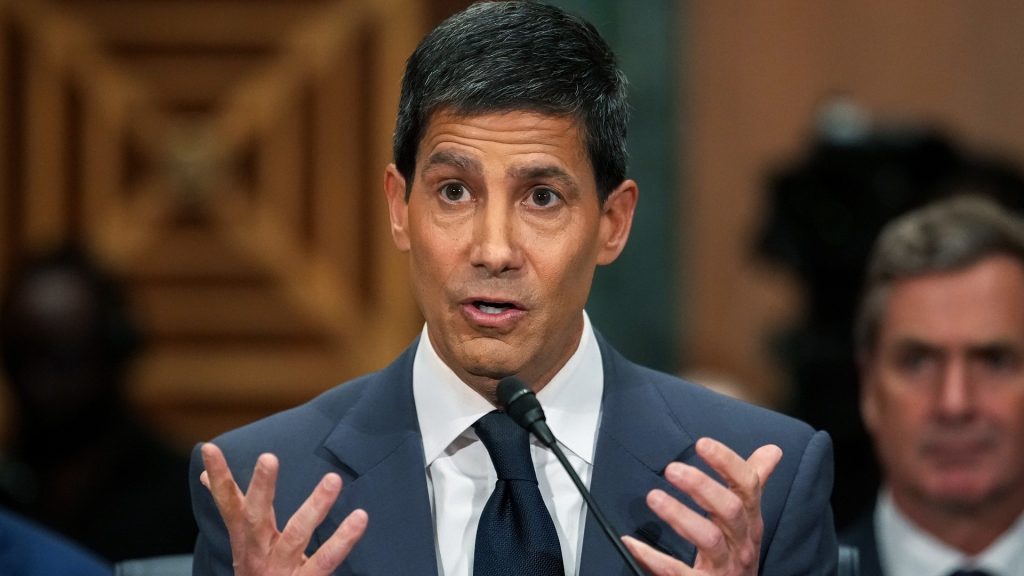
Kevin Warsh, President Donald Trump’s nominee as the next Federal Reserve chair, is on Capitol Hill Tuesday for a confirmation hearing focused on the independence of the U.S. central bank.
If approved by the Senate, Warsh would succeed Jerome Powell, whose term is set to expire in May. Powell and Trump have butted heads during the president’s second term, with Powell resisting Trump and the White House’s demands to cut interest rates.
Warsh’s confirmation is being met with resistance from Democrats, who claim his stances focus more on making money for Wall Street than the American people.
What lawmakers are saying
The confirmation hearing kicked off with Sen. Tim Scott, R-S.C., emphasizing the importance of a Federal Reserve that is independent from politics.
“An independent Federal Reserve is essential to achieving its mission,” Scott said. “Markets depend on it, families depend on it, and that independence must be protected.”
The top Democrat on the committee, Sen. Elizabeth Warren, D-Mass., spoke next, criticizing Trump for attempting to “take over” the central bank. She introduced Democrats’ biggest argument against Warsh’s appointment: that his views are significantly influenced by political concerns.
Warsh responded to the concerns in his opening statement, saying “monetary policy independence is essential.”
“I do not believe independence in monetary policy is threatened when elected officials state their views on rates,” he added.
When questioned further, Warsh said he shares the president’s beliefs, but has not promised Trump anything should he be appointed.
Despite the comments in his opening remarks, senators continued to press Warsh on politics and their potential influence on Fed rates.
Eventually, artificial intelligence joined the conversation. Sen. Chris Van Hollen, D-Md., spoke about Warsh’s history of shifting stances, saying he’s “concerned that your position on interest rates seems to shift with what’s politically convenient rather than sound economic judgment.”
Most recently, Warsh said he favors lowering interest rates now due to the rapid growth of the economy’s “potential.” He says AI has increased the country’s capacity to generate growth. It’s an argument that many economists remain skeptical on, saying AI could actually drive inflation higher.
Van Hollen and Warsh’s debate over AI was to one of the more flashy moments during the hearing.
Who is Kevin Warsh?
Warsh became the youngest-ever Fed governor when President George W. Bush nominated him in 2006.
Prior to serving on the board, Warsh worked in mergers and acquisitions at Morgan Stanley & Co in New York, where he focused on financial strategy.
Later, he was special assistant to the president for economic policy and served as executive secretary of the National Economic Council under Bush.
In those positions, he advised the president and administration on issues related to fund flows in the capital markets, securities, banking and insurance issues.
Although he has previously favored keeping interest rates higher to prevent inflation, he has recently aligned with Trump, criticizing the current Fed board and calling for aggressive rate cuts. He blamed the central bank for not responding more quickly to skyrocketing inflation during the COVID-19 pandemic.
Ella Rae Greene, Editor In Chief