Washington ranchers demand a jury to decide their fate in legal battle with state
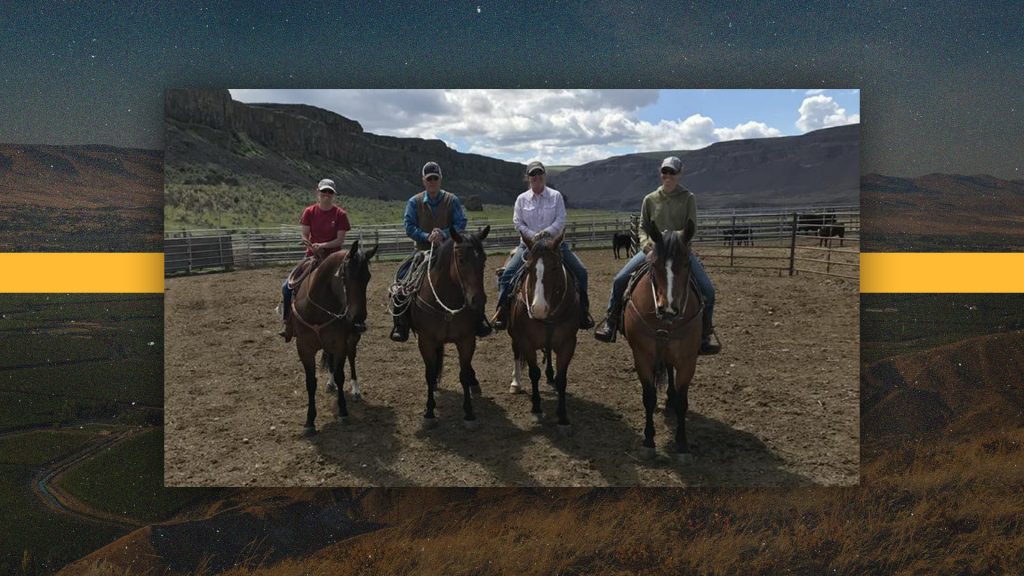
Roughly three and a half hours east of Seattle, there’s a nearly 13,000-acre cattle ranch in Grant County. King Ranch is owned by Wade and Teresa King and has been in their family since the 1950s.
They’re now facing legal action from the state over their ranch, but the Kings are fighting back in more ways than one.
Not only are they pushing back against state allegations, but they’re also challenging who will be judging this case and just filed a new motion asking a judge to immediately rule in their favor. Their demand is constitutional; to be judged before a jury of their peers rather than a panel of political appointees. The state says the ranch doesn’t have that protection in Washington.
State accusations
This all started on February 10, 2023, when the Washington State Department of Ecology fined the Kings more than $267,000. The department accused them of damaging nearly two dozen wetlands.
Not long after, the Kings, with the help of STW Law, appealed that decision.
They argue that those wetlands are watering holes for cattle that have been excavated by ranchers for years.
“[The Department of Ecology] has never been on my land because it’s private property, and so they’re using satellite imagery to just focus in and say we think there’s been a disturbance right there, and then that’s enough for them to give me an administrative order,” Wade King said on “unDivided with Brandi Kruse.”
The department argues that 18 of the damaged wetlands are on leased, state-owned land, while two are on federal land.
However, the Kings got the support of Agriculture Secretary Brooke Rollins. She wrote a letter to the Department of Ecology Director Casey Sixkiller and Public Lands Commissioner Dave Upthegrove expressing her concerns.
“The creation and maintenance of stock water ponds is one of primary ways ranchers ensure their livestock have access to water,” she wrote. “For over 60 years, the King Ranch has had farm ponds on the property they own and lease.”
Trial movement
That case is not set to go in front of a courtroom judge or jury, but rather the Pollution Control Hearings Board, or PCHB. That’s a three-member panel, appointed by Gov. Bob Ferguson and the state Senate.
“The PCHB holds a hearing without a trial in an independent court and without a jury,” Oliver Dunford, a senior attorney at Pacific Legal Foundation, who’s representing the Kings in this case, told Straight Arrow News.
That hearing is scheduled for September and would also likely take place in Olympia, nearly five hours from Grant County.
The Kings don’t want to go in front of that board.
“If we’re successful before September, then the [Dept. of] Ecology would not be allowed to proceed with its hearing in front of the PCHB,” Dunford said. “It could, though, bring an action in state court, and so it would have to make a decision whether it wants to pursue the case in court.”
The Kings would much prefer to see a jury, and the Seventh Amendment does guarantee the right to a jury trial in federal civil cases.
But this isn’t federal. This is the state of Washington, and there’s nothing in the Seventh Amendment about a jury trial being required for state charges.
In 1916, the Supreme Court decided that the Seventh Amendment right does not apply to state courts in Minneapolis & St. Louis Railroad Company v. Bombolis.
“It’s one of the few remaining rights in the Bill of Rights that the Supreme Court has not yet applied to the states,” Dunford said.
The Washington Attorney General’s office also said the Kings have no constitutional right to a jury trial.
Despite that, the Kings believe this is unconstitutional and are happy to keep appealing any losing decisions.
“We’re hoping for a quick decision, and if we lose, there’s a way to petition the Washington Supreme Court directly,” Dunford said.
He’s also said it doesn’t need to stop there, saying he believes the U.S. Supreme Court is ready to revisit that 1916 decision in a previous report.
Justice Neil Gorsuch also reportedly called the 1916 ruling “something of a relic.”
Meanwhile, Dunford believes the state may not have even brought these fines if the trial would have needed to remain in Grant County and gone in front of a jury.
“If the government knew it had to come to Grant County where the Kings are, have to prove to a jury of probably like-minded farmers, that what the Kings did is wrong, they’d be a lot more careful before they filed these kinds of cases,” he said.
What’s next?
The most recent action is the motion for summary judgment filed by Dunford and his team.
That essentially means they’re asking the judge to rule in their favor based on material facts, arguing there’s no need for a trial.
That’s partly because the board hearing is only five months away.
“Time is of the essence,” Dunford said.
There’s a hearing scheduled for that in May.
“Our attorneys are reviewing the Kings’ motion and plan to file a response prior to the hearing,” Andrew Wineke, deputy communications director at the Washington State Department of Ecology, told SAN.
Dunford said his team asked the government to agree to an expedited schedule before asking the court but said “they refused.”
In the meantime, Dunford said all of this is costing the Kings a king’s ransom.
“What the government knows here is that they have a lot more resources than any individual property owner,” he said. “And so, they can avoid these kinds of constitutional challenges simply through attrition. They know that they can drag these things out. They can force landowners, in this case, the Kings, to spend lots of money, and oftentimes the government will win simply because the regulated party runs out of money and has to settle. So, that’s another reason we’re trying to move so quickly.”
Ella Rae Greene, Editor In Chief