What’s next in Iran? Trump’s options after negotiations fail
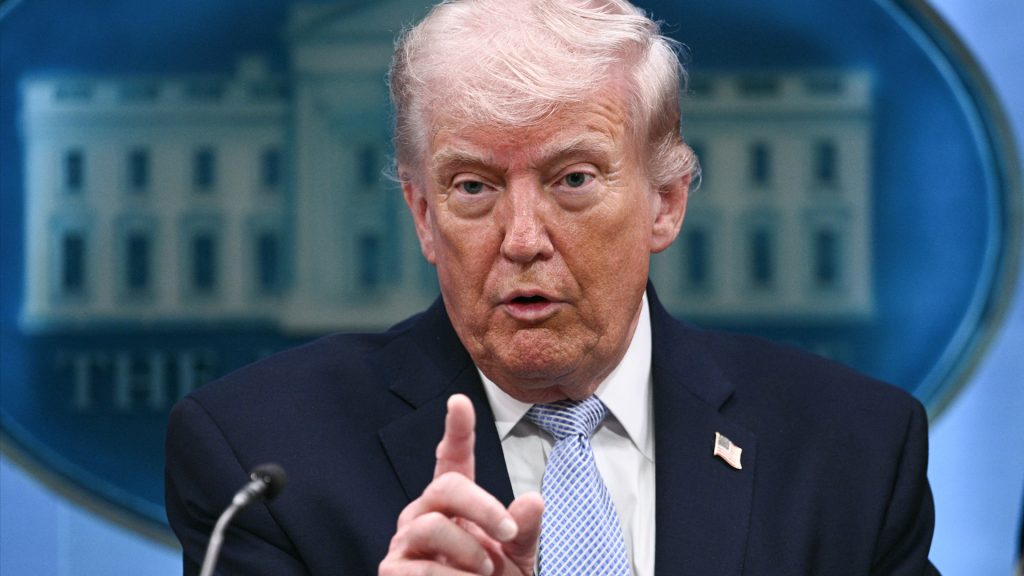
President Donald Trump must now decide whether to return to diplomacy, increase pressure at sea or use more force after Vice President JD Vance left Pakistan without a deal after more than 21 hours of talks with Iran. Trump quickly signaled his next step, saying the United States would begin a naval blockade while warning that additional forces remained “locked and loaded.”
More talks remain possible, but the White House has also shown little desire for a long, open-ended bargaining process.
At the same time, officials are considering limited military strikes alongside the blockade, while a return to a broader bombing campaign appears less likely given the chance of wider destabilization in the region.
Trump’s public posture combined escalation with the possibility that diplomacy could continue. He said “most points were agreed to,” but that the nuclear issue was not, leaving open the chance of more talks even as he threatened Iranian infrastructure and ordered the blockade to begin.
What the blockade would do
Trump said the Navy would begin a blockade, stop or divert vessels that paid tolls to Iran and start clearing mines from the waterway. He framed the move as a response to what he called Iranian extortion in the Strait of Hormuz.
“Any Iranian who fires at us, or at peaceful vessels, will be BLOWN TO HELL!” Trump posted on Truth Social.
U.S. Central Command described the operation more narrowly. It said the blockade would begin at 10 a.m. ET on April 13 and would apply to maritime traffic entering and exiting Iranian ports. It also noted that the military would allow commercial ships traveling through the Strait to and from other nations’ ports to pass unimpeded.
Why the talks broke down
The talks in Islamabad left the core dispute unchanged. Vance said the United States had made its “red lines” clear and that Iran had chosen not to accept them. According to U.S. officials, these demands required Iran to allow toll-free passage through the Strait of Hormuz, completely dismantle its uranium enrichment capabilities, hand over its highly enriched uranium, agree to a new regional security pact and halt its funding for militant proxies like the Houthis and Hezbollah.
In contrast, Tehran’s public description of the talks put the Strait of Hormuz, sanctions, war reparations and the broader end of the conflict alongside the nuclear issue, showing that Tehran is negotiating over more than enrichment alone.
Each option carries risk
Each option carries obvious costs. A return to major combat could trigger another round of energy disruption after the earlier war already pushed up gasoline prices and created shortages in critical goods. A blockade also presents tactical dangers. U.S. officials cited by The Wall Street Journal cautioned that warships stationed in the tight confines off the Iranian coast would have minimal time to react to sudden drone or missile strikes.
For the White House, the domestic politics are difficult too. Higher fuel prices remain a liability, and a wider war would likely deepen criticism from voters already wary of another Middle East conflict. According to The Times, the administration is balancing pressure on Tehran against the risks of a broader war.
Some unnamed officials and analysts, according to The Journal, view a blockade as the most viable alternative for the administration, allowing it to squeeze Tehran economically without immediately committing to another massive bombing campaign. But Iran has already shown it can withstand pressure for long periods and remains defiant even after weeks of U.S. and Israeli strikes.
What comes next
For now, the administration is moving first with maritime pressure under Trump’s order and CENTCOM’s guidance. After that, the key question is whether the administration uses the blockade to force Iran back into negotiations or decides that more coercion, including limited strikes, is necessary. The current ceasefire expires on April 21, giving the White House a short window to see whether maritime pressure will change Iran’s position.
Ella Rae Greene, Editor In Chief