First deaths at Rikers under Mamdani underscore urgency of replacing New York’s notorious jail
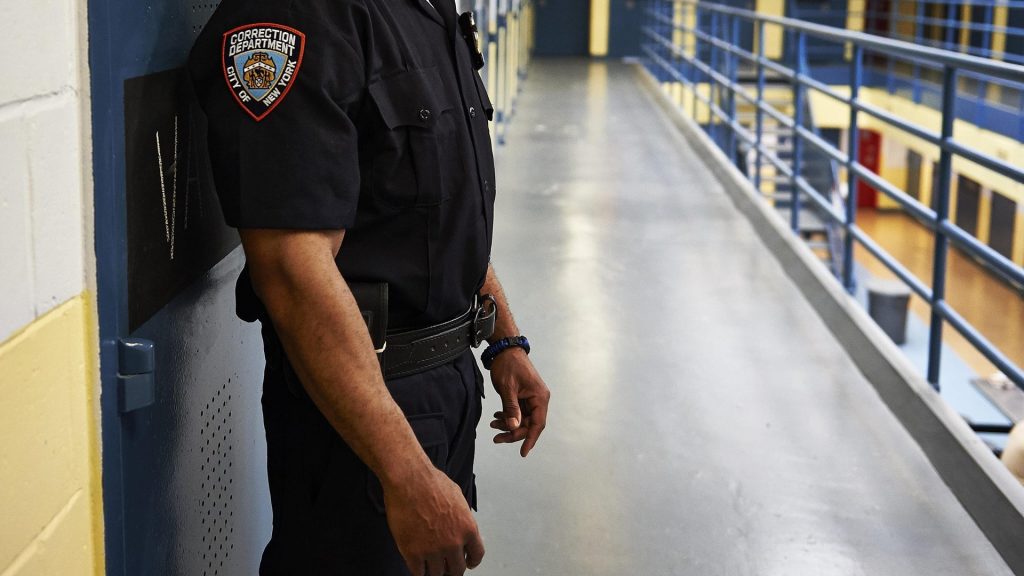
NEW YORK — On Tuesday, Barry Cozart appeared in a New York criminal court on burglary charges. Since he couldn’t make bail, a judge sent him back to Rikers Island, one of the most notorious jails in America.
On Wednesday morning, the 39-year-old was dead.
A correction officer who found Cozart unresponsive in his cell performed CPR and called for medical assistance. But Cozart could not be revived, the city’s Department of Correction told Straight Arrow News.
Cozart’s death was the first at Rikers this year — and the first since New York City’s new mayor, Zohran Mamdani, took office.
Then, four days later, it happened again. City officials said John Price, 49, died in a hospital Sunday, a day after he was transferred from his cell at Rikers.
The two deaths underscore the persistent dangers at Rikers Island — one of the most notorious and dangerous correctional facilities in the country — at a pivotal moment for New York’s criminal justice system. As the city pushes forward with a massive, controversial plan to close Rikers and build four new jails in its boroughs, other jurisdictions are watching to see how the new mayor can complete this program.
“I’m saddened to learn that a New Yorker in city custody died early this morning,” Mamdani posted Sunday on X.
“Every person in our city’s care deserves dignity, safety, and access to quality medical treatment — without exception,” he added.
The message echoed the one Mamdani posted Wednesday after Cozart’s death. On Wednesday, though, he went further: “While we do not yet know the cause of death, too many have died on Rikers Island for far too long. Rikers must close, and we will pursue every avenue to do so as quickly as possible.”
Details about Price’s incarceration were not immediately available. Cozart had been held at Rikers since November because he could not afford his $30,000 bail — a reality for many who are behind bars not because of a conviction, but because they don’t have the money to get out.
Long string of deaths
Cozart’s presence at Rikers was hardly remarkable. A judge had set bail in his case. But like many others at Rikers and other jails across the United States, Cozart didn’t have the financial wherewithal to make bond. He would have to wait behind bars for months or even years before standing trial.
His death, too, was surprisingly common. Dozens of prisoners have died in custody at Rikers in recent years, including 48 during the four years that Eric Adams served as mayor before Mamdani’s election, according to the Vera Institute of Justice.
The current administration in New York’s City Hall says safety is a top priority.
“As Commissioner, and as a Department, we place the safety and support of those in our care at the center of everything we do,” New York’s correction commissioner, Stanley Richards, said in a statement to SAN after Cozart’s death. “This tragedy weighs heavily on me and on every member of this Department. I extend my deepest condolences to his loved ones. Our sorrow over his loss is immeasurable.”
Deaths in custody are hardly unique to New York, however. In a single year, 2023, 52 people died in the Los Angeles County jails system. Since 2020, 60 people have died at the Oklahoma County Detention Center.
But what happens at Rikers — as the city moves toward closing it altogether — will play a pivotal role in how the nation deals with the negative effects of mass incarceration.
Under pressure
The city is racing toward a 2027 deadline — mandated by law — to close Rikers Island. Many speculate this will not be possible because of construction delays — as well as the fact that the jail’s population nearly doubled under Eric Adams, the former mayor.
How the city proceeds with its massive justice reform overhaul, the Borough-Based Jails program, under its new mayor is being closely watched by other jurisdictions with outdated jails, dangerous facilities and high recidivism rates.
The city has demolished its other jails in the boroughs to make way for new facilities. This is one of the nation’s largest criminal justice reform overhauls, where the city is positioning more “humane design” and fewer beds as an antidote to mass incarceration.
In Brooklyn, work on one of the jail facilities is well under way. This week, construction noises could be heard for blocks — a source of upset for some neighbors.
The 15-story jail was originally scheduled for completion in 2027. Now it’s been pushed to 2029.
The designs of the four new jails — the other three are in Manhattan, Queens and the Bronx — are meant to emphasize natural light, improved ventilation and more programming space.
But all together, they will have fewer beds than Rikers, forcing the city’s jail population to shrink.
For now, though, because the city’s other jails have been demolished under the Borough-Based Jails initiative, more people are being held on Rikers.
“We have eight active facilities on Rikers Island,” Annais Morales, press secretary at the city Department of Correction, told SAN on Thursday, “housing the vast majority of our incarcerated population.”
Ella Rae Greene, Editor In Chief