With all eyes on Iran, American narco-terrorism strikes rack up in the West
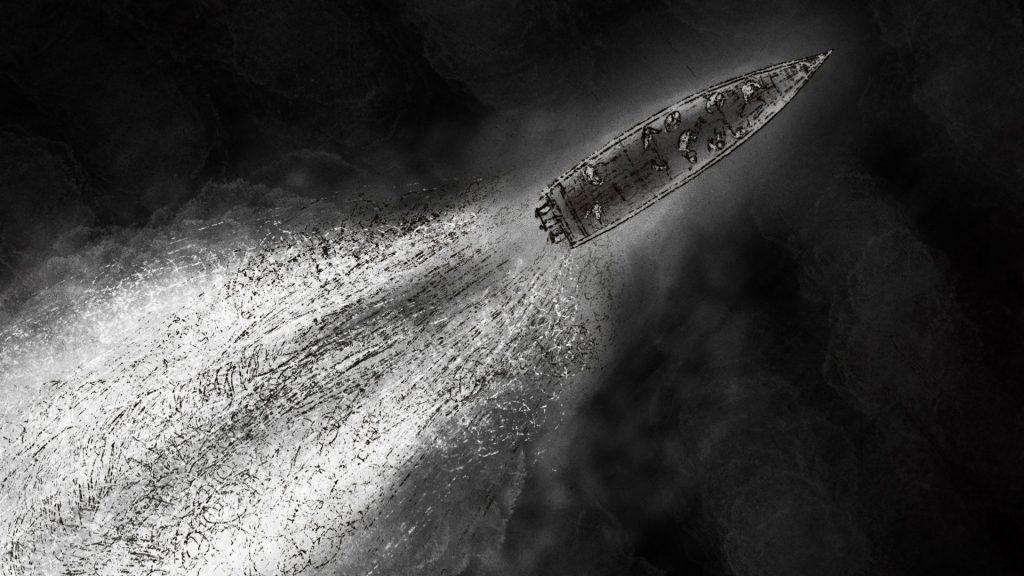
As the war in Iran expands into a regional conflict, it has pulled attention away from the Trump administration’s military actions in America’s neighboring waters. To date, nearly 50 military airstrikes have killed more than 160 people, with the most recent strike happening on Wednesday.
The administration maintains its ability to carry out the operations, labeling the targets as “narco-terrorists” hauling thousands of pounds of drugs into the country.
“The president has made it quite clear that if narcoterrorists, again, are trafficking illegal drugs towards the United States, he has the authority to kill them,” press secretary Karoline Leavitt said in September. “And that’s what this administration is doing.”
Since then, Leavitt’s news conferences have touched on the Gulf narco-terrorism operations less. Transcripts of her March 25 conversation with the press don’t mention the topic; rather, they focus on Iran, DHS funding, and other issues.
However, the actions are a departure from past administrations, including Trump’s previous White House, according to experts.
The Washington Office on Latin America, a non-governmental organization that promotes human rights, democracy and social and economic justice in Latin America and the Caribbean, said the operation is unprecedented.
“What we have seen so far suggests that the U.S. armed forces did something that it has never done, to our knowledge, in more than 35 years of military involvement in drug interdiction in the Caribbean Sea: an instant escalation to disproportionate lethal force against a civilian vessel without any apparent self-defense justification,” the group wrote.
The first strikes

On Sept. 2, 2025, the White House announced that it carried out its first strike on a suspected drug smuggling boat. The strike killed 11 of what the administration called “narcoterrorists,” later alleging that the Venezuelan gang Tren de Aragua operated the boat.
“The strike occurred while the terrorists were at sea in International waters transporting illegal narcotics, heading to the United States,” Trump wrote in a social media post. “The strike resulted in 11 terrorists killed in action. No U.S. Forces were harmed in this strike.”
The initial strike led to major criticisms after an anonymous source said the military did a “double tap” strike, meaning the military launched a second strike to kill any survivors from the first one.
Less than two weeks later, on Sept. 15, Trump again used social media to announce the U.S. had struck another suspected drug trafficking boat, killing three men. Trump shared a video of the strike in his post, which appeared to show the boat stopped in the water before a missile slammed into it, causing an explosion.
The president later told reporters the U.S. had “proof” the boat was trafficking narcotics.
“All you have to do is look at the cargo that was spattered all over the ocean — big bags of cocaine and fentanyl all over the place,” Trump said.
Trump announced the third strike of the month just four days later, which killed three people. This strike was also the first joint operation, and Dominican Republic officials said the strike resulted in the seizure of about 1,000 kilograms of cocaine.
October: The deadliest month for strikes
The Trump administration significantly increased its strikes in October, leading to the deadliest month to date.
On Oct. 3, 2025, a strike on a boat near the Venezuelan coast killed four. Defense Secretary Pete Hegseth said the boat was heading towards the U.S. with “substantial amounts” of narcotics.
The strikes angered Democrats in Congress, who introduced a resolution that would’ve prevented Trump from launching further strikes. Republicans shot down the proposal.
Despite partisan pushback, the administration continued its campaign. On Oct. 14, 2025, Trump announced the U.S. conducted its fifth strike on a suspected drug trafficking boat, killing six people.
“Intelligence confirmed the vessel was trafficking narcotics, was associated with illicit narcoterrorist networks, and was transiting along a known DTO route,” Trump wrote.
The strike on Oct. 16 was another first for the administration’s campaign after it destroyed a narco submarine, killing two people and injuring two others. This was also the first instance of the military rescuing survivors of a strike. The administration later repatriated both survivors to their home country.
The next day, Hegseth announced a strike killed three people aboard a boat affiliated with the National Liberation Army, a Colombian guerrilla group. Trump previously designated the group a Foreign Terrorist Organization in an executive order in early 2025. Hegseth compared the people killed in the attack to the terrorist group Al Qaeda, something he would do in following strikes.
“These cartels are the Al Qaeda of the Western Hemisphere, using violence, murder and terrorism to impose their will, threaten our national security and poison our people,” he wrote. “The United States military will treat these organizations like the terrorists they are—they will be hunted, and killed, just like Al Qaeda.”
Four days later, Hegseth announced that the U.S. carried out its first strike in the eastern Pacific, marking an expansion of the campaign. The strikes killed two people. Strikes the next day killed another three people in the eastern Pacific, according to a post by Hegseth.
“These strikes will continue, day after day,” Hegseth wrote. “These are not simply drug runners—these are narco-terrorists bringing death and destruction to our cities.”
On Oct. 24, 2025, the U.S. conducted its first nighttime operation of the campaign. Hegseth said the strike targeted “a vessel operated by Tren de Aragua,” killing six people.
Just three days later, Hegseth would announce that the U.S. carried out its largest and deadliest strikes since the operation began nearly two months before. On Oct. 27, 2025, in a trinity of airstrikes, the U.S. killed 15 suspected drug traffickers on four different boats in the eastern Pacific.
“The Department has spent over TWO DECADES defending other homelands,” Hegseth wrote. “These narco-terrorists have killed more Americans than Al-Qaeda, and they will be treated the same. We will track them, we will network them, and then, we will hunt and kill them.”
The U.S. carried out its last strike of the month on Oct. 29, 2025, killing an additional four people, according to the Defense secretary. This was the 11th strike in October, killing a total of 45 people.
Strikes continue into the new year
The administration launched another strike on Nov. 1, 2025, killing three people. Hegseth said that U.S. intelligence had found that the boat was carrying narcotics, but he did not go into further detail about where the boat was from.

Five more people died in two separate strikes on Nov. 4 and Nov. 6, according to the Defense secretary. In his post announcing the Nov. 6 strike, he threatened drug traffickers, again labeling them as terrorists.
“To all narco-terrorists who threaten our homeland: if you want to stay alive, stop trafficking drugs,” he wrote. “If you keep trafficking deadly drugs—we will kill you.”
Three days later, he announced that the U.S. had killed six more suspected drug traffickers in strikes on two boats. CBS News reports that a day later, the U.S. conducted another strike, killing four people in the Caribbean.
The final strike in November came five days later on the 15th, and just two days after Hegseth launched Operation Southern Spear, an anti-drug operation aimed at taking out what he calls narco-terrorists. The strike targeted a boat in the eastern Pacific, killing three people.
The administration didn’t announce another strike until Dec. 4, 2025, when U.S. Southern Command posted a video on social media. The post said Hegseth had ordered a strike on a boat carrying four people, killing all aboard. The news was also among the first times the U.S. Southern Command, rather than Trump or Hegseth, posted an announcement on social media, a pattern that continued through the end of the year.
The military announced another trio of strikes on Dec. 15, 2025, that killed eight people. They said intelligence confirmed that the boats “were transiting along known narco-trafficking routes in the Eastern Pacific and were engaged in narco-trafficking.” However, they did not go into detail about where the boats were heading or the amount of narcotics they were carrying.
Strikes on Dec. 17 and Dec. 18 killed nine more people, according to Southern Command. The first strike targeted a boat allegedly owned by an unspecified “Designated Terrorist Organization” that was traveling in international waters. The strikes on Dec. 18 targeted two boats in the eastern Pacific, killing three in the first strike and two in the second.
A strike on a “low-profile vessel” killed another person a week later in the eastern Pacific, according to the military. On Dec. 29, 2025, another strike in the eastern Pacific killed two people.
Dec. 30, 2025, was the deadliest day in more than two months. Officials said three strikes on a convoy of suspected drug trafficking boats killed 11 people. They said survivors did manage to abandon the boats before the military launched a follow-up strike to sink the vessels, but the Coast Guard never found any survivors.
Strikes the following day killed another five people in two boats. SOUTHCOM did not indicate where those strikes took place. The strikes in 2025 killed a total of 123 people in more than two dozen strikes.
Strikes carry into the new year
The only strike in January came more than three weeks after the previous one. On Jan. 23, a strike on a boat in the eastern Pacific killed two people aboard and left one survivor. However, the Coast Guard couldn’t find the survivor.

February has been the deadliest month for strikes so far this year. The U.S. conducted the month’s first strike on Feb. 5, killing two people aboard a boat. The next attack happened four days later and left two dead from the immediate strike. The military said another person survived the strike, but the Coast Guard never found them.
This strike was the first to say that U.S. Southern Command commander Gen. Francis L. Donovan gave the order for the strike. In the past, the announcements cited Hegseth or Trump for giving the order.
SOUTHCOM announced strikes killed another three people in the Caribbean Sea on Feb. 13.
The deadliest strike of the month happened on Feb. 16, according to the Southern Command. Strikes on three boats killed 11 alleged “narco-terrorists.” SOUTHCOM said the intelligence reported that the boats were “transiting along known narco-trafficking routes and were engaged in narco-trafficking operations,” but didn’t go into detail.
Strikes on Feb. 20 and Feb. 23 killed a total of six people. Both strikes occurred in the eastern Pacific, and military officials again provided only limited details on the reasoning behind them.
So far in March, the military has only launched three strikes. The first happened on March 8, when the U.S. targeted a boat in the eastern Pacific, killing six people.
On March 19, another strike in the eastern Pacific, just off the coast of Costa Rica, killed two people. Initially, the military announced the strike had only injured the people on board, but the U.S. Coast Guard and Costa Rican authorities later found one survivor and recovered two bodies.
The most recent strike happened on Wednesday and killed another four people. As with the other posts by SOUTHCOM, details about the strike are limited.
Strikes to continue
The Trump administration’s military action on suspected drug trafficking is continuing despite the recent large-scale military operations in the Middle East. In the post announcing the most strikes, the military said it was “Applying total systemic friction on the cartels.”
March also marked the first time SOUTHCOM helped in a land operation targeting suspected drug traffickers. Something Hegseth said could happen more often.
“Yes — as (President Donald Trump) has said — we are bombing Narco Terrorists on land as well,” he wrote on X. “Thank you to our partners in Ecuador. Much more to come from [SOUTHCOM].”
Since the operation began, airstrikes on suspected narcotics vessels have killed about 163 people in at least 47 strikes.
Ella Rae Greene, Editor In Chief