IEA details how oil reserves release will play out as prices go over $100 a barrel
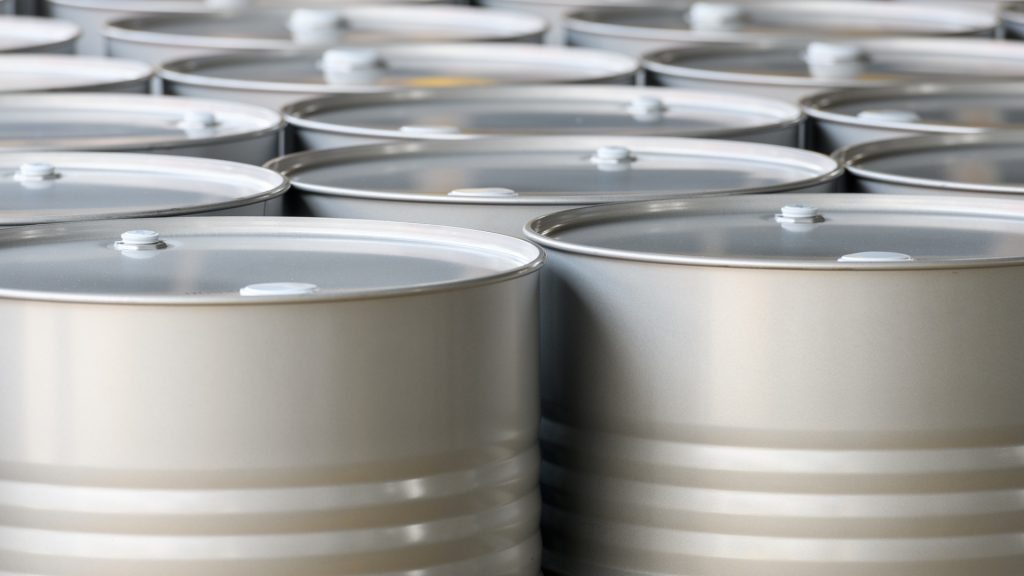
The International Energy Agency laid out a timeline for when it expects the 400 million barrels of oil from its emergency reserves to start flowing from global markets.
This comes as U.S. oil prices went over $100 amid the war in Iran. As of Sunday afternoon, U.S. crude oil increased by 2.64% to $101.32 per barrel, according to CNBC.
Individual implementation plans submitted to the IEA by member countries indicate that stocks in Asia-Oceania will be made available immediately. Stocks from the Americas and Europe are set to be made available starting at the end of March.
Countries committed to a total of 271.7 millions of barrels from government stocks,116.6 million from obligated industry stocks and 23.6 million from other sources.
Of these, 72% are crude oil, and 28% are oil products.
According to the IEA, this is the sixth time since the agency’s creation in 1974 that countries have made this move to support oil markets.
“The war in the Middle East is creating the largest supply disruption in the history of the global oil market. This emergency collective action, by far the largest ever, provides a significant and welcome buffer,” the IEA said. “But the most important factor in ensuring a return to stable flows is the resumption of regular transit of shipping through the Strait of Hormuz.”
The war is causing a chokehold on the Strait of Hormuz, a major oil shipping lane under Iran’s and Oman’s control. About a fifth of the world’s oil supply moves through the strait. Since the U.S. and Israel’s joint strikes on Iran, which started the war on Feb. 28 vessels in the strait have come under attack.
‘No guarantees in wars’
In an interview with ABC News Sunday, Energy Secretary Chris Wright said the conflict will “certainly come to the end in the next few weeks,” which is when “we’ll see a rebound in supplies.”
Still, he added: “there’s no guarantees in wars at all.”
Speaking to NBC News in another interview, Wright said there’s a “very good chance” gas prices could drop below $3 per gallon by summer.
President Donald Trump, who also talked to NBC, dismissed concerns about increasing gas prices, saying “I think they’ll go lower than they were before.”
“There’s so much oil, gas — there’s so much out there, but you know, it’s being clogged up a little bit. It’ll be unclogged very soon,” Trump said.
Still, on Sunday, AAA reported that the national average for gas in the U.S. was at $3.699. And GasBuddy analyst Patrick DeHaan said on X gas prices could inch closer to an average of $4 a gallon — and $5 for diesel, in the coming week.
Trump’s ask for the Strait of Hormuz
On Saturday, Trump urged China, France, Japan, South Korea, the United Kingdom and other countries to send warships to the Strait of Hormuz amid attacks on vessels by Iran. These countries did not commit to doing so.
Asked about this by ABC’s Martha Raddatz, Wright said “all nations of the world depend on products that come from the Straits of Hormuz.”
“China top on that list. Japan, Korea, all the Asian nations is where the energy — energy that comes out of the Straits of Hormuz flows to,” Wright said. “So, of course, it’s quite logical to have a broad coalition of the nations of the world work to reopen the straits.”
French President Emmanuel Macron said Sunday that he discussed the strait with Iranian President Massoud Pezeshkian.
“I called on him to immediately put an end to the unacceptable attacks that Iran is carrying out against countries in the region, whether direct or via proxies, as in Lebanon and Iraq,” Macron said. “I reminded him that France is intervening within a strictly defensive framework to protect its interests, those of its regional partners, and in favor of freedom of navigation, and that it is unacceptable for our country to be targeted.”
Ella Rae Greene, Editor In Chief