Kansas requires IDs to vote, but 1,700 trans residents just had their IDs revoked
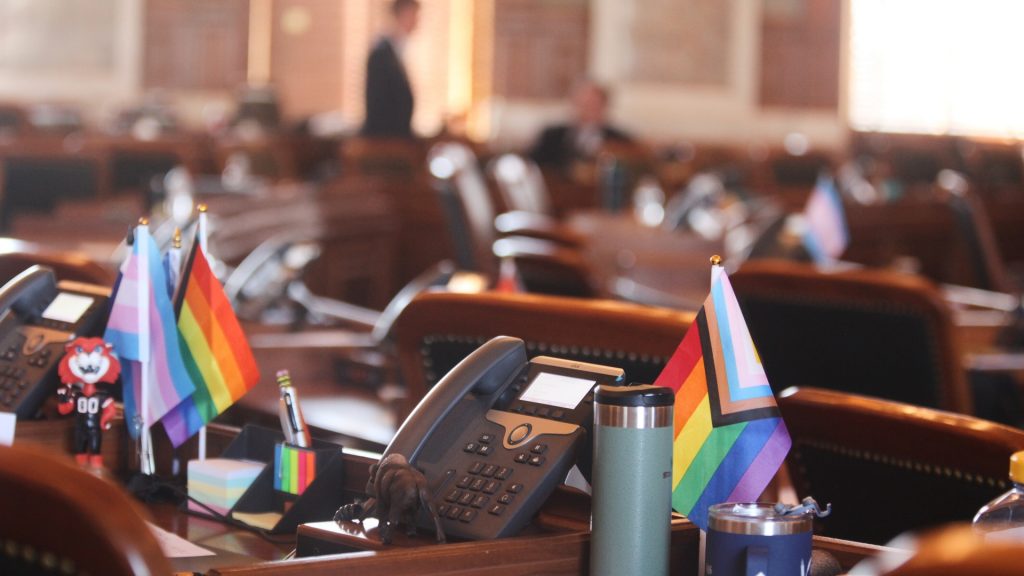
Two transgender Kansans filed a lawsuit in state court to block a new law that invalidated their driver’s licenses, making some ineligible to vote. The state’s governor previously vetoed the legislation for being “poorly drafted” and potentially costing taxpayers millions of dollars.
The law allegedly violates residents’ personal autonomy, privacy and equal rights, the American Civil Liberties Union said in a release. The organization is representing the two transgender men, identified in the lawsuit only as Daniel Doe and Matthew Doe, who legally updated their birth certificates and state-issued IDs to reflect their gender. They are seeking a temporary restraining order and a temporary injunction to halt the enforcement of the bill while litigation proceeds in court.
According to a supplemental note filed on the legislation, the Kansas Department of Revenue estimated that 1,700 people would need new driver’s licenses.
Invalidating state-issued ID meant that some trans residents cannot vote in person until their records are updated, unless they have another proof of identification issued by either another state or the federal government. Kansas has required people to show a photo ID to vote since 2012, according to Douglas County Clerk records.
In place of a state ID, a voter could use identification issued by another state, a handgun license, a U.S. passport, an employee ID from a government agency, military identification, student identification issued by a higher education institution located in Kansas or a government benefits ID. According to the National Conference of State Legislatures, 36 states have laws requiring voters to provide proof of identification at polls.
Lawmakers first passed the measure strictly along party lines on Jan. 28 in the state’s Republican-controlled Legislature, but Gov. Laura Kelly, a Democrat, vetoed the legislation for harm to more than just transgender Kansans.
“If you feel you have to accompany your nine-year-old daughter to the restroom at a sporting event, as a father, you would have to either enter the women’s restroom with her or let her use the restroom alone,” she said in a Feb. 13 statement after issuing her veto.
Republicans overrode her veto nearly a week later.
The passage put Kansas as the fifth state to bar people from updating the gender marker on their documents, according to the Movement Advancement Project, an LGBTQ rights organization. Tennessee and Texas have laws that prevent people from changing their gender on documents. Both Florida’s and Indiana’s motor vehicle agencies have issued policies to make such a change.
“Effective Feb. 12, 2026, the BMV will no longer provide customers with the option to change their gender on their Indiana credential by using a court ordered gender change or physician statement,” according to the Indiana Bureau of Motor Vehicles.
Kansas state Senate President Ty Masterson, a Republican, said on X that the law is “common sense” and protects women and girls’ private spaces from “biological men.” House Speaker Daniel Hawkins, also a Republican, added that the bill is intended to affirm what sex is under state statute.
“This isn’t about scoring political points, but doing what’s right for women and girls across our communities,” Hawkins said in a statement shared on X. “Kansans expect clarity, not confusion. They expect leadership, not surrender to radical activists.”
An X user posted a letter they received from the state on Feb. 23 informing them that their state-issued IDs would be invalid on Feb. 26, and the Legislature didn’t include a grace period for implementation. The person, whose username is NyanSox, said their driver’s license and birth certificate were no longer valid.
The law also carried an additional provision that barred trans people from using bathrooms in public buildings that aligned with their gender identity. It allowed people to face a misdemeanor charge and a civil lawsuit.
Trans men say law threatens their livelihood
Daniel and Matthew wrote in court papers that they both work jobs that require them to travel by car to various locations and use public restrooms.
They said having their IDs and birth certificates invalidated would expose them to harm.
“If Daniel is required to carry identification bearing a gender marker inconsistent with his gender identity, he will be compelled to disclose his transgender status each time he presents identification,” according to the lawsuit. “This forced disclosure would strip Daniel of his hard-won privacy and expose him to stigma, discrimination, and potential hostility.”
The two said they’ve faced harassment and mental stress in the past when they had to use restrooms that aligned with their gender at birth. They said the law resurfaces those same fears, plus the added fear of criminal charges, as they either work or attend public universities in Kansas.
“The invalidation of state-issued IDs threatens to out transgender people against their will every time they apply for a job, rent an apartment, or interact with police,” Harper Seldin, senior counsel for the ACLU’s LGBTQ and HIV rights project, said in a release.
Ella Rae Greene, Editor In Chief