Paris Hilton’s Stop Institutional Child Abuse Act was supposed to address behavioral programs. Did it?
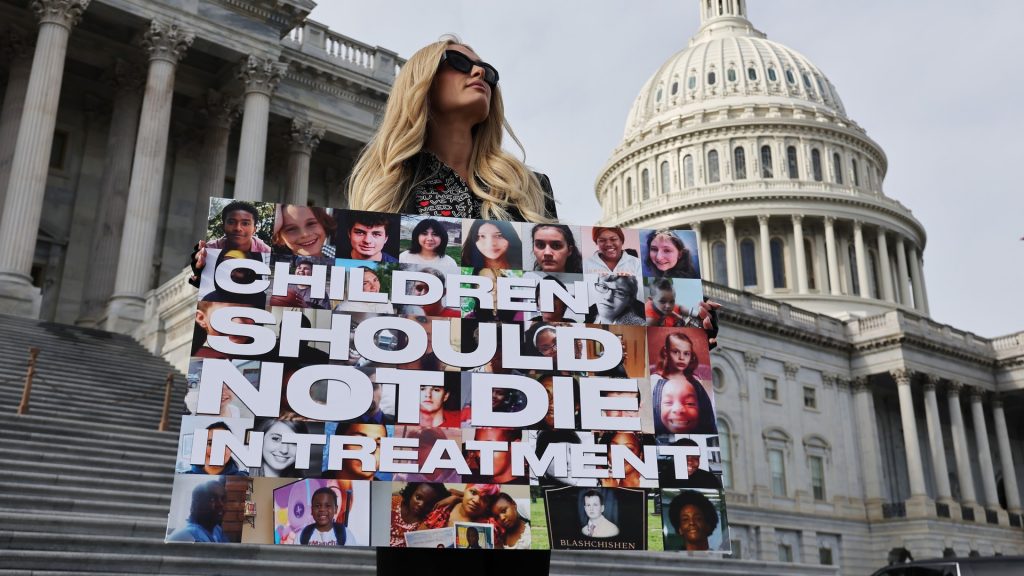
More than a year after former President Joe Biden signed the Stop Institutional Child Abuse Act into law targeting the abuses children faced in the troubled teen industry, children are still alleging they faced abuse at the behavioral programs. Supporters of the law say more work is needed to protect those placed in the programs.
Reality television star-turned activist Paris Hilton pushed Congress to pass her law establishing federal oversight and accountability for how youth behavioral programs, also known as the troubled teen industry, operate. But allegations still persist as former attendees filed lawsuits and made testimonies in state government about their experiences in the programs, some of which included allegations of sexual abuse and forced child labor.
“So when survivors describe ongoing abuse after SICAA, that does not mean the law ‘failed’ in the way a direct regulatory bill might,” Caroline Cole, strategic advocacy lead at 11:11 Media Impact, told Straight Arrow News. Hilton established the media company to centralize activism focused on the troubled teen industry and neurodiversity.
The law requires the secretary of Health and Human Services to contract with the National Academies of Sciences, Engineering and Medicine to review the state of children in the residential behavior programs. It additionally requires the National Academies to then issue a full report of their findings and recommendations by 2027, then every two years for 10 years afterward.
Cole said the survivors’ experiences highlighted that the system is fragmented and has exploited loopholes in state licensing, with inconsistent enforcement.
“SICAA is designed to force a national reckoning on the evidence base, oversight gaps and best practices, and to drive coordinated recommendations that states and federal agencies can implement,” she wrote.
According to the Clarion Psychiatric Center in Pennsylvania, residential treatment centers could be more effective at addressing problems as they provide long-term care in a structured environment away from a person’s home. It noted challenges such as insurance coverage, transitioning back home and whether a center adequately addresses an individual’s needs.
Some of the allegations have been used in lawsuits against programs nationwide.
A class action lawsuit in the U.S. District Court for the District of Maine claimed more than a dozen students who attended the Hyde School faced forced labor, denials of basic necessities and punitive discipline, according to Justice Law Collaborative, who are lawyers for the survivors. Hyde School is a private boarding school for teens in grades nine through 12. Dana McAvity, chair of Hyde School’s board of governors, told families in July that the lawsuit “grossly mischaracterizes” the school’s policies and practices, according to The Portland Press Herald.
Another allegation from the Unsilenced Project, an organization focused on emotional and legal support to survivors of behavioral programs, claimed they were strip-searched and neglected at Second Nature Wilderness in Utah.
“SICAA is a significant milestone, but it is not the end of the work,” Cole wrote.
She’s seen states enact legislation that establishes a public critical incident reporting program; limits on how seclusion, restraint and transport are used; protections for children’s and families’ rights and an independent complaint and ombudsman plan that children can access.
“SICAA is designed to force a national reckoning on the evidence base, oversight gaps and best practices, and to drive coordinated recommendations that states and federal agencies can implement,” Cole wrote.
Lawsuits, testimonies allege children subjected to abuse
In the lawsuit against Hyde School, Jessica Fuller leads the class action claims, stating that she faced systemic abuse and exploitation at the Maine behavioral school.
The Maine school has a student enrollment of 137 people and is advertised as a place for high school-aged children to “develop character to discover unique potential.” Fuller, who attended the school from July 2014 to February 2015, was 16 and 17.
She claimed in the lawsuit that staff physically restrained her with excessive force and without reason. She named the school, president Laura Gauld, executive director Malcolm Gauld, executive director of family education Georgia Gauld MacMillan, teacher Malcolm MacMillan and director of community engagement Laurie Gault Hurd as defendants.
“Defendants threatened Ms. Fuller with exercise and 2-4 forced labor if she did not subject herself to the attack therapy abuse on a regular basis,” according to court papers. “Ms. Fuller was forced to subject herself to shame, ridicule, and humiliation because of Defendants constant threats of forced labor.”
“Two-Four” is a stricter form of discipline that includes student suspension and requirements to work around the campus during school hours, according to court papers. Students are expected to “earn his/her way back into the regular program.” The lawsuit is ongoing, according to court records.
“The news you will hear may make you think that Hyde has skeletons, dark secrets now coming to light,” McAvity wrote in her letter. “But Hyde, as you know, has always been an open book, a place of extraordinary transparency.”
A 2011 literature review in the Justice Department’s Office of Juvenile Justice and Delinquency Prevention said that facilities give families an alternate path to treatment and are less restrictive than an inpatient psychiatric unit.
In Utah, an unnamed person told the Unsilenced Project that they were voluntarily admitted to Second Nature Wilderness for depression and academic issues. They wrote that two men took them from a hotel their father left them at, and confiscated the person’s clothes and belongings. The men then allegedly strip-searched the person before giving them a uniform. No information was provided on when the person entered the program or what age they were.
“The new staff again strip-searched me and made me ‘cough and squat’ to cavity search, as if I was a maximum security prisoner,” the person wrote. “I spent my first few days not allowed to speak or interact with anyone else outside of strict parameters.”
They claimed staff punished them by removing cooking privileges and required teens to write and read aloud a letter detailing why they’re at Second Nature. The person wrote they spent two years in the program, beyond the one-month projection. Second Nature has not addressed the allegations. According to the facility’s website, it uses a therapist-driven model to help teens dealing with mental health and substance abuse disorders, developmental issues and overall behavioral problems.
The program employs psychologists and psychiatrists to lead therapy sessions and maintain a teen’s medications.
“Second Nature boasts an exemplary safety record,” according to the program’s website. “The Second Nature Wilderness Therapy program is state licensed and is subject to state reviews, state licensing supervision and extensive onsite audits.”
Ella Rae Greene, Editor In Chief