Ahead of the Super Bowl, a radiation helicopter is circling San Francisco. Here’s why.
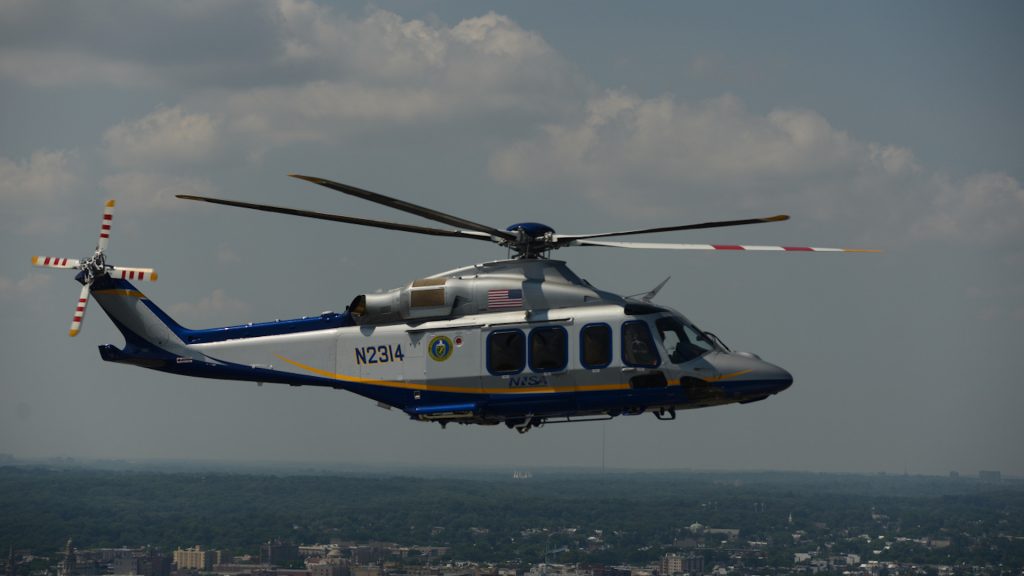
If you’re in the San Francisco Bay Area this week and see a helicopter skimming the rooftops, don’t panic — it’s just the feds on a routine patrol of the city.
They aren’t looking for trouble; they’re mapping background radiation levels to establish a baseline before Super Bowl LX kicks off. It’s part of a program called the Aerial Measuring System, a federal capability that’s been around since the 1950s.
The Department of Energy’s National Nuclear Security Administration (NNSA) said that these aerial surveys aim to protect public safety by establishing a baseline for normal radiation levels across the region before the major event. In a statement, the agency described the operation as a “standard preparation” for security, noting it publicized the flights to ensure residents “are not alarmed” by the low-altitude aircraft.
These surveys utilize the AMS, a federal aviation fleet capable of mapping radiation levels domestically or abroad. The NNSA states these aircraft can generate real-time contamination data during emergencies. This capability is frequently deployed to secure high-profile gatherings, with the agency citing the Super Bowl and presidential inaugurations as standard missions for their “Preventative Nuclear and Radiological Detection” operations.
What officials say the NNSA helicopter is doing
The San Francisco Department of Emergency Management confirmed on social media that the flights would take place over the Bay Area early this week. Outlets identified the aircraft as a Leonardo AW139, a specialized helicopter operated by the NNSA’s Nuclear Emergency Support Team.
According to NNSA fact sheets, the AMS maintains aircraft on standby “365 days per year/24 hours per day.” Following a radioactive release, these teams can rapidly deploy to provide officials with a comprehensive view of radiological conditions, informing critical decisions like evacuations.
The agency also highlighted recent upgrades to its fleet. In a 2024 statement, the agency noted that the Leonardo AW-139 offers an extended range and higher speeds than older models. Officials say these improvements, alongside updated sensing gear, enable sharper data collection and faster response times.
How the nuclear-response system behind the flights works
The Bay Area flights are part of a decades-old national defense program. The program traces its roots to 1958, when it was originally tasked with mapping fallout from atmospheric nuclear tests. Over the decades, its mission evolved into emergency response, notably deploying helicopters to monitor the 1979 Three Mile Island nuclear accident.
Today, NEST, which includes AMS, works alongside federal partners like the FBI and the Department of Homeland Security during crises. According to the agency, NEST operates as an all-encompassing response unit for nuclear crises, staffing teams with engineers, scientists and emergency managers. Their remit covers a wide range of threats, from radiological “dirty bombs” to improvised nuclear devices.
The current fleet includes both fixed-wing planes and helicopters stationed at bases in Maryland and Nevada, according to agency documents. The NNSA says it continually validates its scientific equipment and integrates new technologies to ensure the system remains ready for modern threats.
What happens after this week’s flights end
Local officials said the low-altitude helicopter flights over the Bay Area are scheduled only for the designated flight window ahead of Super Bowl LX, according to CBS News Bay Area. Active patrols end Wednesday. The NNSA did not announce any flight schedule beyond this window.
The post Ahead of the Super Bowl, a radiation helicopter is circling San Francisco. Here’s why. appeared first on Straight Arrow News.
Ella Rae Greene, Editor In Chief