Federal judge blocks termination of temporary protected status for Haitian immigrants
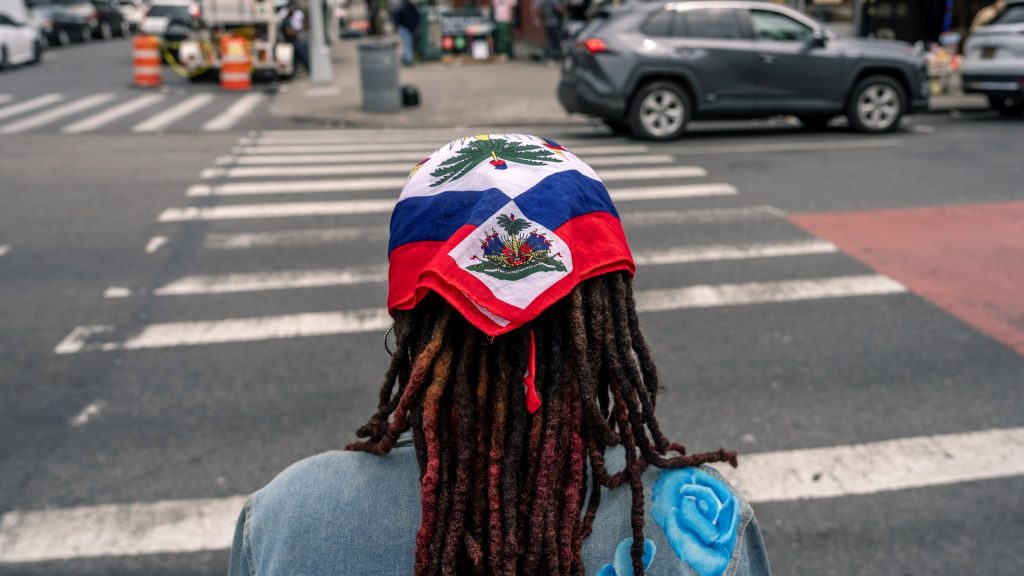
A federal judge issued an 11th-hour order Monday night to block the termination of Haitian immigrants’ Temporary Protected Status (TPS), saying that Department of Homeland Security Secretary Kristi Noem couldn’t make such a decision on her own. The judge’s order means more than 330,000 Haitian immigrants do not have to leave the U.S. starting Tuesday.
U.S. District Court Judge Ana Reyes wrote in her order that Noem ignored provisions in the Immigration Act that required her to both review the country’s conditions and to consult with other agencies before making a final decision. She wrote the order is effective for the duration of the lawsuit.
Reyes said Noem couldn’t prove that she’d talked to others about the TPS termination when she was pressed to do so. The judge said she didn’t confer with Secretary of State Marco Rubio, U.S. Ambassador to Haiti, U.S. Embassy in Haiti, State’s regional office or Haiti desk, or with Congress.
“Her ‘national interest’ analysis focuses on Haitians outside the United States or here illegally, ignoring that Haitian TPS holders already live here, and legally so,” Reyes wrote. “And though she states that the analysis must include ‘economic considerations,’ she ignores altogether the billions Haitian TPS holders contribute to the economy.”
The ruling dealt a blow to Noem’s increasing number of TPS revocations for various countries. Since she was appointed, Noem terminated status for at least a dozen countries, including Haiti, Venezuela and Somalia. Those terminations are facing legal challenges.
DHS Assistant Secretary Tricia McLaughlin wrote on X the Trump administration would appeal.
“Supreme Court, here we come,” McLaughlin wrote. “This is lawless activism that we will be vindicated on.”
Noem’s post referenced in order
Reyes pointed to Noem’s X post in her order, noting that the secretary’s words contradicted both her actions and the law governing the TPS program.
She said the Dec. 1 post was made three days after terminating Haiti’s status.
“Kristi Noem has a First Amendment right to call immigrants killers, leeches, entitlement junkies, and any other inapt name she wants,” Reyes wrote. “Secretary Noem, however, is constrained by both our Constitution and the APA to apply faithfully the facts to the law in implementing the TPS program. The record to-date shows she has yet to do that.”
Five Haitian TPS holders filed the litigation, Reyes said. They were neuroscientists, software engineers, laboratory assistants, a college student and registered nurses.
“And so, the Government studiously does not argue that Plaintiffs will suffer no harm if removed to Haiti,” the judge wrote. “Instead, it argues Plaintiffs will not certainly suffer irreparable harm because DHS might not remove them. But this fails to take Secretary Noem at her word: ‘WE DON’T WANT THEM. NOT ONE.’”
Haiti is still not safe
U.S.-born Haitian American Natasha Atkinson told Straight Arrow News in January that the Caribbean Sea nation isn’t safe to return. She noted that a number of major U.S. airlines are still refusing to fly to Port-au-Prince, and the State Department has a level four do not travel advisory out on the nation for heightened crime, terrorism, kidnapping, civil unrest and limited health care.
Atkinson said a “perfect storm” of environmental and political disasters kept the country in need of humanitarian assistance and has led to an unstable government.
“All of that, taken into consideration, and examined under the lens of why the United States even has TPS status, it meets the criteria,” she said.
Haiti faced devastation from Hurricane Matthew in 2016, a Category 4 storm, as it was still recovering from the 2010 earthquake. The events collectively claimed more than 200,000 lives and displaced millions of people. Protests against rising fuel costs led to the assassination of President Jovenel Moise in 2021 and the government collapsed. Haiti faced another devastating earthquake at 7.2 magnitude in 2021, killing at least 304 people, the BBC reported. The country’s government has since remained unstable as armed gangs and terror groups patrolled the nation.
That conflicted with McLaughlin’s assertion that protections were only granted for the 2010 earthquake.
“Haiti’s TPS was granted following an earthquake that took place over 15 years ago,” she wrote, “it was never intended to be a de facto amnesty program, yet that’s how previous administrations have used it for decades.”
Separate lawsuit challenged 75-country visa ban
The judge’s order could affect the outcome of a lawsuit the American Civil Liberties Union, the National Immigration Law Center and other immigrant-focused groups filed against Rubio for pausing visa processing for 75 countries “whose migrants take welfare from the American people at unacceptable rates.”
“The overwhelming majority of applicants for immigrant visas are not eligible for most government assistance programs and remain ineligible for years,” according to the National Immigration Law Center.
The Trump administration has not commented on the lawsuit as of Tuesday afternoon.
Haiti is among the countries listed. Immigrants permitted into the U.S. under temporary protected status can seek visas to obtain permanent residency.
The State Department noted that the rule doesn’t affect current visas and people from the affected countries could still submit applications.
Several people in the lawsuit alleged that they petitioned for their children and grandchildren to enter the U.S. and had their applications approved and paid, but were told at consular interviews they were ultimately denied due to inclusion on the list.
The plaintiffs’ were U.S. citizens and filed to have their families from Colombia, Ethiopia, Ghana, Guatemala and Jamaica to reunite the U.S.
The post Federal judge blocks termination of temporary protected status for Haitian immigrants appeared first on Straight Arrow News.
Ella Rae Greene, Editor In Chief