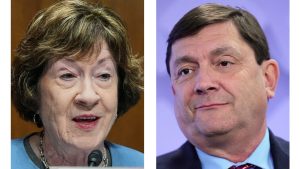
Attack on Rep. Ilhan Omar reflects rising threat against lawmakers
Less than a week after authorities arrested a man for assaulting one member of Congress, another was attacked during a town hall.
Early Friday, a man reportedly punched Rep. Maxwell Frost, D-Fla., in the face during a private party coinciding with the Sundance Film Festival in Park City, Utah. Frost said the man, identified by police as Christian Young, screamed racist remarks and told him President Donald Trump “was going to deport me.”
Then, Tuesday evening, a 55-year-old man charged toward Rep. Ilhan Omar, D-Minn., at a town hall in Minneapolis and used a syringe to spray her with an unknown liquid. Immediately after the episode, captured on video, police took Anthony Kazmierczak into custody.
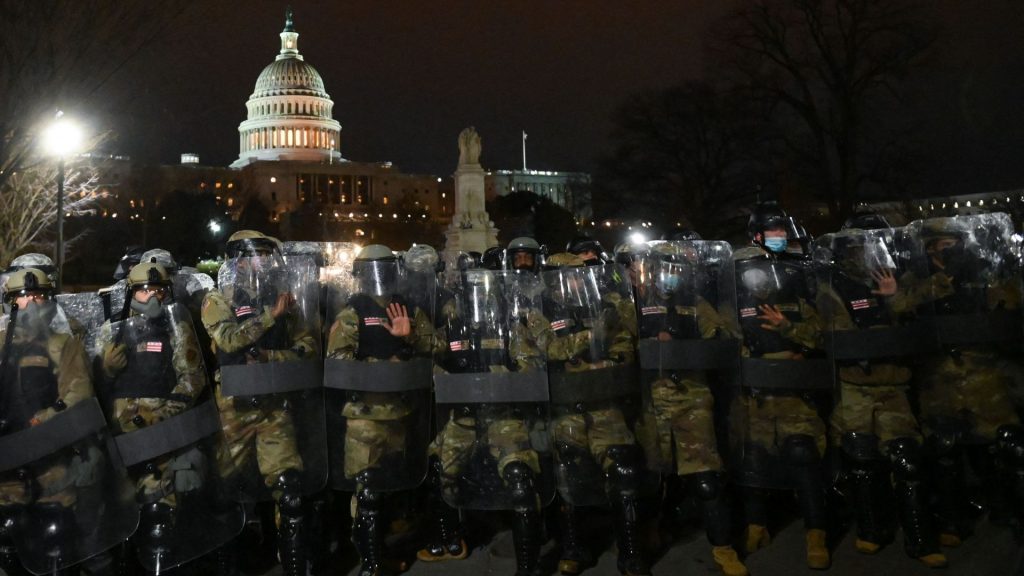
Neither Frost nor Omar was seriously injured. But the incidents reflect the growing threats to members of Congress, a trend documented in a new report by the U.S. Capitol Police.
The agency said Tuesday that assaults, threats and “concerning statements” toward lawmakers, their families and their staffs increased by 57% last year — from about 9,500 in 2024 to nearly 15,000 in 2025. It was the third year in a row that the number of incidents rose, as well as the largest increase on record.
Political violence on the rise
The assaults on Frost and Ilhan follow a year of high-profile political violence, including the assassinations of conservative activist Charlie Kirk and Minnesota state Rep. Melissa Hortman, as well as the attempted assassination of state Rep. John Hoffman.
Data from Princeton University’s Bridging Divides Initiative also show an increase in political violence, Vox reports. From January to June 2025, the university identified more than 170 total incidents across almost 40 states.
About a quarter of these incidents involved hate speech, according to Vox, and about 20 of them involved local officials threatening each other.
But researchers, like Jon Lewis, a research fellow at George Washington University’s Program on Extremism, say this data is only the tip of the iceberg. He said broader studies on the threat environment need to start before someone reaches the point of committing a violent or threatening act.
“The data only looks at the point at which people successfully conduct acts of violence,” he told Vox. “I think we need to start far earlier in the process and far more holistically to really capture the root causes of this issue, which is rhetoric.”
What’s behind the increase?
In its annual threat assessment report, the Capitol Police said people’s false sense of anonymity online contributed to the increase in threat investigations.
However, researchers say social media and online forums help proliferate conspiracy theories and lies about certain politicians. Some media companies thrive off peddling conspiracy theories.
“I think that we really need to recognize the fact that there is a significant subset of people, especially online, especially on these social media platforms, that do not share our common understanding of reality,” Lewis told Vox. “If you spend your weekend on Twitter, which I would not recommend doing, you would genuinely say that the suspect [in the Minnesota shootings last summer] shot these Democratic politicians because they went against the leftist, Marxist party line.”
Studies have shown that hateful political rhetoric against political enemies can also increase the likelihood of political violence. Fiery political speech can give violence a direction, complicate law enforcement response and increase fears in vulnerable communities, according to the nonpartisan think tank Brookings.
The group says remarks from political leaders don’t fade away. Those with large social media followings often have their hateful comments shared with millions of people, amplifying the fiery political message.
What is the impact of political violence and fiery rhetoric?
Besides increasing the likelihood of attacks, angry or hateful statements can also push what’s called the Overton Window, according to Brookings. The Overton Window is a range of policies or ideas that have mainstream appeal.
Brookings says this happens as politicians push rhetoric or policies on the political fringe, things that would have ended political careers in the past. Studies indicate that rhetoric didn’t change attitudes but emboldened people to express pre-existing beliefs that they had hidden.
The Brennan Center, a nonprofit law and policy institute, says political violence also reshapes American politics by distorting who gets elected and how they interact with their voters.
Elected officials have said that fear of violence changes how they vote on legislation, with the Brennan Center saying fears of political attacks against lawmakers’ families have led some to vote against proposals they supported.
Violence has also deterred people from entering politics and has led others to leave it. One study found that mayors who experienced political violence were more likely to say they considered not running for reelection or a higher office.
What kind of protection do politicians receive?
Lawmakers receive some protection, but after recent attacks, calls for more protection have grown. The Capitol Police protect lawmakers when they are in Washington, D.C., but that security ends when they leave Washington.
Some lawmakers can request, and often receive, additional security outside of Washington if they are threatened. However, lawmakers and their families don’t receive round-the-clock protection like the president or the vice president, relying on local authorities for protection when in their home districts.
Following the Kirk assassination, Republicans proposed $88 million in security funding for lawmakers, judges and top government officials. The bill would allow lawmakers to spend up to $10,000 per month on personal security costs. The legislation passed the House of Representatives but stalled in the Senate.
“While security on Capitol grounds has already improved,” Capitol Police Chief Michael Sullivan said in a statement, “we have been strengthening our partnerships with law enforcement agencies across the country to keep the members of Congress safe when they are away from Capitol Hill. We want to make sure agencies have the resources they need to be able to enhance protection, which is critical to the democratic process.”
The post Attack on Rep. Ilhan Omar reflects rising threat against lawmakers appeared first on Straight Arrow News.
Ella Rae Greene, Editor In Chief