First US fatalities in Syria since Assad’s fall intensify scrutiny of mission
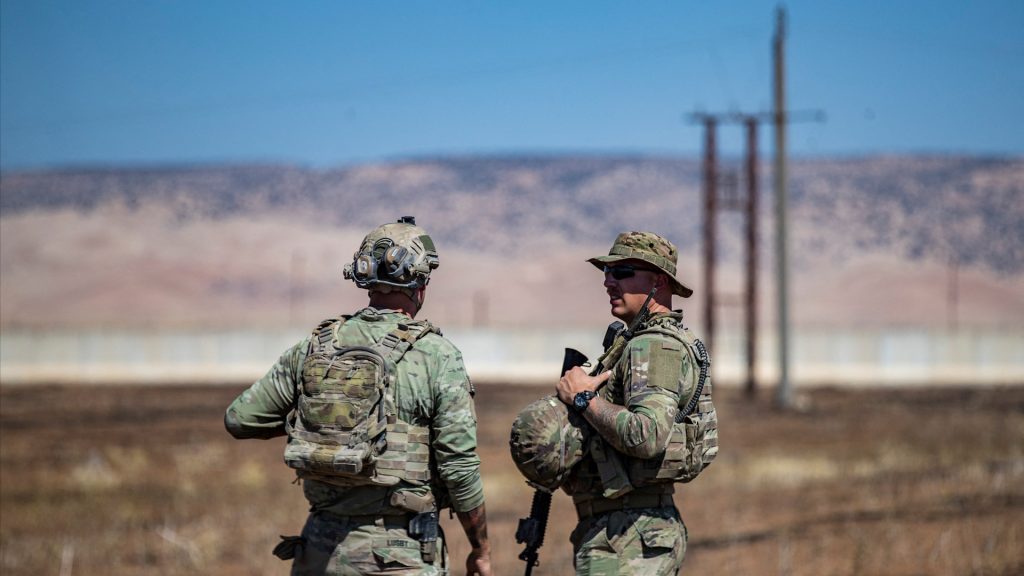
The deaths of two U.S. service members and one American civilian near Palmyra, Syria, on Saturday is drawing fresh scrutiny on why roughly 900 U.S. troops remain in the country. U.S. officials blamed the attack on an alleged Islamic State member.
The fatalities are the first since Syrian President Bashar Assad was ousted in December 2024, The Associated Press reported. President Donald Trump vowed to retaliate, but offered no details about potential military action.
Both soldiers were members of the Iowa National Guard. They were identified on Monday as Sgt. Edgar Brian Torres-Tovar, 25, and Sgt. William Nathaniel Howard, 29.
Who carried out the attack?
A Syrian interior ministry spokesperson said the gunman had joined Syria’s internal security forces two months earlier. He had been reassigned amid suspicions of Islamic State.
The gunman opened fire at a lunch meeting of U.S. and Syrian officials and was reportedly killed at the scene. U.S. officials told PBS News that the shooter had infiltrated Syrian security forces and was already under investigation for ISIS links.
Where are U.S. forces and what is their mission?
According to the AP, U.S. troops have operated in Syria for more than 10 years to combat the Islamic State.
Roughly 900 soldiers are primarily stationed with Kurdish allies in the country’s northeast and at the remote al-Tanf outpost in the southeast. While the physical Islamic State caliphate was destroyed in 2019, American forces have remained to suppress active sleeper cells.
How did Syria’s political map change after Assad’s fall?
A recent analysis by the Carnegie Endowment for International Peace describes a fractured landscape following Assad’s fall in late 2024.
Power is now split among the new Damascus government, Turkish-supported groups in the north and Kurdish-led forces in the east. In response, the U.S. has adopted a strategy of “flexible oversight,” focusing on mediation and conflict deescalation rather than static defense.
Why is the US working with Syria’s new authorities?
Ties between Washington and interim President Ahmad al-Sharaa have warmed over the last year as Damascus joined the anti-ISIS coalition.
The Carnegie Endowment’s analysis describes a pragmatic, risk-management approach built on limited security coordination with Damascus while the U.S. balances Turkish and Israeli red lines and tries to prevent an Islamic State resurgence in eastern Syria.
What are the operational priorities and vulnerabilities?
Stability in the east now rests on three pillars, according to the analysis: securing prisons holding ISIS fighters, protecting critical infrastructure and ensuring freedom of movement on major highways.
The analysis warns that breakdowns in any of those areas could give Islamic State remnants space to regroup. Meanwhile, the U.S. garrison at al-Tanf continues to serve as a hub for monitoring threats and launching rapid responses near the Jordanian and Iraqi borders.
The AP quoted officials calling the attack a “major security breach,” tied to rapid post-ouster recruiting.
Afterward, forces swept the Badiya and made arrests. The AP also noted that critics warn the hasty expansion has left security services exposed to ISIS infiltration.
The post First US fatalities in Syria since Assad’s fall intensify scrutiny of mission appeared first on Straight Arrow News.
Ella Rae Greene, Editor In Chief