It’s Thanksgiving week and Sea-Tac Airport is short on gas after pipeline leak
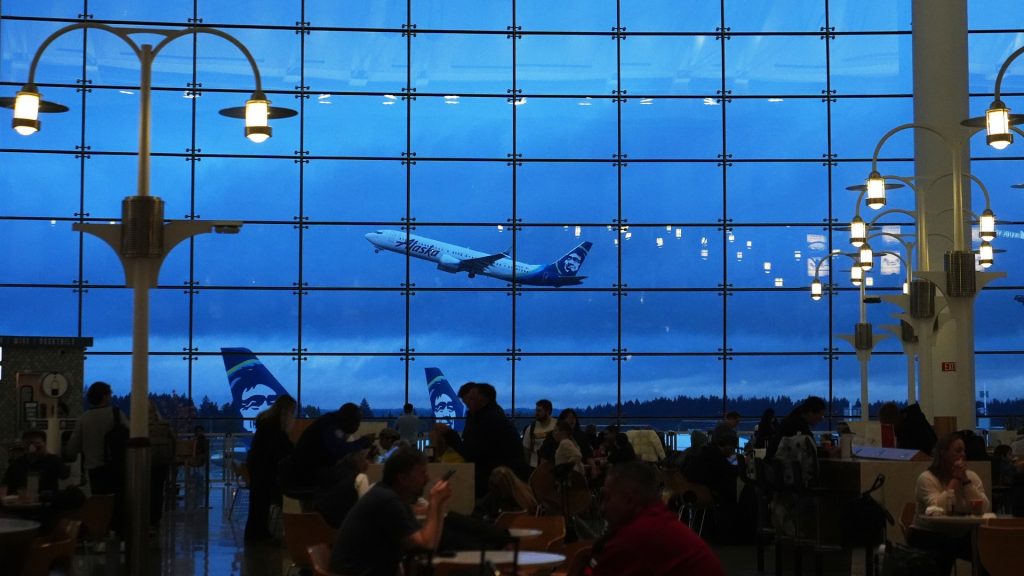
Tuesday will mark two weeks since a leak was discovered in a pipeline that transports gas to one of America’s busiest airports, and the issue still hasn’t been resolved. While the leak hasn’t caused any significant delays as of yet, the upcoming Thanksgiving holiday weekend could complicate matters.
How big is the problem?
On Nov. 11, a sheen was discovered by a local farmer along a portion of the Olympic Pipeline that runs through Everett, Washington, roughly 30 miles north of Seattle. Made up of two different pipelines, it is a critical piece of infrastructure that transports jet fuel to Seattle-Tacoma International Airport (Sea-Tac).
The pipeline was subsequently shut off as crews worked to excavate it and locate the source of the leak. A spokesperson for BP, the company that owns the pipeline, told Straight Arrow News that so far, more than 200 miles of the 400-mile-long line –– which stretches from the Canadian border in Washington’s north, all the way down to Portland, Oregon –– have been excavated, and that crews are working “around the clock.”
However, there is still no timeline for when the problem could be resolved. The spokesperson added that BP is working with federal, state, tribal and local authorities, while the extent of the damage and the amount of petroleum product released are still being assessed.
Washington’s Department of Ecology began cleanup efforts in the immediately impacted area after the leak was first reported. The cleanup involves a vacuum truck and absorbent materials that target contaminated soil.
Spokesperson Jasmin Adams said there are currently no reports of impacts to wildlife or the nearby Snohomish River.
Will Thanksgiving travel be impacted?
In an emergency proclamation issued Nov. 19, Washington Gov. Bob Ferguson said that airport operations would be “significantly affected” if the pipeline wasn’t brought back online by Nov. 22.
But Sea-Tac spokesperson Perry Cooper doesn’t think it should be a problem, telling SAN that the airport manages the fueling system’s infrastructure and there has not been a “major impact to flights.” Additionally, Cooper said one of the benefits of Sea-Tac is that it operates as an O&D, or origin and destination, airport.
“A majority of our flights either start or end here –– unlike places such as Denver, Chicago, or Atlanta, where 70% to 80% of their flights are connections –– about 70% of our flights are O&D,” Cooper explained. “So, when flights change, typically travelers hear from the airlines ahead of time and don’t show up at the terminal. Thus, we don’t see lines at ticket counters like others whose connection flights might see.”
In a letter addressed to BP CEO Murray Auchincloss, Sen. Maria Cantwell, D-Wash., estimated that upwards of 900,000 travelers are expected to move through Sea-Tac during Thanksgiving weekend. The ranking member of the Senate Committee on Commerce, Science and Transportation also noted that more than 1,000 airplanes use the airport each day.
Cooper recommended that travelers stay in contact with their airlines regarding any disruptions, adding, “The airlines have done a good job to alert travelers to any changes in their flights.”
What’s being done in the meantime?
Until the pipe is brought back online, Sea-Tac is getting its fuel from tankers. Ferguson’s emergency proclamation temporarily suspended state regulations that limit the number of hours commercial drivers can work while transporting fuel.
“We are in close communication with our state and federal partners on the Olympic Pipeline shutdown,” Ferguson posted to X alongside the proclamation. “This emergency declaration will help Sea-Tac Airport maintain its fuel supply while the pipeline is offline and limit disruptions to travelers.”
Cantwell said that 90 trucks serving Sea-Tac every 24 hours would only provide half the fuel needed to keep the airport operating at full capacity.
“With so much riding on the reliable transportation of fuel through your system, pipeline safety and operational integrity must be top priorities,” Cantwell wrote in her letter. “The fact that a blueberry farmer—not BP—first identified the spill, and that it is still not known for certain which of the two pipelines is leaking, raises significant concerns about the capabilities of the Olympic Pipeline’s leak detection systems and the adequacy of your inspection and maintenance programs.”
The post It’s Thanksgiving week and Sea-Tac Airport is short on gas after pipeline leak appeared first on Straight Arrow News.
Ella Rae Greene, Editor In Chief