World’s first social media ban for kids prompts others to consider restrictions
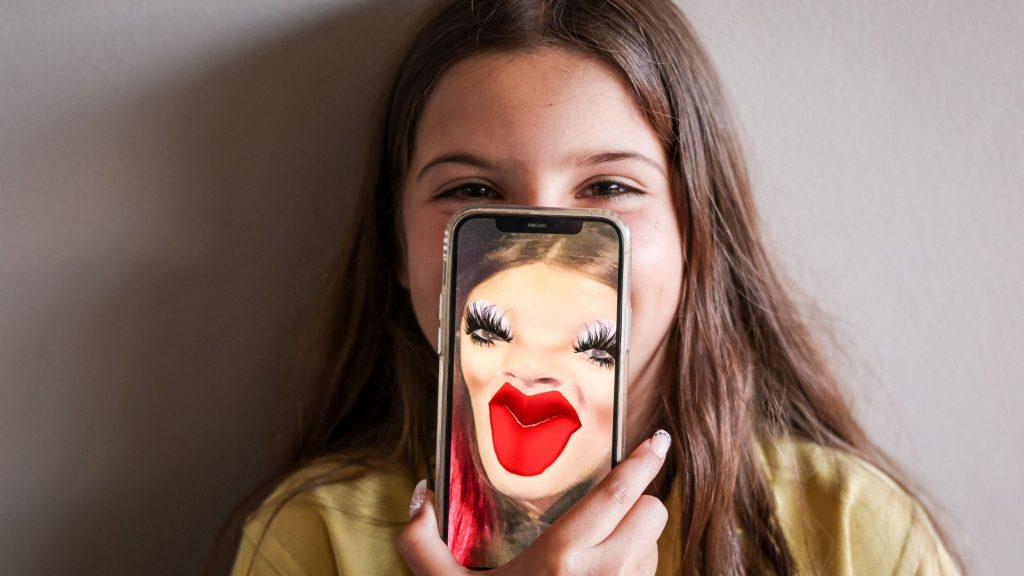
Luca Hagop, 15, spent more than 34 hours a week on Instagram, mostly sharing random pet videos with her friends. Amelie Tomlinson, 14, uses Snapchat to connect with friends and has almost nobody’s phone number.
But on Wednesday, all this will change.
Australia, where both girls live, will implement the world’s broadest social media restrictions for children under 16, citing research on the deleterious effects of cyberbullying, online predators, harmful and addictive content, and impacts on mental health. More than a million minors are expected to lose their accounts on apps such as Facebook, Instagram, X, TikTok, Reddit, YouTube and Snapchat. Platforms — not parents or children — will be responsible and liable for every user logging in.
Other nations are closely watching Australia’s efforts on the vanguard. Many see it as a test case, as more and more regions are considering similar restrictions. In the United States, a wave of recent bills aimed at curtailing children’s social media use has swept through the federal government, and several states are attempting their own bans.
But in the U.S. particularly, efforts to limit social media use face uphill legal battles.
Supporters say restrictions are a step in the right direction as children’s exposure to social media has proven to cause harm. Critics, however, see these efforts as running counter to the First Amendment’s guarantee of the freedom of expression. Besides, they argue, a ban would likely not be effective.
Support for restrictions
Across the world, support is strong for enacting laws that restrict kids from accessing social media. According to research from Ipsos, 71% of adults surveyed across 30 countries support bans on social media for children under 14. The survey found “significant increases in support in most regions compared to the previous year,” Ipsos reported.

Several states have enacted their own versions of these bans. Last year in New York, for instance, Gov. Kathy Hochul signed a bill titled “Stop Addictive Feeds.”
“We owe it to [my granddaughter Sofia’s] generation to put guardrails in place to protect her mental health, just as previous generations did with the pressing issues of their time,” Hochul wrote for The New York Post. “We stopped marketing tobacco to kids. We raised the drinking age. And today, we’re fighting to protect kids from the defining problem of our time.”
Many came forward supporting Hochul’s initiative.
“This is one of the most forward-thinking, visionary initiatives of any state in the nation. Social media is harming our kids and our society,” Rep. Tom Suozzi, D-N.Y., said. “This legislation should be replicated nationwide.”
At least eight other states have implemented social media bans for kids. Florida’s HB3, signed in March 2024, is arguably the most aggressive of all the states’ legislation. It bars children under 14 from having accounts; children ages 14 and 15 must have their parents’ consent. The law was challenged, but the 11th U.S. Circuit Court of Appeals allowed the state to enforce its ban.
In Utah, a pair of laws, the 2023 Social Media Regulation Act, requires platforms with more than 5 million users to ensure that all minors’ accounts have parental consent. The legislation blocks teens’ access from 10:30 p.m. to 6:30 a.m., unless a parent opts out. Advertising that targets kids is also blocked. A federal judge issued an injunction, blocking parts of the legislation, citing First Amendment concerns. The law was rewritten.
Other states, such as Connecticut, Texas, Arkansas, Maryland and Louisiana have all attempted similar legislation. All have been tangled in the courts.
“Most state social media laws face serious First Amendment challenges in federal courts,” Sandy Dornsife wrote for MultiState. “Arkansas and Ohio laws have been permanently blocked, while California, Florida and Georgia measures are temporarily halted pending litigation.”
While there isn’t a single federal law that bans social media from kids, there have been multiple attempts at federal legislation, though these bills have faced controversy, legal issues and criticism.
Critics of laws curtailing kids’ social media
Critics of government social media bans are skeptical.
“It raises policy and legal concerns,” David Inserra, a fellow for free expression and technology at the Cato Institute, told Straight Arrow News. “We’ve seen more legislation at a state level passing, than at a federal level. … Regardless of the specifics of these, there are some serious concerns from free expression and data security perspectives, and how feasible it is for these to fully work in practice.”
Inserra, as well as many other critics — and certain judges — hold that bans like these infringe on First Amendment rights.
“In a society that should want people to express themselves, we’re restricting people’s access to communities and their ability to speak, and that’s a concern,” Inserra said. “Why is the government the one responsible for deciding which platforms are acceptable for kids and whatnot?”
Children are tech-savvy and will find ways around these laws, some critics say. Before the law was passed a year ago, children found ways to get around social media rules, such as using their parents’ information or lying about their ages.
“As soon as you ban something, people find ways around it,” Inserra said. “They flock to other things, like Signal chats and obscure new platforms. … Imagine what happens when they move to other apps that aren’t concerned with keeping kids safe. This generation is the most tech-savvy. … In states, whenever these laws go into effect, we immediately see surges in VPN use.”
Some parents believe they should have the choice to manage their children’s accounts, Inserra said. “We don’t want to see a world that’s cracking down on speech and security to keep kids safe, rather than keeping it in the parents’ hands. … It starts with parents and education for the parents and for the kids who are in the environment. Teach kids how to navigate the space, and educate parents on how to do that, as well.”
Whether Australia’s experiment will serve as a cautionary tale or a paragon is to be determined. It will depend on how kids — and their parents — respond.
The post World’s first social media ban for kids prompts others to consider restrictions appeared first on Straight Arrow News.
Ella Rae Greene, Editor In Chief