Why your electricity bill is vulnerable to energy supply shocks in the Middle East
The war with Iran has sent supply shocks across global energy markets, and it’s affecting more than gasoline. The cost of electricity is also vulnerable to increases due to disruptions in the supply chain for liquefied natural gas (LNG).
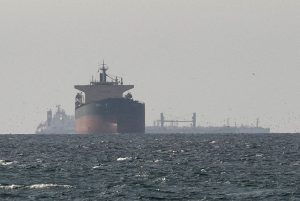
About 20% of the world’s LNG supply is currently offline. Qatar is one of the top three LNG-exporting countries in the globe, and its supply has been cut off from the market as Iran continues to prevent ships from exiting the Persian Gulf through the Strait of Hormuz.
LNG is made when natural gas is cooled to a temperature at which it liquifies. Then it’s pumped into specialized tankers that carry LNG around the globe. At import terminals, the LNG can be turned back into a gas and sent through pipelines to power plants and buildings that use gas for heat.
Global LNG prices have surged by 80% since Feb. 28’s initial strikes on Iran, according to Reuters. The price hike comes as electricity rates are already trending upward due to fuel costs, the need to upgrade infrastructure and the emergence of massive data centers. While most Americans are feeling the effects of gas price increases, the impact on electricity prices could hit one region first.
Why is New England especially at risk?
The Everett LNG Facility in Massachusetts, owned by Constellation Energy, is a key link in New England’s energy system. And due to limited pipeline connections to the rest of the country, gas-fired power plants in New England are especially dependent on LNG and therefore exposed to global price shifts.
Marissa Gillett experienced what increased exposure to LNG prices can mean in 2022 when Russia invaded Ukraine during her tenure as chair of Connecticut’s Public Utilities Regulatory Authority.
During the first half of 2023, the price of electricity from Connecticut’s two main utility companies doubled compared with the previous six months, according to data cited in an issue brief written by Gillett, who now works as a Senior Fellow at the American Economic Liberties Project.
Having lived through the 2022 shock as a regulator, Gillett told Straight Arrow News that customers “are going to start seeing the ramifications of the war in Iran later this year and especially during the winter season between 2026 and 2027.”
Current LNG prices and looming uncertainty can affect the future price for electricity in New England states, even if the supply shock subsides. That’s because auctions to determine how much electricity will cost are held seasonally, and electricity suppliers must place bids based on their best estimations of how much it will cost to spin up gas-fired power plants. Connecticut’s auction is held this month; Massachusetts and New Hampshire will follow in May and June.
“There’s a very high risk premium, because the wholesale suppliers — just like us — don’t know when this war is going to end, when the Strait is going to be back open and LNG may flow,” Gillett said.
While the U.S. and Iran agreed on Tuesday to a two-week ceasefire, traffic through the Strait of Hormuz remains at a near standstill.
What’s the status of the LNG supply chain?
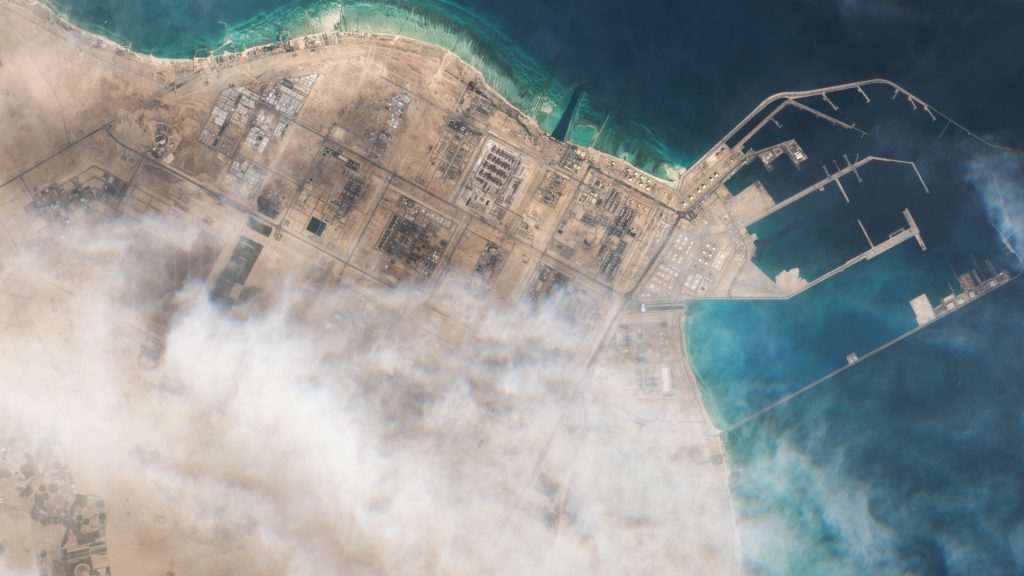
In March, Iran struck LNG facilities in Qatar. Some damage may take years to fully repair. If and when the Strait of Hormuz fully opens, the global flow of LNG will not come back immediately, according to industry experts.
“Prices will probably remain at a relatively high level” through at least the middle of the year, said Anne-Sophie Corbeau, a global research scholar at the Center on Global Energy Policy at Columbia University. Those prices could rise further if there is a heatwave or cold winter, she added.
Corbeau told SAN that Qatar is also not likely to start making necessary investments to bring its production back online until a stable peace is reached.
With LNG flows out of the Strait of Hormuz locked in, the oil and gas industry in the United States has already ramped up exports to Europe and Asia. In March, U.S. LNG exports hit an all-time high of 11.7 million metric tons, Reuters reported.
Future prices for LNG exported to Europe remain about $17 for every million British thermal units, or MMBtu, the standard measuring unit for natural gas. Meanwhile, the price of natural gas in the U.S. market has remained much lower, at around $3 per MMBTU throughout 2026, even after the war in Iran began. The $14 gap means that for companies with the capability, there’s more money to be made exporting LNG than supplying the domestic market.
Will it impact broader US electric rates?
While electric ratepayers in New England are vulnerable to the direct price increases in LNG, the rest of the U.S. might face higher costs because of LNG exports competing with the domestic market for natural gas — a longstanding debate about LNG.
“There is a camp that’s saying ‘there’s been plenty of gas in the United States,’” and it’s enough to increase exports and meet domestic demand without raising the price, Corbeau told SAN. The opposing camp, according to Corbeau, says U.S. demand for gas is growing faster than expected due to new power plants for data centers at the same time that LNG exports are higher than many anticipated.
“High natural gas prices flow directly to consumers in a market that’s largely supplied by natural gas generation,” said Jon Gordon, a senior policy director at the trade group Advanced Energy United. Gordon is especially concerned about the PJM grid, which stretches from the mid-Atlantic coast to Chicago ands home to the largest concentration of data centers. Ratepayers there have seen significant price increases.
In a free market, Gordon said gas producers “are going to sell their commodity where they can earn the greatest profit in return,” and right now that’s LNG to Europe and Asia. How exactly that translates to electricity prices is yet to be seen, but Gordon said, “chances are we’re not going to see a spike, but we are going to see continued upward pressure.”
Corbeau falls somewhere between the two poles of the debate.
“I do have concerns that we may eventually see an increase in U.S. domestic gas prices. Not immediately but progressively,” Corbeau said. But she added that she’s not “dramatically concerned” and recognizes there’s a lot of cheap natural gas being produced, and the industry has a history of lowering its production costs.
Ella Rae Greene, Editor In Chief